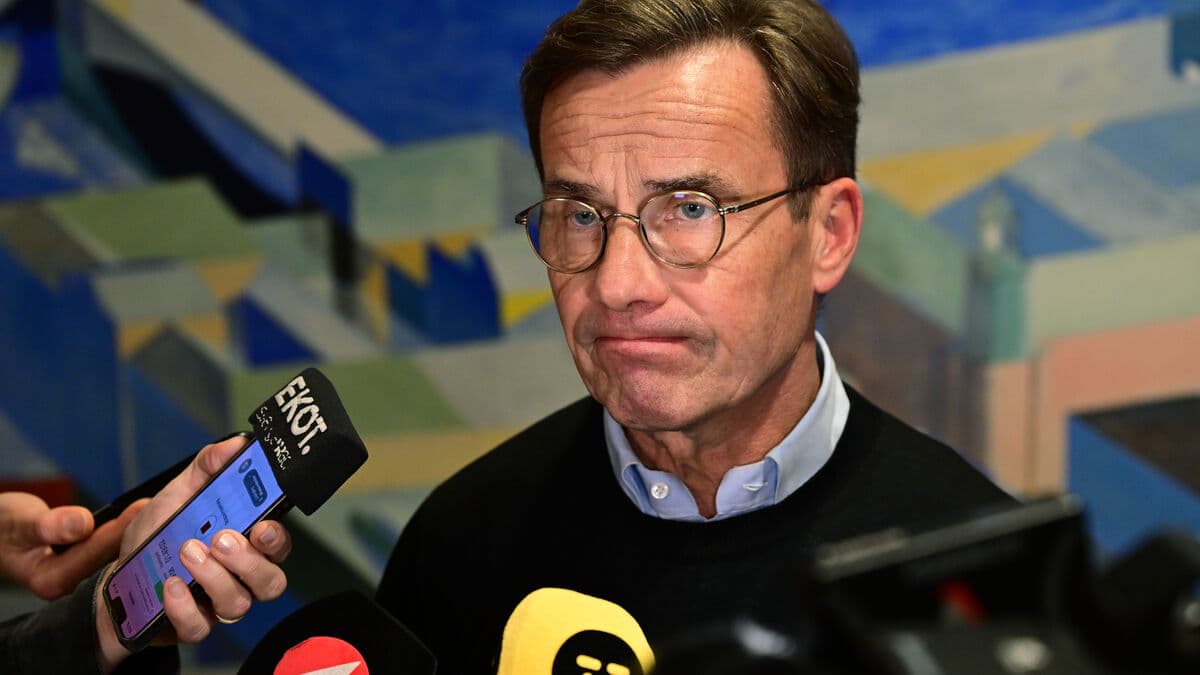
We see that it is within reach, says Minister of Justice Gunnar Strömmer (M).
On Thursday, the Riksdag will decide on the final part of the government's major criminal law reforms.
However, the bill does not state when the various legal amendments will come into force. The reason is that it is uncertain when there will be enough new prison places to meet the effects of the reform. The Social Democrats call the bill a frivolous castle in the air.
The government now says it is economically feasible for all parts of the bill to enter into force in 2029 or 2030, at an estimated cost of 3-7 billion during the mandate period. In the longer term, when the changes take full effect, the costs are estimated to be significantly higher.
We believe it is economically feasible, says Strömmer.
Big challenge
In addition to abolishing the current quantity discount for those convicted of multiple crimes, the bill also includes fewer mitigating circumstances in sentencing, as well as legal changes that mean courts will more often than today end up higher on the punishment scale for a crime.
According to Strömmer, it is also possible for the Swedish Prison and Probation Service to have time to increase its capacity sufficiently, for example by allowing more first-time offenders to serve sentences with electronic ankle tags and building new prisons faster using modules.
The Director General of the Swedish Prison and Probation Service, Rikard Jermsten, recently said that it will be a major challenge but that it is possible to increase the already high rate of expansion further - under the right conditions.
Majority exists
If prison places do not increase quickly enough to handle the entire criminal justice reform in the next term, the Moderates want to prioritize abolishing the current volume discount. However, according to Strömmer, this will require a new bill to be produced after the election.
"The Moderates' handling of the government's bill is beginning to resemble a farce," says Teresa Carvalho, the Social Democrats' legal policy spokesperson.
S will vote no to the government's bill, but promises to abolish the current quantity discount for violent crimes and start with sexual crimes during the next term.
The government parties and the Social Democrats have a majority in the Riksdag for their bill on paper. But for it to come into force, a new government after the election must also decide on it.