In an interview with CBS on Saturday, he also opened the door to an agreement with the United States.
"We are ready to fulfil everything that we agree to with the US," Pezeshkian said in what has been described as a charm offensive from the Iranian side in the US.
"A good week for Iran at the UN - but its proposals to the US are doomed to fail," CNN noted.
Sulfur-releasing speech
The oppressive regime in Tehran, which violently suppresses all opposition and dissent in the country, has achieved propaganda success in the United States through its presence during the week. The opportunity for the visit arose when the world's heads of state and government were allowed to enter the United States to attend the opening of the UN General Assembly.
Even before, leaders who were shunned like the plague in Washington, DC, were able to travel to New York. Cuba's Fidel Castro gave an incendiary speech during the conflict in 1960; he put a handkerchief over the warning light when the 15-minute deadline expired - the speech lasted four hours and 29 minutes.
Venezuela's then-leader Hugo Chávez addressed US President George W. Bush directly in a speech, saying that "the devil was here yesterday, and it still stinks of sulfur."
But Masoud Pezeshkian's presence in New York is special as the US and Iran are at war. President Donald Trump said in his speech at the UN that "important decisions must be made" about a deal or whether he will "destroy Iran."
“Threats us every day”
Pezeshkian, in turn, chose to accuse Washington of dishonesty:
They threaten us every day. They attack us every day. And they don't respect what they signed.
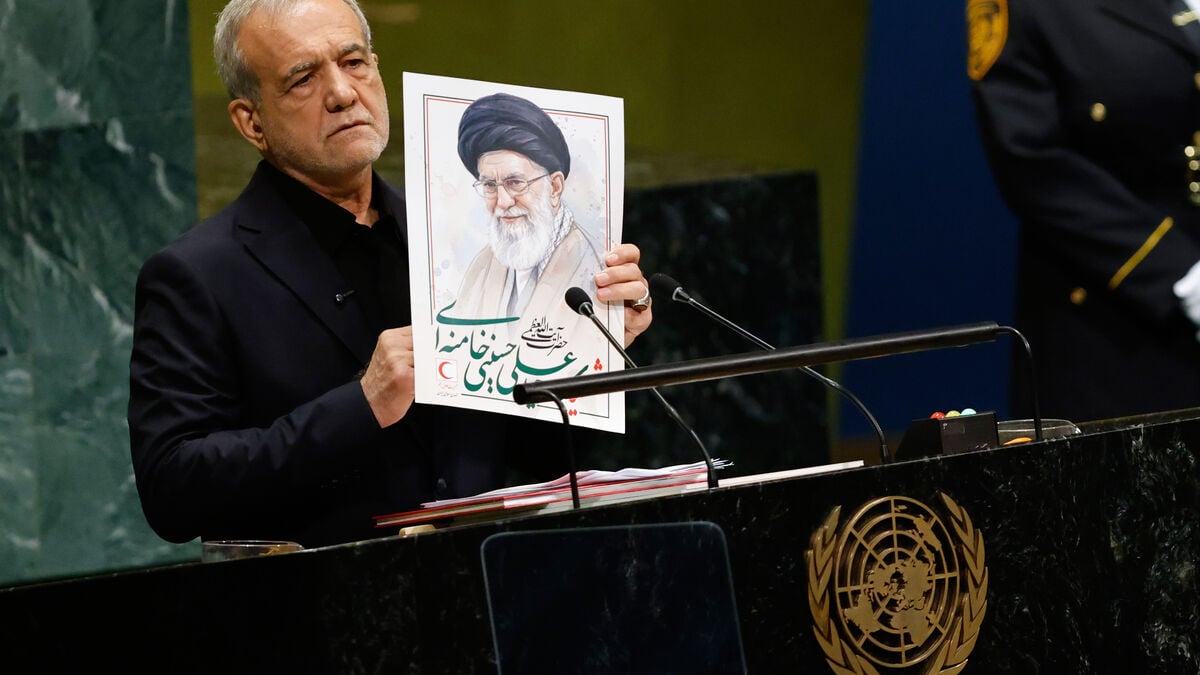
At the UN, he also held up a portrait of Iran's supreme leader, Ayatollah Ali Khamenei, who was killed in a massive Israeli and American airstrike on February 28.
In the interview with CBS on Saturday, Pezeshkian opened the door to allowing UN nuclear energy observers into the country to review suspicions of nuclear weapons production.
And on the usually Trump-loyal Fox News network, Pezeshkian referred to Iran's negotiating proposal for a seven-day roadmap to reach a new ceasefire agreement. It includes, among other things, that the Strait of Hormuz could be opened if attacks in the region cease.
"We don't want to continue (the war). We shouldn't continue killing each other when we can solve this through talks," he said.
Trump said no to Iran's seven-day proposal on Saturday. And in the Middle East, the parties continue to fight.