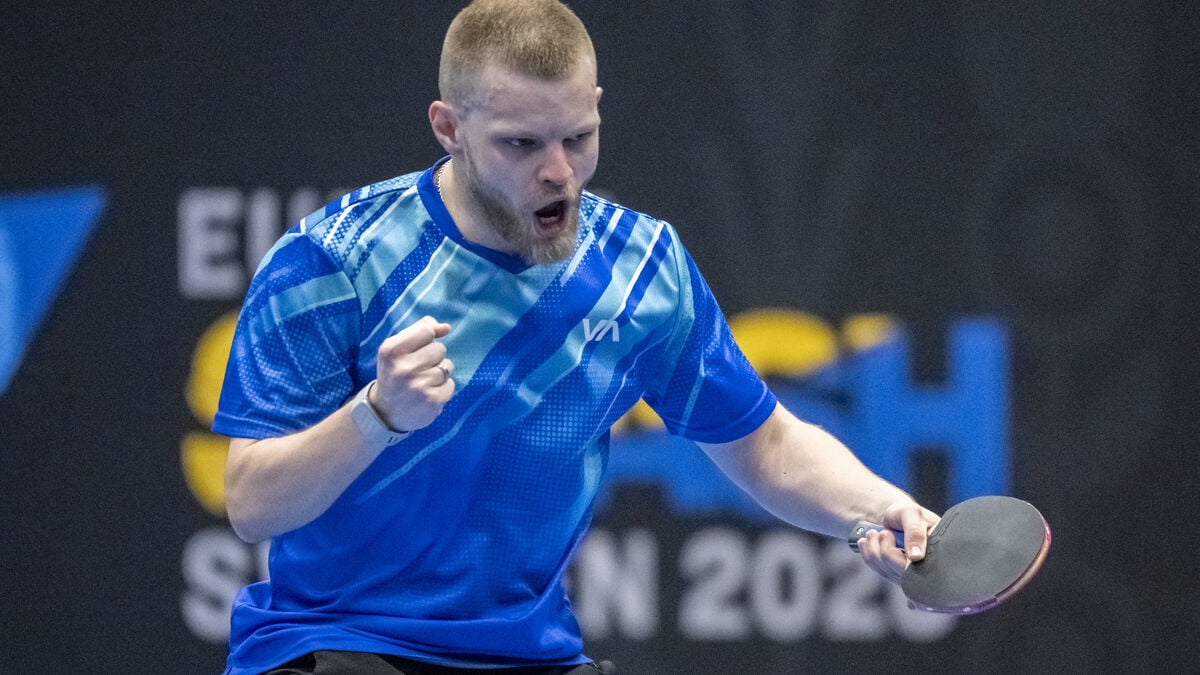
For the first time since Russia’s invasion of Ukraine began, Russian and Belarusian players are being allowed to compete in a European table tennis championship, following a decision by the International Olympic Committee (IOC).
The IOC opened up this possibility this summer, and the International Table Tennis Federation (ITTF) and the European Table Tennis Union (ETTU) followed suit.
Slovenia does not grant visas to Russians
However, not all Russian and Belarusian players who qualified are allowed to compete in the European Championship.
But the ETTU has not prevented some players from participating. Slovenia does not grant Russians and Belarusians visas to enter the country.
Those who are here and participating can do so because they play in the French or Italian league and were therefore able to make their way to Slovenia, says Alen Ivancin, the competition director for the European Championship.
Those who did not have this opportunity were not granted visas by the Slovenian state.
No national team clothing
The ETTU’s position is that Russians and Belarusians should be allowed to participate in international competitions like any other players. But in Ljubljana, even the names of the countries at war are not allowed to appear.
Russian players are called “ETTU2” and Belarusians “ETTU1”.
Russians and Belarusians are also not allowed to wear their national team uniforms. They wear jerseys and tracksuits bearing only the manufacturer’s logo and the player’s name.
All of this is a requirement set by the host country.
In order for them to be allowed to play in Slovenia, they had to compete as neutral ETTU players and not under the Russian flag, says Alen Ivancin.
If a Russian player wins European Championship gold, there will be no national anthem, just a medal ceremony.
Pierre Kass, the ETTU’s secretary general, writes in an email to TT that “this arrangement applies specifically to the 2026 European Individual Championships in Ljubljana and does not change ETTU’s general decision from July 16, 2026.”
Do not want to answer
The Russian players would rather not discuss the politically sensitive issue.
“If you’re going to ask about something political, we don’t want to answer,” says Elizabet Abraamian, the only remaining Russian player, who has reached the women’s singles quarterfinals.
Her compatriot Nikita Artemenko was not particularly forthcoming either.
“I don’t speak English,” says Nikita Artemenko in almost perfect English, leaving the conversation and interpretation to his coach.