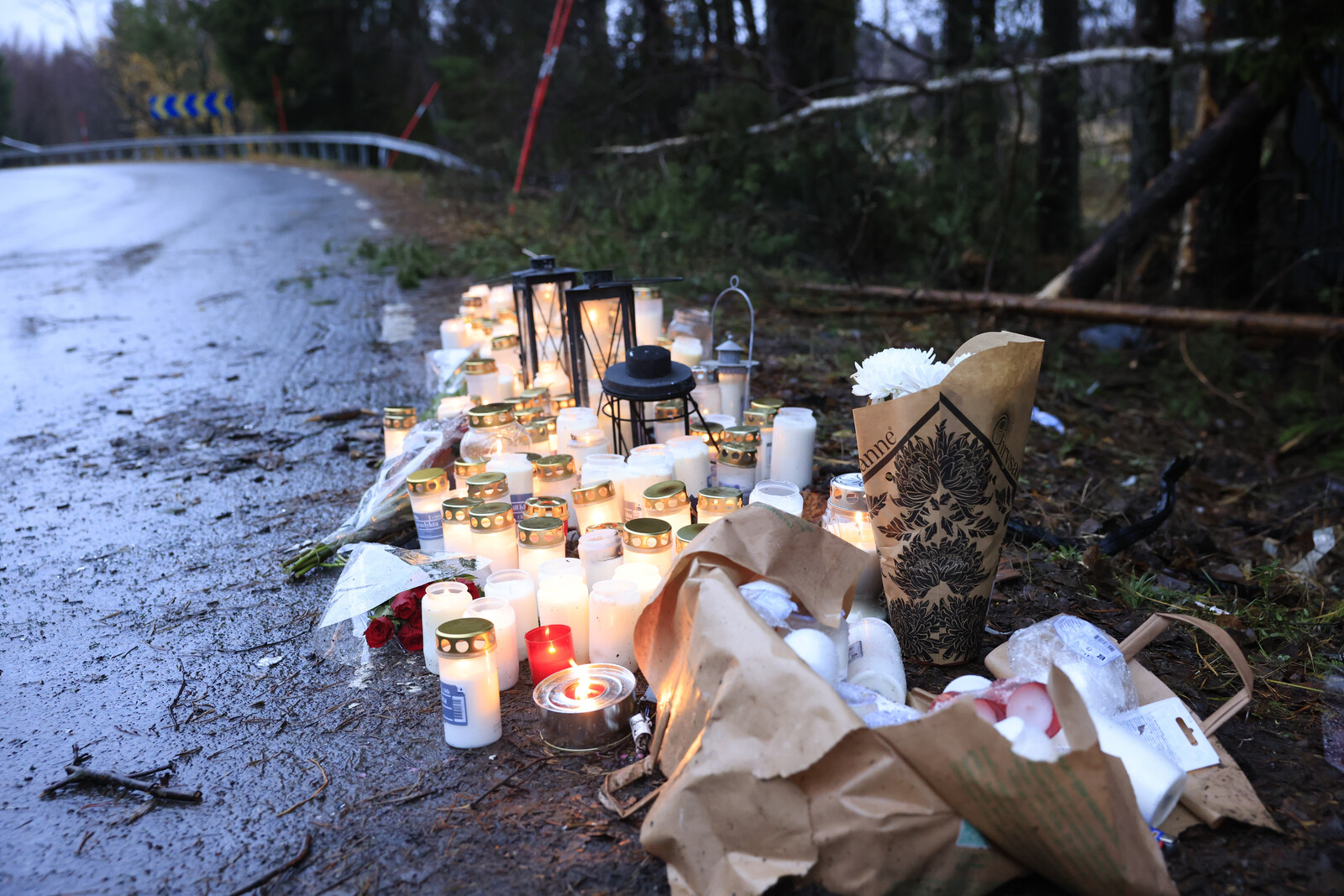
Three people in their late teens died and another teenager is being treated for life-threatening injuries after a fatal car accident outside Luleå on Saturday night. Relatives and loved ones are mourning, and on Monday, many will return to school and work after the weekend.
Rakel Eklund, a researcher at the Department of Women's and Children's Health at Uppsala University, believes that empathy, flexibility, and honesty are essential when adults encounter children and young adults who are grieving.
What we can see in research is that young people tend to turn to each other rather than their family members, she says, exemplifying with the funeral procession in Norrköping in connection with a similar fatal accident in May.
Sorrow may not always come immediately. It can sometimes take months and come unannounced.
These questions or feelings and thoughts may arise when we adults least expect it. For example, when we're unloading the dishwasher or driving a car. Then we adults must stop.








What do you think?