In recent weeks, headlines have been dominated by attacks between the Houthi movement and neighbouring Saudi Arabia. Riyadh has tried to keep the Iran-allied militia at bay for more than a decade. But military interventions, Western-backed alliances and reports of Saudi bribery have not stopped the rise of the fundamentalists, who profess Zaydi Shia Islam.
It is an Islamist revival movement originating in northern Yemen, says Aron Lund, who works at the Swedish Defence Research Institute (FOI).
Truce in turmoil
Since Yemen's formation in 1990, the country has been plagued by poverty, famine and civil war. Division, corruption and armed power struggles continue. The Houthi movement took control of the capital Sanaa in 2014 and has since expanded and consolidated its power.
Then the state collapsed completely, Lund notes.
There is now a fragile ceasefire between Saudi Arabia, the Saudi-backed central government and the Houthi movement. But in the wake of the Iran war, deadly attacks between the parties have flared up.
Now they are fighting, now they are shooting at each other. And the starting point for this is the Saudi bombing of the airport in Sanaa, says Aron Lund.
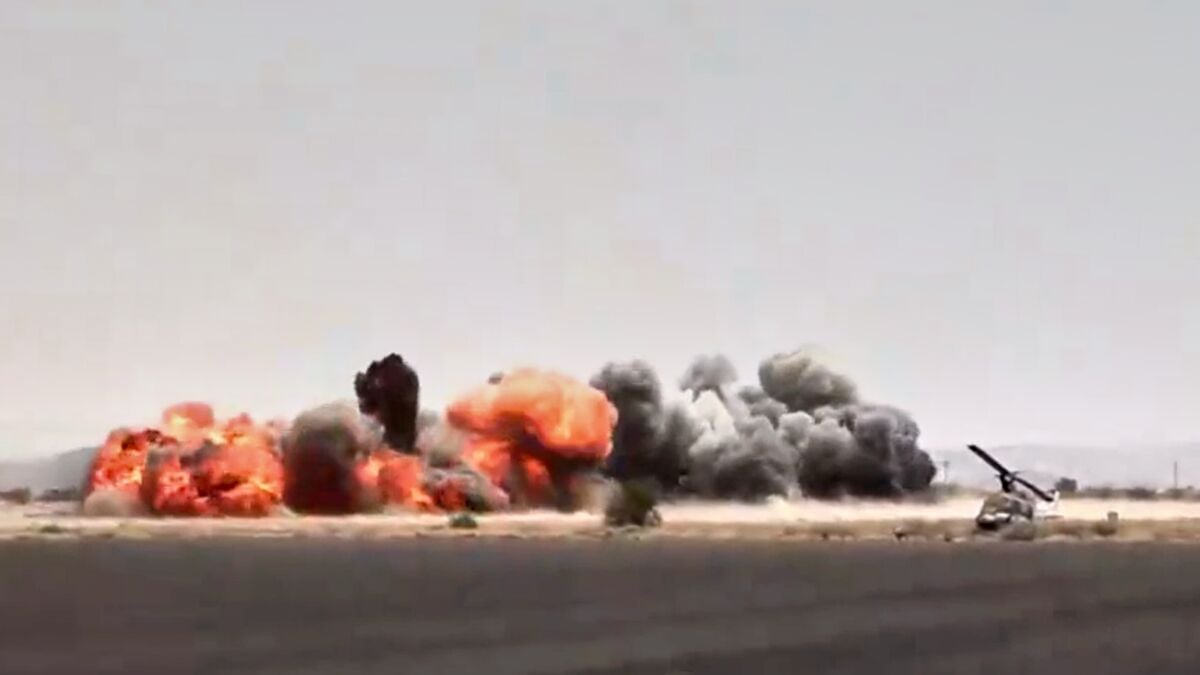
He is referring to what Saudi Arabia claims was a pre-emptive attack just over a month ago. The Houthi-controlled airport in Sanaa was attacked. The Houthi movement responded with a declared naval blockade of Saudi oil exports.
It is clear that Sunni Saudi Arabia has historically underestimated the militia, says Lund:
Saudi Arabia probably thought they could handle it with their left hand when they invaded in 2015. It is debatable how close the Houthi movement was to Iran from the start, but the more they argued with the Saudis, the more useful they became to the Iranians.
The Gaza War Meant a Shift
Hamas's terrorist attack on Israel in 2023 was also crucial for the militia.
The movement realized it could exploit the Gaza war and became enamoured with its new regional image, says researcher Maysaa Shuja al-Deen at the Sana'a Center think tank, according to the Reuters news agency.
The reasoning has been condemned by the Houthi movement as “American-Zionist” aggression.
However, the movement's role in the Iran war has been more cautious - until recently.
The other Iranian client movements in the region have been shattered, one by one: Hamas, the Assad government fell, Hezbollah is badly damaged. But the Houthis have become more important to Iran - in that they have the ability to block the Bab el-Mandeb Strait (the entrance to the Red Sea), says Lund.
After the repeated closures of the Strait of Hormuz, Saudi Arabia has redirected much of its oil exports westward to Bab el-Mandeb.
The Houthi movement rules the areas it controls in Yemen with an iron fist. According to testimonies, food distribution is conditional on, among other things, militia recruitment.
Anyone who refuses the Houthi movement's ideological indoctrination risks imprisonment or torture. Propaganda rallies in which the population is expected to participate are held regularly. Arbitrary arrests occur.
A number of UN employees in the country have been kidnapped and imprisoned.
Iran has partly financed the movement's militarisation. Its weapons arsenal includes drones and ballistic missiles.
In addition to the fundamentalist and ideological affiliation with Iran, there are personal ties: the Houthi movement's leading figure, Hussein al-Huthi, and his family are said to have been close to Iran's former supreme leader Ali Khamenei.
Sources: Reuters news agency, Sana'a Center For Strategic Studies (Sana'a Center).
The conflicts in Yemen, one of the world's poorest and most war-torn countries, have hit the civilian population hard. The UN has described the situation there as the world's most widespread humanitarian crisis.
In 2014, a civil war broke out in Yemen, with the Houthi movement forcing out long-time president Ali Abdullah Saleh. By 2021, more than 380,000 people had been killed as a direct result of the war, according to the UN.
Over 14 million people in Yemen are currently estimated to be in need of urgent humanitarian assistance. Over three million people have fled their homes and five million are at risk of famine. Cholera outbreaks have affected over one million people.
All parties to the conflicts in Yemen are considered to have violated human rights and international humanitarian law.
Source: Global Conflict Tracker , UN