The number of asylum seekers to Sweden is at record lows. This year, 4,200 asylum seekers are expected to arrive in Sweden - the lowest number since statistics began in 1985.
The Tidö parties M, KD, L and SD have implemented a series of austerity measures during their term in office. M now believes that the restructuring is complete.
Our most important priority is to stay on this course, says Migration Minister Johan Forssell (M).
Forssell believes that the next term will be more about integration and breaking down exclusion. But he warns that this could be jeopardized if the red-greens win the election:
Then we will see a return to the policies that led us into the refugee crisis.
A: Strict and reasonable
The Social Democrats have promised to continue a “strict” migration policy. During their term in office, the party has mostly voted in favor of the government’s tightening measures.
But in the last year, a shift has occurred. After the debate about teenage expulsions, S - just like the other opposition parties - emphasizes that it does not want an “unreasonable” expulsion policy.
For example, S does not think the government has done enough about the so-called teenage deportations. Recently, S also joined forces with V, MP and C in an attempt to stop the government's stricter requirements for family immigration.
But according to Ida Karkiainen, migration policy spokesperson for S, this does not mean that immigration to Sweden will increase with an S-led government.
"No, not if you ensure that the regulations remain reasonably comparable between different EU countries. Then we believe it will continue to be at a low level," she says.
The Center Party believes that easing family immigration will be one of the first measures in the event of a red-green election victory.
I think we can agree on that quite quickly, says C's migration policy spokesperson Niels Paarup-Petersen.
More quota refugees?
Overall, the opposition parties C, MP and V stand for a more generous line in immigration policy.
All want to increase the number of quota refugees to 5,000 again. Both MP and V also want permanent residence permits back. MP also believes that Sweden should accept more asylum seekers in accordance with the distribution system in the EU and not buy its way out of it.
We have the opportunity to help more people, says MP's migration policy spokesperson Annika Hirvonen.
However, Sweden has no proposal to increase the number of quota refugees and says no to permanent residence permits as a general rule.
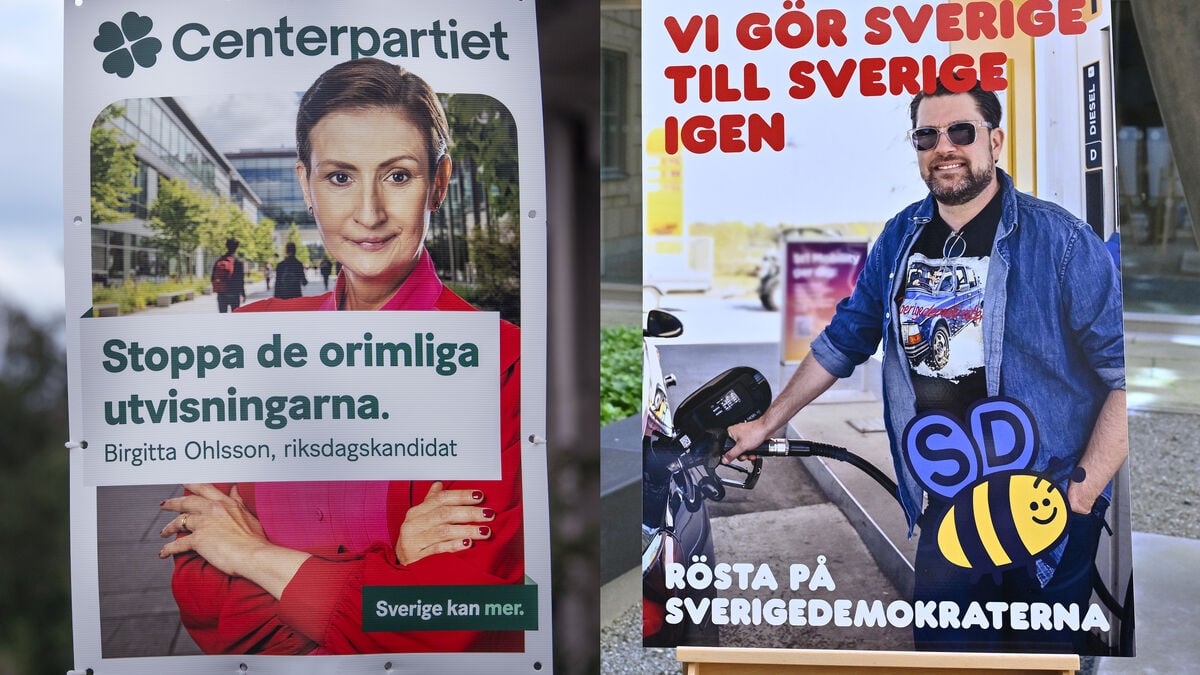
The Sweden Democrats see room for further austerity. The party wants to revoke permanent residence permits, stop accepting quota refugees altogether, and tighten the rules for family immigration even further.
"You can tighten the requirements for livelihood more, for example," says SD leader Jimmie Åkesson.
People who come on student visas but do not study but deliver food should also be looked at more closely.
The number of asylum seekers to Sweden has decreased sharply.
During the great refugee crisis of 2015, over 160,000 people came to Sweden in one year. Last year the figure was 6,700 and this year it is expected to drop further to 4,200.
This means that asylum-related immigration is now down to its lowest level since 1985, which is as far back as comparable statistics are available.
Stricter Swedish migration policy plays a role, but migration flows through Europe have also taken new routes. The EU has also gradually tightened controls at external borders and increased cooperation with countries along the usual migration routes.
During the mandate period, the Tidö parties have, among other things, reduced the number of quota refugees from 5,000 to 900, tightened the requirements for residence permits, as well as the rules for family immigration and deportation due to crimes. The salary requirement for labor immigrants has been significantly increased, and the repatriation grant has been greatly increased.
At the same time, it is not possible to say whether the so-called shadow society has decreased, and hundreds of criminals who have been sentenced to deportation remain in Sweden because they cannot be sent out.