For large parts of cultural life, this autumn's election is a fateful choice: will finances shrink again? Culture's share of total government spending has been shrinking for several years and in 2025 was lower than in 26 years.
In our Nordic neighbours, culture seems to be doing much better. In Norway, public investment has steadily increased - even under more market-liberal governments, points out Ola K Berge, a cultural researcher at the Norwegian Telemark Institute.
According to him, this is also visible in cultural life.
Norwegian artists and works are gaining ground. International success is new. In the 1960s and 1970s, Sweden, Denmark and Finland were far ahead, but Norway has caught up. One can imagine that this is the result of increased investment and the professionalisation of culture, he says.
Sweden at the bottom
Sweden and Finland spend 1 percent of public spending on culture, while the figure is 1.1 in Norway, 2.2 in Iceland and 1.2 percent in Denmark, according to a report from DIK, the trade union for culture, communication and the creative sector.
But comparisons between countries are complicated. Malin Weijmar at Kulturanalys Norden recommends also comparing cultural offerings per capita - then the differences will be smaller. Regardless of the method, Sweden is at the bottom.
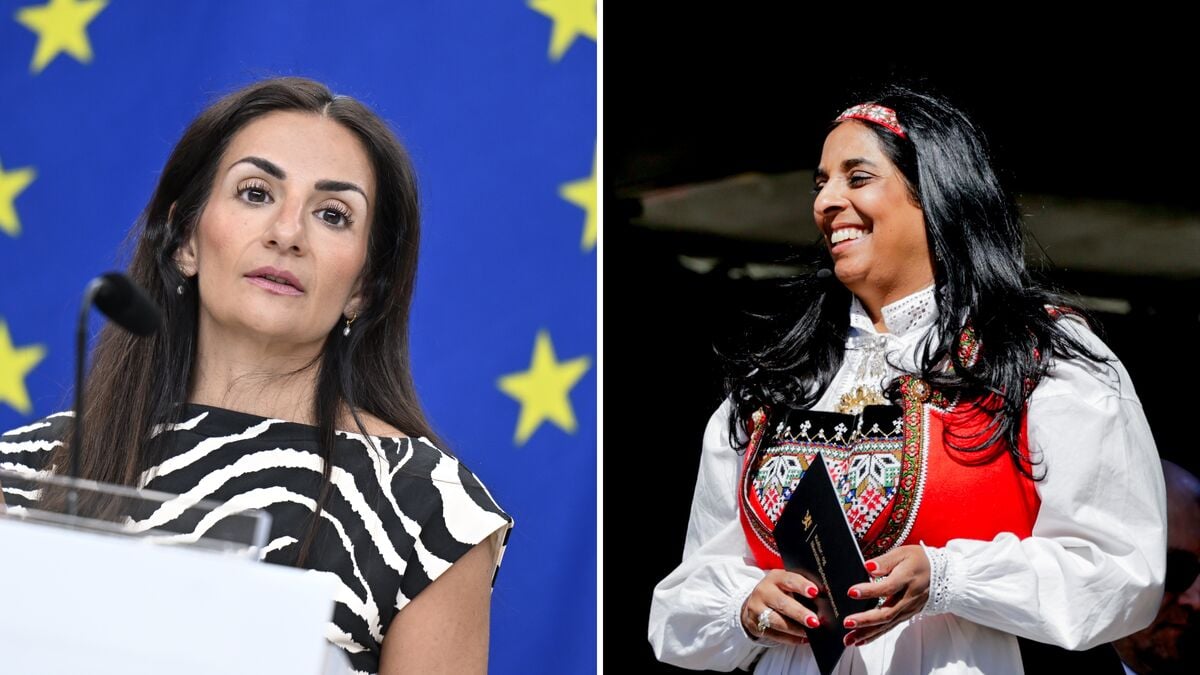
Minister of Culture Parisa Liljestrand has focused on increasing the level of private funding - here too, Sweden is the worst in the Nordic countries. Denmark is often highlighted as a pioneer, but the country also spends the second-highest proportion of public spending on culture in the Nordic countries, according to DIK.
If Sweden wants to continue to protect the core values that have characterised Nordic cultural policy - artistic freedom, cultural diversity and everyone's opportunities to participate in cultural life - the balance between public and private funding is important, Kulturanalys Norden points out in a report.
Ambitions are important
It is certainly impossible to prove, for example, that Jon Fosse received the Nobel Prize because of increased cultural budgets, Ola K Berge points out.
But one can imagine that without the good basic conditions, the industry would have had a harder time reaching out, as is the case in all other industries.
He emphasizes that it is also about political ambitions. In Norway, they have consciously invested in small languages and narrow literature, for example with fixed prices on books for a while.
So that small literary genres are not discriminated against in favour of bestsellers. This means that there is great diversity in bookstores.
Cultural funding has been eroded for a long time, but the development has accelerated in recent years, DIK states in its report "Sweden - worst in the Nordic countries in cultural funding".
In 2014, Sweden spent 1.2 percent of its public spending on culture. Ten years later, we had slipped to 1.0 percent, DIK shows in the report, which is based on statistics from the Swedish Financial Management Agency and Eurostat. This is below the average level in the EU (1.24 percent).
Eurostat's figures include all public funding of culture, state, regional and municipal. If you look only at the share of state spending that goes to culture, the figures are even lower: last autumn the government set a culture budget of SEK 9.6 billion, which corresponded to 0.62 percent of the state budget. It had then fallen from 0.65 percent in 2024.
Among the opposition parties, MP and V want to invest the most in culture, SEK 1.35 billion and SEK 957.7 million respectively more than the government. S added SEK 279 million in its shadow budget, investing SEK 100 million more in regional culture than the Tidö government.