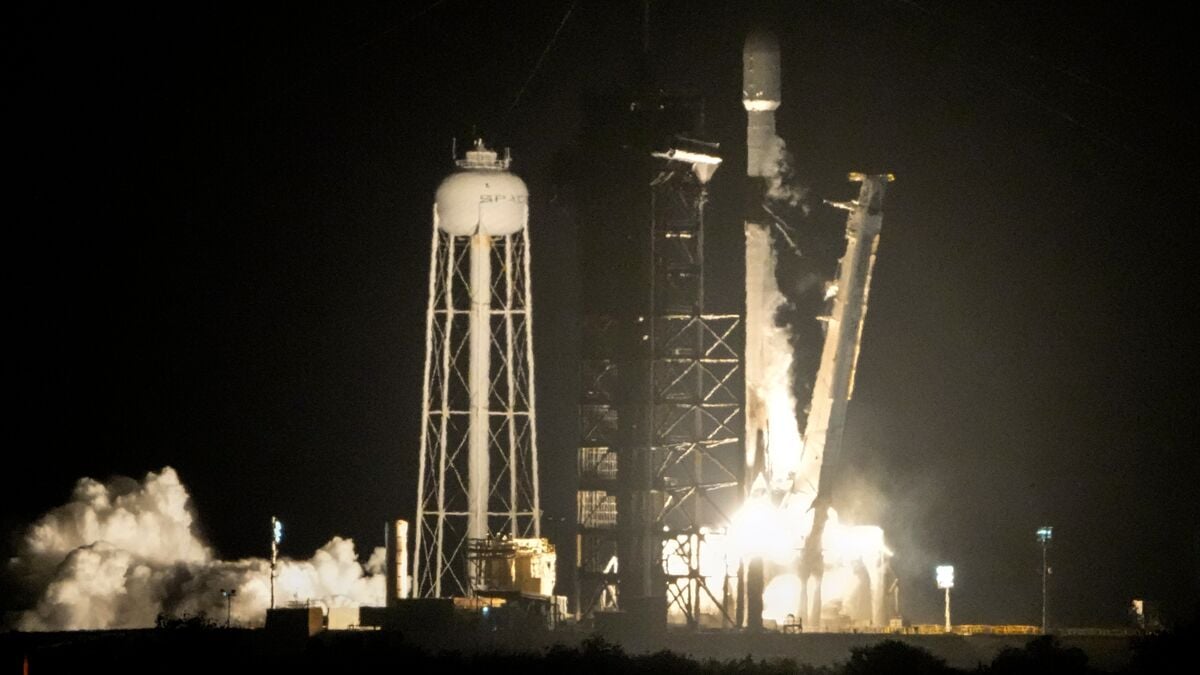
SpaceX Falcon 9 rockets have two stages, the lower and larger of which return to Earth after launch. But the smaller upper stage from a lunar lander launch last year ended up in the wrong place this time.
"It's great that you have the opportunity to follow up on a collision of an object where you know the mass. But to our knowledge, a direct impact with accompanying dust that has been thrown up has never been observed," says Eric Stempels, a space researcher at Uppsala University.
No explosion
Normally, such debris is sent on safe paths towards, for example, the sun, Julianna Scheiman explained at SpaceX the other day, US media reports. But this time, "a combination of solar activity and gravity" meant that the Falcon 9 rocket was instead pulled towards the moon.
But it is believed that there was no dramatic explosion.
It's just an object colliding with another object, and no fire phenomena occur, because there is no atmosphere – no oxygen that can burn.
However, the smoke cloud from the crash may be visible from Earth in the near future.
It (the collision) was very close to the edge of the moon, which means that if a dust cloud was thrown up, you have a very nice and dark background above the lunar surface that you hope to be able to observe, says Stempels.
Crater hunting
Due to the moon's low gravity, the smoke is expected to settle very slowly. Not much of the rocket is expected to remain.
There are a number of satellites orbiting the moon that will try to follow up and see if a crater has been created.
It is unclear when any images may appear. According to Stempels, the rocket stage measures 30 metres, and the moon is about 385,000 kilometres away.
"It's very possible that you haven't seen anything. Because these are very challenging circumstances," he says.