Reports have recently been pouring in about bombs at German airfields, fires in Estonia, attacks on merchant ships in the Black Sea and hacked freezers in France.
No one seems to know for sure whether or how the incidents are connected. They are nevertheless fueling concern about hybrid and cyberattacks across the EU.
The events are a key topic of conversation at this week’s summit in Brussels.
"Unfortunately, more and more countries have become targets. Russia is clearly stepping up these attacks," a senior EU source said ahead of the meeting.
“There will be victims”
Publicly, EU leaders have frequently repeated the same response: the events only reinforce their support for Ukraine.
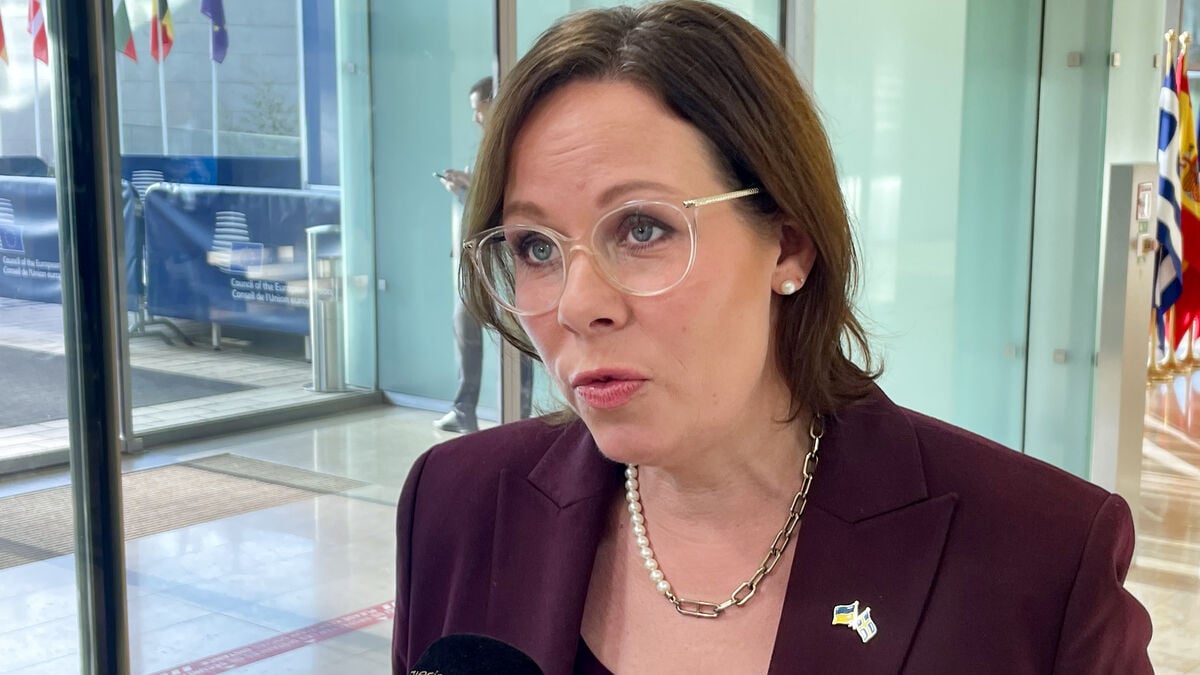
"It is quite clear that Russia is taking greater risks, that it is being more careless and that it wants to scare us into stopping our support for Ukraine. The answer must be very clear: we will not be intimidated," Foreign Minister Maria Malmer Stenergard (M) says.
Discussions are already underway about how to respond if something really serious happens, with dozens or even more civilian casualties.
"As Russia uses more and more lethal tools to test our preparedness and willingness to take countermeasures, there will be casualties at some point," Teija Tiilikainen of the European Centre of Excellence for Countering Hybrid Threats in Helsinki told Politico.
“Russia shouldn’t know”
Most EU countries are also members of NATO, which can invoke Article 5 to call on all members to help in the event of an attack.
The whole point of a hybrid attack, however, is that no one knows for sure who carried it out. Russia has steadfastly denied any involvement in the incidents it has been accused of orchestrating.
That also makes it more difficult to decide how to respond.
Maria Malmer Stenergard welcomes discussion of alternative ways to respond.
I think that should be discussed. Then you can also respond without saying exactly what you are doing, with so-called asymmetric responses. Russia should not know how we respond, but it should know that we are united, says the Foreign Minister.
Muscles tense?
British journalist and security expert Edward Lucas, for his part, thinks he sees signs that the Western world has already begun responding in a new way.
Recently, professionally produced but obviously false information about alleged mobilization decisions was spread in Russia - something Lucas interprets as a response to the fake news that has long been spread from the other direction.
"Could be an early sign that a NATO country’s intelligence service is flexing its muscles. . . Russia’s keyboard warriors have been doing this to us for decades. We need more operations like this and with a broader mix," Lucas writes for the EU Observer website.
Facts: Hybrid and cyberattacks in Europe
Here are some recent events that have raised concerns about hybrid and cyberwarfare in Europe:
Germany: Explosive-laden drones were found next to Ukrainian military aircraft in Leipzig in August. Germany blames Russia for the attack.
Estonia: An arson attack in August on a company manufacturing defense materials in Tallinn is being blamed on Russian sabotage.
Bulgaria: Several merchant ships were attacked earlier in October in the country’s exclusive economic zone in the Black Sea. The Russian ambassador was summoned in response.
France: Hundreds of refrigerated and freezer cabinets in French grocery stores were hacked earlier this week. No one has yet been formally named as responsible.