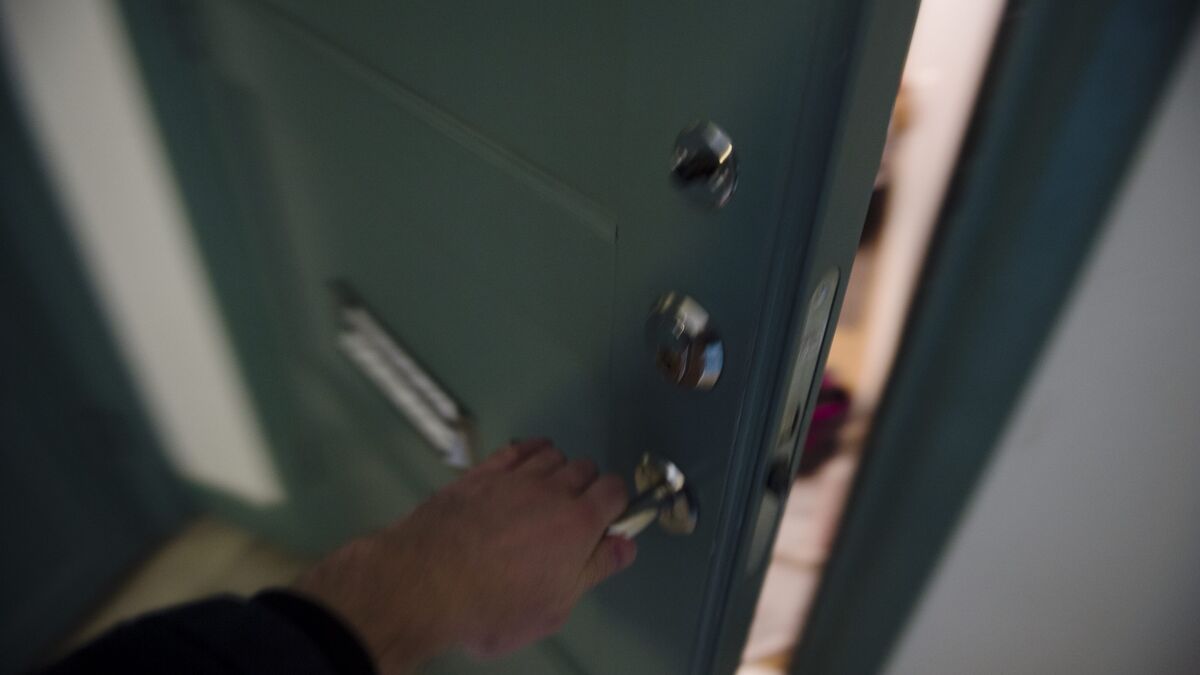
Lights suddenly turned on. Closed doors opened while the occupant was away. Objects moved. Someone used the toilet without flushing. The usual signs of a break-in are missing, and nothing has been stolen. The signs that someone has broken into the home are subtle - but they are there. They cause concern, confusion and distrust.
In Finland, up to 20 members of parliament have been affected over a period of as long as a year. MPs have been warned, security measures have been tightened, and Prime Minister Petteri Orpo says it is "very possible that a foreign power" could be behind it. According to Speaker of Parliament Jussi Halla-aho, the vague traces left by the intruders may be intended to be discovered.
“Coming to you”
The incidents in the Helsinki area are now being investigated by the police. The Security Police, Finland's equivalent of Säpo, has issued a general statement saying that these are common working methods in authoritarian states - but that it is not aware of them having been used against Finland or other European countries before.
For Jörgen Holmlund, a Swedish expert in security and psychological warfare, the methods sound familiar.
These various intrusions and deliberate traces are likely part of a conscious, systematic effort. It aims to send the signal that “we can reach you even in your home,” he says.
Your parents then also start to think, and if there are children, there will be an increased degree of worry - as a result, you may no longer want to work as a politician.
The aim is psychological influence, according to Holmlund. In the case of the Finnish MPs, for example, it could be about showing that some political decisions, such as support for Ukraine or increased sanctions, have consequences.
The message is “we don’t like what you do, we’re bothered by you”. They are working in a disinformation arena to influence - it’s not an active act of war, but it’s against elected officials in a very serious way. I think there is a great deal of understanding in Finland about who is behind it, how it works and what it aims to do.
Synchronized attack
Countries that engage in this type of psychological warfare and hybrid operations include Russia, China and Iran. Holmlund, who has a background at the Swedish National Defense University and in the police, sees parallels with methods used by the Soviet security service, the KGB. He believes it is likely that Russia is behind it.
Previously, it was the KGB that carried out these types of operations in other countries. In the case of Finland, I would guess that the Russian military intelligence service GRU did it. If they had hired a local criminal, there would have been a risk that he would have botched it. This is a fairly synchronized attack that requires coordination.
East Germany's security service, the Stasi, once carried out home invasions against students, opposition figures and cultural figures, but not in other countries, he points out.
Well-known “business cards”
Western diplomats and journalists who have worked in Russia have testified to individual incidents similar to those experienced by the Finnish MPs. Many of the traces left behind are well known to them.
I think it's a fairly common "Russian calling card" that someone has used the toilet and "forgot" to flush, says Holmlund.
John Sipher, a veteran of the US civilian intelligence service CIA, has told Helsingin Sanomat about harassment during his time serving in Moscow during the Cold War.
The supervisors often sent messages through intrusions into homes, Sipher said.
Pulled cord
The refrigerator might be unplugged, pets poisoned and feces left in the toilet, Sipher said, according to Finnish outlet Verkkouutiset.
In addition to home invasions, an assistant to Defense Minister Jussi Niinistö (2015–2019) has had his phone calls interrupted, hotel rooms turned upside down without anything going missing, and "guests" who sat at the restaurant table next to his for a long time without eating anything.
Facts: Finland-Russia relations
Finland has Europe's longest border with Russia, stretching more than 1,300 kilometers. Since Finland applied for NATO membership in May 2022, shortly after Russia's invasion of Ukraine, relations with its neighbor have been characterized by concerns about hybrid attacks.
Since then, several cable breaks have occurred in the Gulf of Finland, which many experts believe are part of Russian hybrid warfare.
A number of migrants have also appeared at Finland's eastern border. They are believed to have been actively smuggled there from Russia.
GPS interference affecting Finnish flights has also increased since 2022. Russia is suspected of being behind this, as reported by Yle, among others.