Recently, the surface temperature in a measuring region in the Pacific Ocean reached 3.07 degrees above normal. Scientists use this region as a yardstick to measure how strong El Niño will be. The temperature is on par with the strongest variant of El Niño to date, which occurred in 2015, writes the climate website Carbon Brief in a recent analysis.
The difference is that it occurred already in September - the phenomenon usually reaches its climax at Christmas.
There is much evidence that it will continue to get warmer, says Gustav Strandberg at SMHI.
The winds are turning
El Niño is a phenomenon in which the winds across the Pacific Ocean stop or shift eastward, causing warm surface water to spread towards the western part of South America. It is a naturally occurring phenomenon that affects the weather in a large area around the Pacific Ocean. In some places it becomes hot and dry, in other places it becomes very wet.
Strandberg sees the fact that this year's El Niño is already so strong as a sign that climate change is fueling the phenomenon.
As it gets warmer, the probability of having very high temperatures in this particular area will also increase. And that's why we get these very strong El Niño temperatures.
Uncertain future
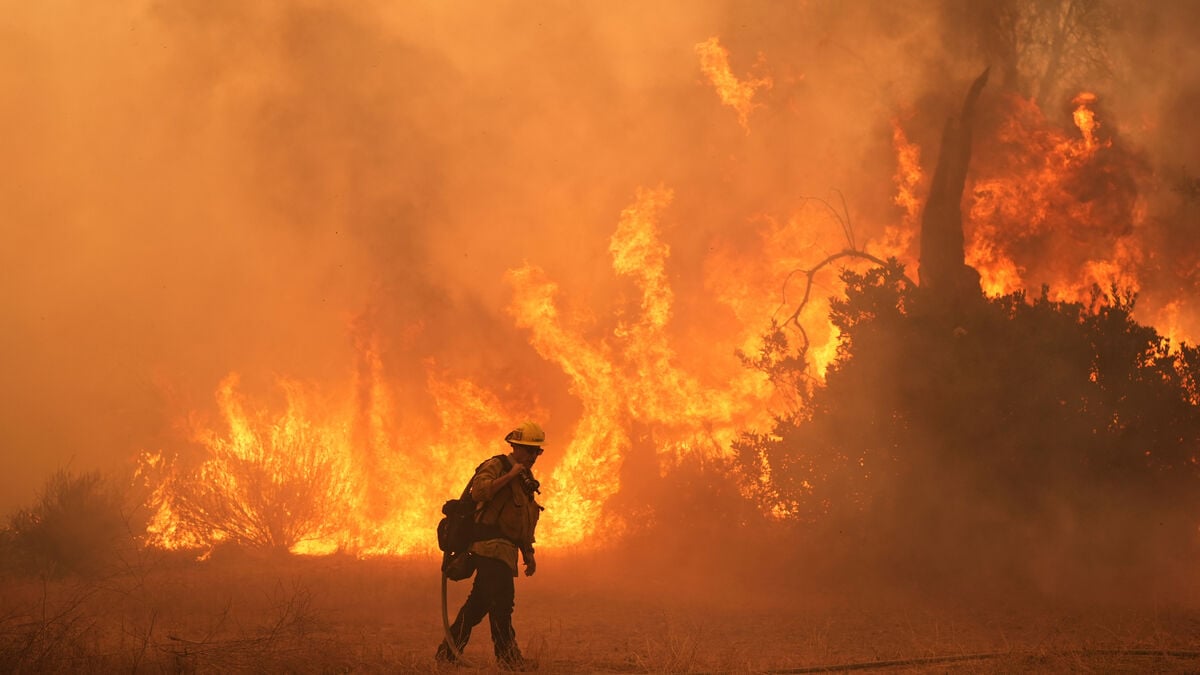
El Niño is likely to push global average temperatures to new record levels, as the phenomenon is so extensive that it usually raises the annual average. There is also a risk that the strong El Niño will worsen extreme weather and hit marine ecosystems hard, for example leading to coral death.
But we don't know that yet, because the connections between the ocean, atmosphere, wind and precipitation are so complex.
Climate change is taking us into a new and unknown world, says Gustav Strandberg.
Facts: El Niño
El Niño and La Niña are phases of the El Niño-Southern Oscillation (ENSO) weather cycle. El Niño warms the surface waters of the eastern Pacific Ocean, while La Niña cools them.
El Niño occurs on average every two to seven years and usually lasts nine to twelve months. It often peaks around Christmas, hence the name El Niño (the boy child - meaning Jesus).
El Niño effects such as increased rainfall typically affect parts of southern South America, the southern United States, the Horn of Africa, and Central Asia, while severe drought can occur over Australia, Indonesia, and parts of southern Asia.
Sources: WMO, SMHI, NOAA