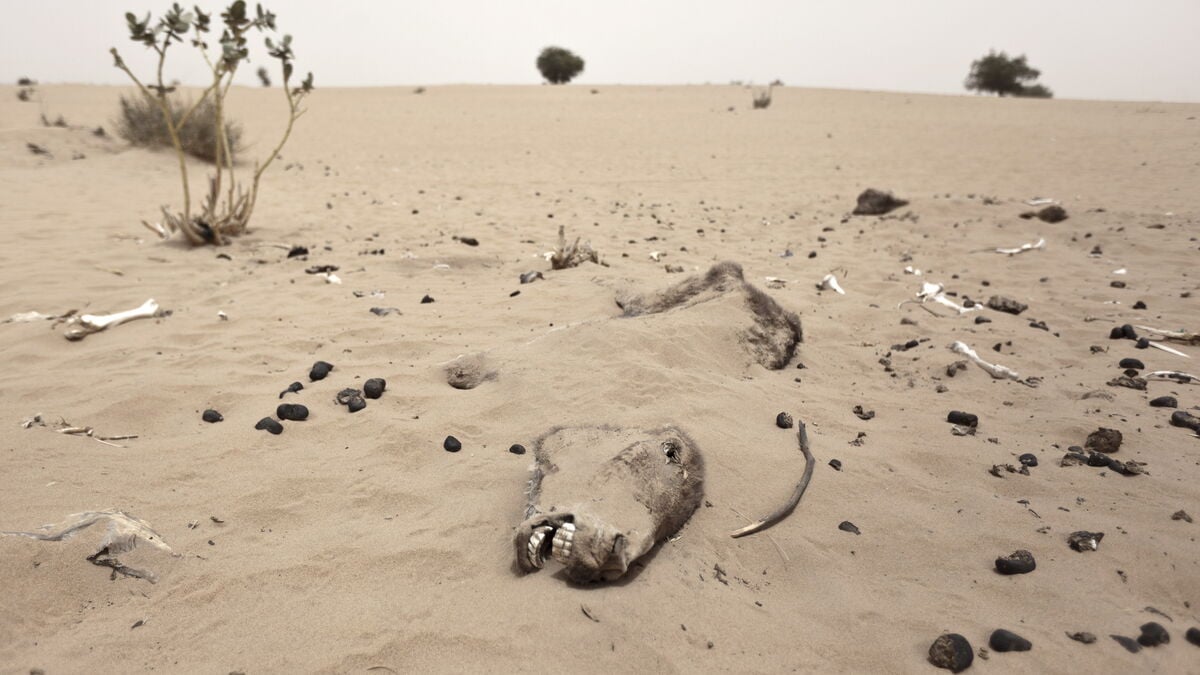
Researchers at Stockholm University have studied the underlying climate processes behind the most severe periods of drought in the eastern Mediterranean region in ancient times. The drought led to the collapse of Bronze Age cultures such as the Mycenaean, Minoan and Hittite empires.
Using climate models, the researchers have recreated the climate in the Mediterranean region 8,000 years ago.
Vulnerable region
Our results give us an idea of how vulnerable the Mediterranean region is to drought, and how drought can put communities in a situation where they have difficulty surviving, says Katherine Power, a doctoral student in the Department of Physical Geography at Stockholm University and the study's lead author.
In the study, the researchers concluded that the region gradually became drier over several thousand years, partly due to gradual changes in the Earth's orbit, which affected precipitation and how humid the region became.
For example, the African monsoon, which used to bring a lot of rain to Africa and to some extent also to the Mediterranean region, weakened.
Catastrophic water shortage
The slow, gradual drying of the region was also due to natural climate cycles coinciding and reinforcing each other, leading to the catastrophic water shortages in the eastern Mediterranean region during the Late Bronze Age.
Could this happen again?
Yes, but based on other mechanisms. Trying to say when it might happen or comparing timescales is very difficult, however, because human-driven changes are happening much faster now, says Katherine Power.
The slow drying that occurred over 3,000 years ago has stopped. According to Power, the faster drying today is driven by human-caused climate change.
Natural climate variation that drives short-term droughts can still occur, she says.
The study has been published in the journal Science Advances.