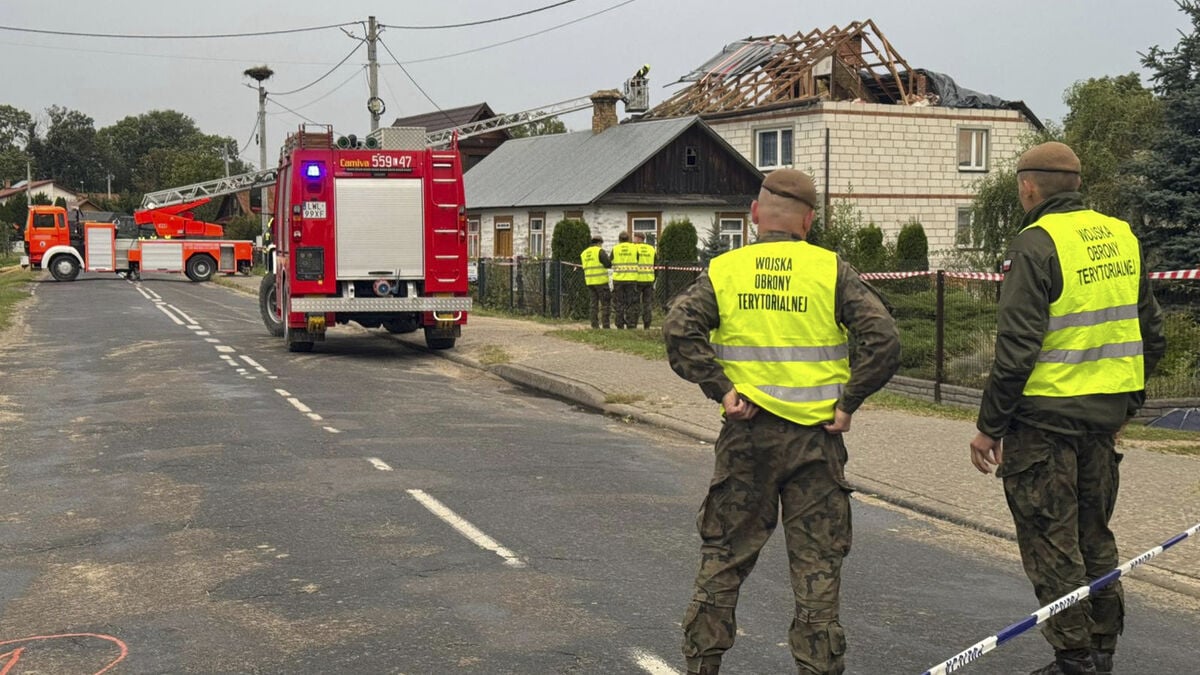
Drones are shot down in Baltic airspace and crash on the Polish border. Arson attacks and sabotage occur in several countries. The Baltic states and Poland raise the alarm about an escalated hybrid war by a more risk-averse Russia.
How and when will NATO strike back?
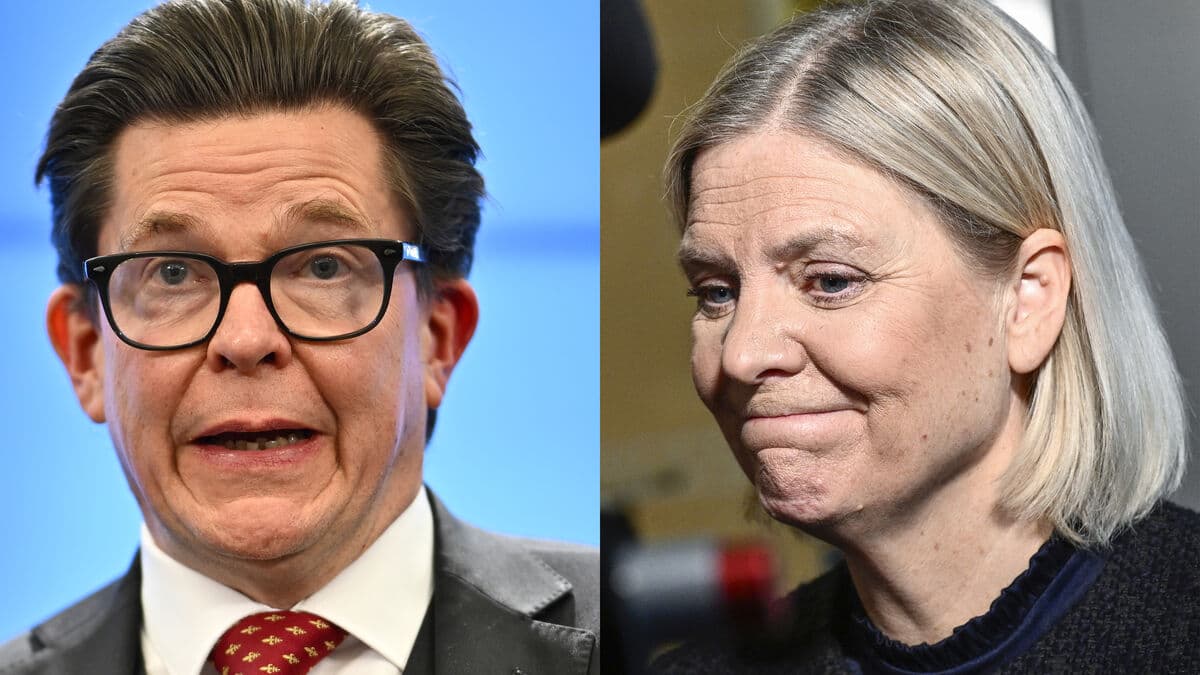
NATO can reduce the risk of escalation by making it absolutely clear where the red line is, says Aleksandr Golts, a Russian analyst at the Stockholm International Peace Research Institute.
Deterrence in the classical sense only works when the other side knows with certainty that you will respond and how. So far, it has not been clear, not to me and not to those making plans on the Russian side.
Small toolbox
Some media and analysts speculate on how Russia would proceed in the event of an attack on the Baltics. But an open military attack on Estonia, Latvia, Lithuania or Poland is currently very unlikely or even impossible, according to experts TT spoke to.
For obvious reasons: If Russia were to consider something like that, it would still have to reckon with the risk of a major war, even if it is not an absolute certainty. They cannot be sure whether NATO will activate Article Five or not, says Golts.
You may not believe it, but Russia has a fairly limited military toolbox, especially when it comes to ground combat. A lot of it is currently tied up in Ukraine, says Maria Engqvist, an analyst at the Swedish National Defence Research Institute.
There is a risk that loud warnings from NATO's eastern flank will be exaggerated, she believes. This is also the opinion of one of Estonia's intelligence chiefs, who recently criticized suggestions that it sometimes sounds as if the Russians "could just walk over the bridge to Narva and take over."
Profiting from worry
If there were to be an attack, the idea is that forces - including Swedish soldiers in Latvia - would meet the enemy at the border.
Does Russia want us to feel that a war is closer than it is?
Yes, it could absolutely be part of it, creating a sense of hysteria and anxiety in societies. It is almost only Russia that has to gain from whipping up such an atmosphere, says Engqvist, who emphasizes that drones are being shot down and that governments are responding increasingly harshly.
However, there is a crack in NATO's united front, believes Aleksandr Golts. Will the US intervene if something happens?
It's really not clear. Maybe it's at NATO headquarters in Brussels? But the question is whether those in power in Russia are convinced of that, he says.
Correction: In an earlier version of the text, information was missing in a caption stating that the image was taken in 2025.
Following Russia's annexation of the Crimean Peninsula in 2014, the NATO military alliance decided to deploy troops more forward in the east. The forces there have been further strengthened following the large-scale war of invasion in Ukraine.
The deployment in a total of eight countries is called Enhanced forward presence (EFP). In the north, forces from several different member states have been deployed in Estonia, Latvia, Lithuania and Poland. Sweden is contributing around 600 soldiers who rotate into a brigade in Latvia.
The original idea was that the forces would act as a deterrent, drawing more countries into the conflict immediately if an attack were to occur. Initially, it was intended that smaller forces would provide an initial defense, with reinforcements arriving later to recapture occupied territory.
After the large-scale Russian invasion of Ukraine, the strategy has been tightened. Today, it states that “every inch” of allied territory must be defended, so that an attacker will be met at the border.