This week, the UN's environmental agency, Unep, released a report that once and for all concluded that the 1.5-degree target agreed upon by the world's countries in the Paris Agreement in 2015 will be exceeded. The global temperature increase will be higher than that compared to pre-industrial times, mainly as a result of human emissions of greenhouse gases.
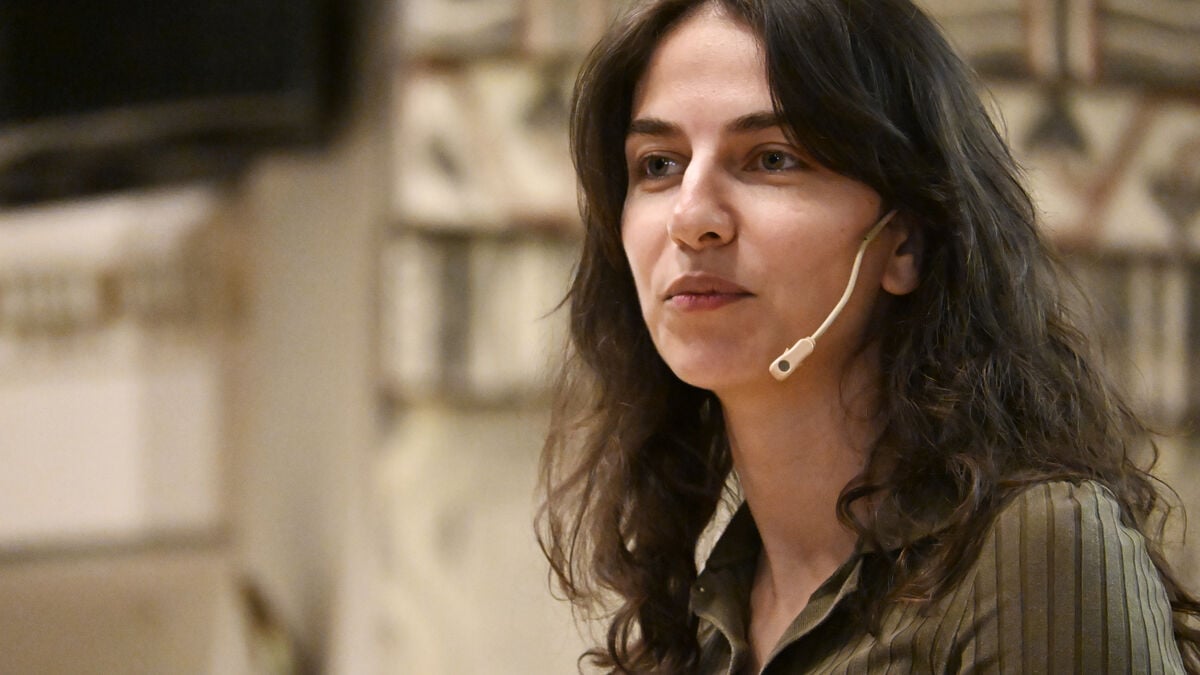
Things are still going in the right direction but not fast enough, says Romina Pourmokhtari, who hopes that the announcement will lead to "a more sensible discussion that is not based on fear but on the hope of switching away from fossil fuels."
“The elephant in the room”
Passing 1.5 degrees - probably before 2030 - will not come as a bolt from the blue.
"It's been a bit of an elephant in the room. At the same time, you can still press for Europe to try to deliver its part of the Paris Agreement," she says.
She notes that several major emitters have continued to expand their fossil fuel use in recent years, something she describes as devastating. Now it will be important to get China, the US, India and others on board.
And the growing economies must make sure to do the right thing from the start, and for that, they must have backing, support and financing, including from richer countries that started with fossil fuels and later switched to cleaner energy.
Uncertain about new goal
The question is whether one should strive for a new numerical target, or focus on as small an increase as possible and then try to bring the increase down to 1.5 again. Romina Pourmokhtari says that the issue has previously been discussed between EU climate ministers ahead of the UN climate summits.
I'm guessing this is a topic that will come up in connection with that.
The goal of the Paris Agreement is to limit global warming to well below 2 degrees, preferably 1.5 degrees, compared to pre-industrial times.
The goal is set to mitigate the most devastating effects of climate change, which get worse for every tenth of a degree the Earth warms.
At 1.5 degrees Celsius, more intense storms and heat waves and an increased risk of mass coral die-offs await. At 2 degrees Celsius, a larger proportion of the population is exposed to deadly extreme weather, and the likelihood of irreversible climate tipping points increases.
1.5 degrees is now described by the UN as impossible to stay below, and many scientists believe that the planet is on its way to 2.5 degrees of warming.