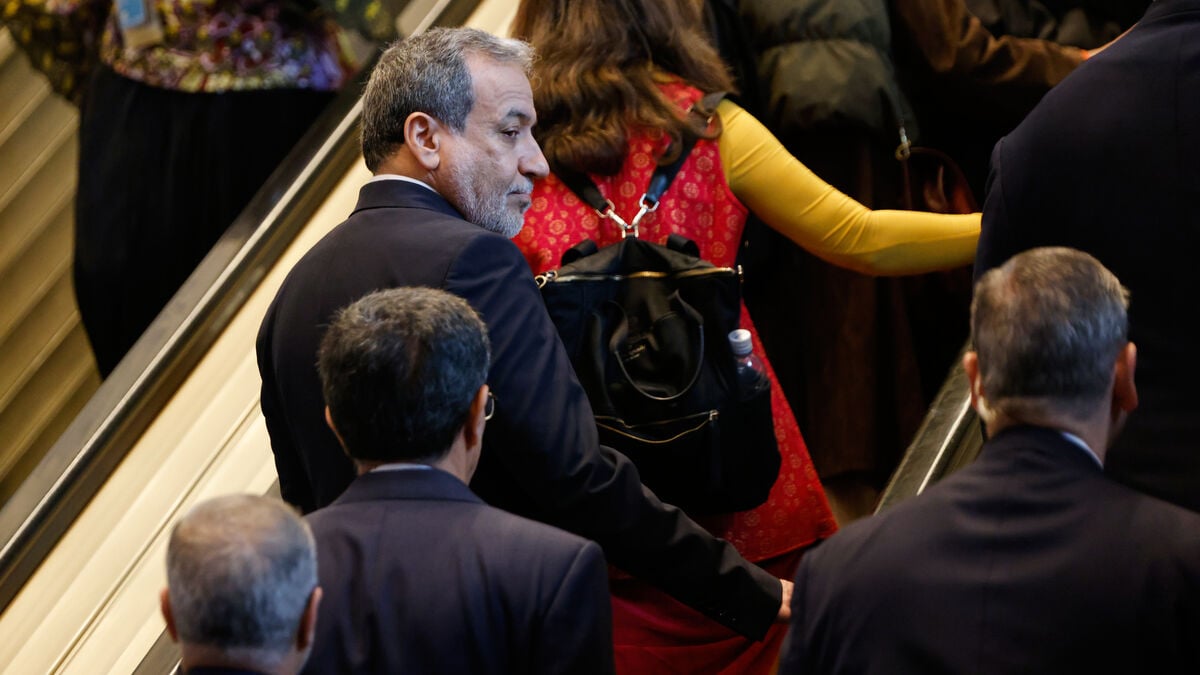
If certain conditions are met, the strait will be open within seven days and talks can begin, Iranian Foreign Minister Abbas Araghchi told media in the United States, where he is attending the UN General Assembly.
Araghchi met with US presidential envoys Steve Witkoff and Jared Kushner in New York on Tuesday, but there has been no word on what was said at that meeting.
The Japanese news agency Kyodo then reported that a formal Iranian proposal had been submitted to the Americans, but this was initially denied by state media in Iran.
Want assets now
Iran has previously demanded major concessions from the United States, which started the war together with Israel at the beginning of the year.
Abbas Araghchi told The New York Times and several other media outlets that they are proposing a one-week pause in fighting in the Middle East, including in Lebanon. They want the US to release frozen Iranian assets worth nearly $12 billion. The US should also lift the naval blockade and all sanctions on Iranian oil.
If this happens within a week, Iran will allow traffic through the Strait of Hormuz again, according to the proposal.
A spokesman for Iran's powerful Revolutionary Guard tells AFP that Yemen should also be included in a ceasefire.
The US and Iran signed a declaration of intent to negotiate towards peace in early summer. The plan was for the parties to meet various conditions in parallel and in stages, but the details and timetable left some room for interpretation. The agreement collapsed early.
Threat of annihilation
The war is a great success, claimed US President Donald Trump at the rostrum before the UN General Assembly earlier this week. There he urged Iran to meet him with threats of otherwise “destroying the Islamic Republic and doing it quickly.”
Iranian President Masoud Pezeshkian has also participated in the ongoing UN week, where talks between the countries have taken place behind the scenes.
It is the United States that must decide whether they want to end this or not, he says in an interview with Fox News.
Iran's main counter-move in the war has been to hold a large part of global oil exports hostage, by using military threats to prevent tankers from leaving the Persian Gulf. In recent weeks, the Iran-allied Houthi movement in Yemen has secured a grip on the Bab al-Mandab Strait in the Red Sea - and with it another of the world's most important shipping lanes.
Facts: Peace plan agreed
The US and Iran agreed in early June to a ceasefire and a 60-day deadline during which they would negotiate a peace solution. The declaration of intent consisted of 14 points.
In the first stage, both countries and their allies would cease all hostilities. The wording of this also included Lebanon, about which there was initially some disagreement.
The US would lift its naval blockade of Iran and ensure that Iranian crude oil exports could resume. Frozen Iranian assets would begin to be made available.
Iran would allow commercial traffic through the Strait of Hormuz for 60 days. The country reiterated a promise never to acquire nuclear weapons. Continued negotiations on Iran's nuclear material were linked to sanctions relief.
The statement of intent also looked toward a possible peace agreement. In one such agreement, it was said that the United States would lift all sanctions and move military forces away from Iran's vicinity. In addition, the United States and partners in the region would develop a plan for Iran to receive the equivalent of just over SEK 2,800 billion for "reconstruction and economic development" in the event of an agreement.