On Friday morning, EU member states agreed on the part of the so-called network package that, among other things, concerns bottleneck charges.
"This is crucial legislation on the way towards a true energy union," says Energy Commissioner Dan Jørgensen, expressing satisfaction after the agreement at a ministerial meeting in Luxembourg.
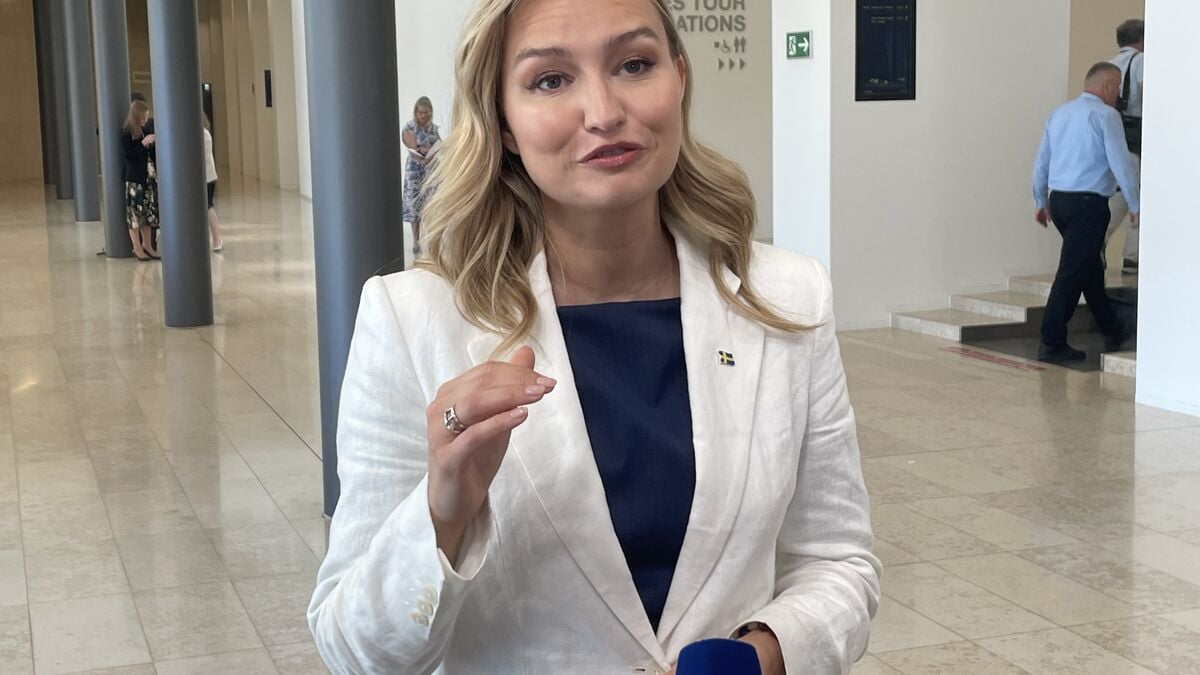
Ebba Busch is also satisfied, despite this spring's high-profile dispute and criticism of the proposal.
"Yes, you can say that. It is almost an unthinkable move that we have managed to achieve. None of the money that has been generated so far from Swedes' electricity bills... will be used for anything other than in Sweden," says Busch.
Opening up to nuclear power?
The agreement means, among other things, that so-called bottleneck fees that arise internally in a country will also be used within that country. If they arise between two countries, they can only be used for projects that benefit the two countries - and only to a certain extent, up to 25 percent.
For Sweden and Busch, it has also been central to be able to decide, as far as possible, what the money should be used for - and that it should not necessarily only be about expanding the electricity grid. Busch now believes that this has been promised.
"We have received submissions that once we have achieved what the Electricity Market Directive stipulates - that the money should be used primarily for grid expansion - we should be able to use the money more flexibly for things that increase use of the grid, that is, expanding more baseload power," says Busch.
Although nuclear support is not specifically mentioned, she sees it as a possibility.
"There could be many different measures - nuclear power could be one of them. But it's up to us to make that interpretation," says Busch.
End of break?
The agreement also allows Sweden to resume investment in new electricity cables to Denmark, which was paused due to the dispute with the EU Commission.
Not yet though.
"We want to see that the Commission's promises are really being fully implemented in reality. We are in no hurry," says Busch in Luxembourg.
Friday's agreement also does not mean that the entire bottleneck proposal is complete. In the future, compromise negotiations with the European Parliament will be held before the entire network package is complete.
Bottleneck revenues arise when there is not enough transmission capacity for electricity between different electricity areas.
The bottleneck revenue consists of the price difference between the areas and goes to the party that transports the electricity between the areas, that is, Svenska kraftnät.
The largest price differences are usually found between electricity area 2, southern Norrland, and area 3, Svealand.
The idea is that state-owned Svenska kraftnät will use the bottleneck revenues to improve the national grid and thereby increase transmission capacity. But so far, more money has flowed in than Svenska kraftnät has had time to spend.