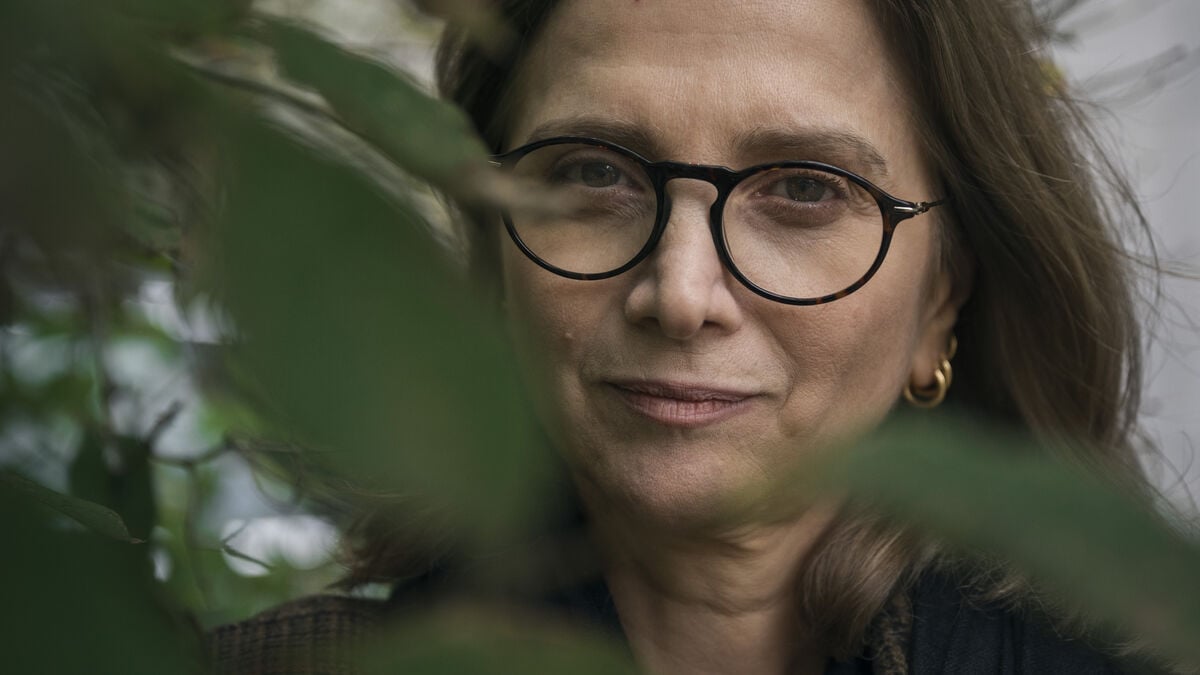
After writing reportage books about war-torn Syria, Samar Yazbek planned to focus on fiction. She came to Doha, Qatar, with her daughter, who needed care after a serious horse-riding accident. But Doha was also home to seriously ill and injured Palestinians from Gaza who had been taken in by Qatar. At first, Yazbek wanted to help them as a volunteer.
I don't feel good writing books like these. I can't sleep, but it's through words that I resist. That's why I don't lose hope.
But meeting the injured people from Gaza was a surreal experience, she says.
They were amputees, sitting in wheelchairs, and when I saw all this - their kindness, their smiles when I said good morning - they had nothing, but they had a human heart.
Private lives
“Get out, or you'll die” is the title of her book in Swedish translation. “Don't talk politics, tell us about your private lives,” Yazbek insisted. The book recounts 27 testimonies about what words can barely express, she says.
Worms crawl into wounds, and domestic animals feast on corpses. “Stories of a Genocide” is the Swedish subtitle.
When I started interviewing these people, I thought maybe it's not a genocide, maybe it will stop, but no. It hurts a lot to say it's a genocide, because I know that over time one genocide leads to another.
However, the Arabic edition does not have “genocide” in the title.
I try to avoid violence and titles that act as spotlights. I like literary titles even when I write documentary.
How well do her chosen witnesses represent what happened in Gaza?
They are ordinary people, civilians. I chose their stories because I saw their faces, I touched their pain. Out of 500 people, I chose 27. They are not from Hamas, not from Al-Fatah. What happened between Netanyahu and Hamas was not their fault; they were innocent.
Pressed button
Samar Yazbek has written about brutal violence in war before, but this was different.
Artificial intelligence had been used to kill; you sat in an office and pressed a button.
The witnesses also told of “quadcopters,” a type of drone that the Israeli army uses to shoot people remotely.
Their way of killing people is very advanced, and it scared me. It's not just about Gaza, it's about all of humanity.
Born: 1970 in the Syrian coastal town of Jableh, incidentally the same town where the poet Adonis was born.
Lives: “Good question. I fly between France, Lebanon and Qatar.” She was forced into exile under Bashar al-Assad and has no intention of returning under the current regime.
"Not after the great massacre of the Alawites. I don't believe in the new regime; they are jihadists. For the sake of women, I am against them. They are destroying our society."
Occupation: She primarily sees herself as a novelist, but has written several reportage books.
Books in Swedish: "A dark streak of light" (2013), "Travel into the void" (2015), "She who walks" (2017), "Nineteen women. Stories of Syrian resistance" (2019), "Get out or you'll die" (2026).