What is and is not allowed in an electoral context is not as clear as one might think.
It is easy to say what is prohibited and what is permitted. But there are a number of cases in between that are much more difficult to decide, says Joakim Nergelius, who, among other things, researches constitutional law at Örebro University.
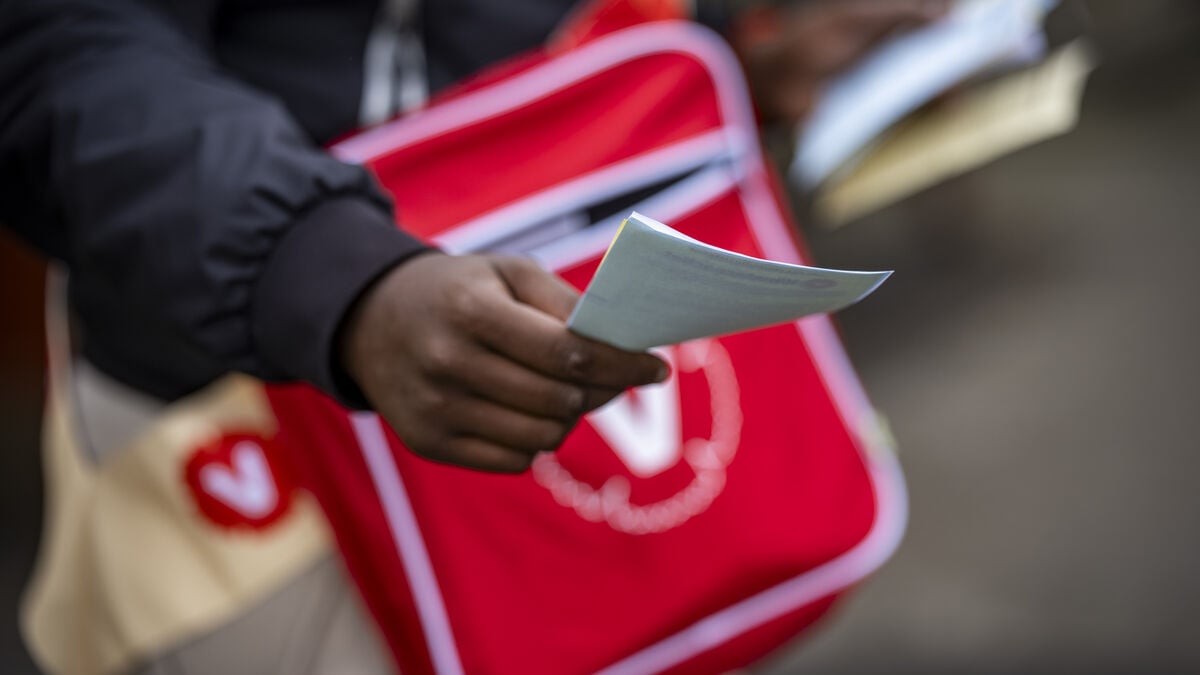
The issue of marked ballots is one such difficult example. Recent developments surrounding suspected election fraud involving V ballots in Borlänge have shown this.
My starting point was that, no, it's not allowed. But then quite a few people have contacted me with examples of accepting marked ballots, where county administrative boards and other authorities have accepted it.
Critical
In the current cases, a distinction should have been made between ballots that were marked by hand and those that were marked by machine, Nergelius explains.
He is himself critical of accepting pre-marked ballots.
The idea is that it is the voter who should decide whether they prefer a certain candidate or not, and that definitely violates how elections are supposed to be conducted. Whether you can classify it as a crime seems to depend a bit on the circumstances.
The reason for the ambiguities is that the laws have not had to be tested that often. There simply aren't that many previous cases, explains Joakim Nergelius.
Elections have generally been conducted fairly honestly and well for a long time, and there is quite a high level of confidence in the system.
“Not trivial”
Paying a voter, however, is clearly election fraud, he explains. However, driving voters to polling stations is not a problem in a legal sense.
Then you have other extreme things that are not relevant now. Like forcing someone to vote a certain way by using violence, that is also of course prohibited.
Election fraud of the kind being investigated in Dalarna carries a maximum sentence of six months in prison. But Joakim Nergelius emphasizes that this is a serious type of crime.
I mean, it's not completely trivial, even if it's a fairly low maximum sentence. Especially not if we're going to protect the democratic process.