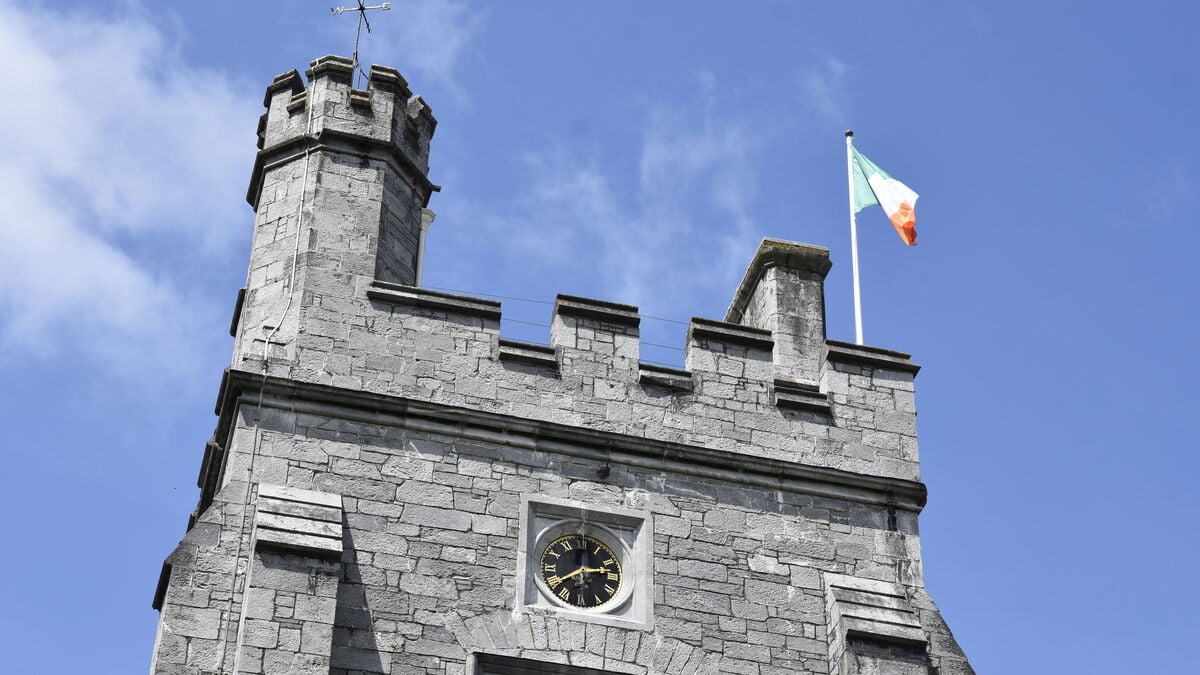
Ireland's sitting Taoiseach - the Irish word for prime minister - receives resident EU correspondents in the library of his old university in his hometown of Cork on the south coast of Ireland.
Here he is preparing for six months at the centre of EU politics, with Ireland holding the presidency of the EU Council of Ministers.
This is happening at a time when the EU, for the first time in many years, is getting ready to expand again.
“Clear signs”
Montenegro hopes to complete all its negotiations this fall with the clear goal of becoming member state number 28 in 2028. Albania is not far behind, and in August Iceland will hold a referendum on whether to resume negotiations that have been on hold since 2013.
In addition, Ukraine and Moldova have finally been allowed to begin their formal membership negotiations.
Ireland now aims to take it further by opening all so-called negotiation clusters with the countries already this autumn.
For Ireland, it is not least about highlighting that it is indeed possible to join the EU - even though it has been 13 years since anyone was last allowed in.
We want to give clear signals. Has this country done its homework? Then it should also be allowed to join, says Martin.
Budget fight
Another major task is to reach agreement on the EU's next long-term budget for 2028-34. The goal is to find a deal before the end of the year - something that will be quite difficult given the multi-billion euro gaps between countries that require a significantly larger - or smaller - common budget.
Finance Minister Simon Harris promises to work towards a "strong, but balanced" budget.
It is in our country's DNA to build bridges and try to find compromises, Harris says at a press conference in Dublin.
Changing of the guard at the top
Harris is the party leader of the conservative Fine Gael, while Prime Minister Martin leads the right-wing liberal Fianna Fail.
The two parties have always been arch-rivals, but in recent years have created a unique coalition where the post of prime minister alternates between the leaders. Martin is currently in power, but will switch places with Harris in 2027 - just as happened during the previous term 2020-25.
During the presidency, it is Martin who is the main focus - not least for the work of putting together the new EU budget.
"It will be tough. Difficult decisions and difficult compromises will be required from all member states," says the Irish Prime Minister in Cork.
The EU Presidency's main task is to lead the Council of Ministers meetings and ongoing negotiations with the European Parliament and the European Commission. However, all regular summits are held in Brussels under the leadership of the Council's permanent President, currently former Portuguese Prime Minister António Costa.
The presidency rotates between all member states for six months at a time. Here are the next five leaders:
Autumn 2026: Ireland
Spring 2027: Lithuania
Autumn 2027: Greece
Spring 2028: Italy
Autumn 2029: Latvia
Sweden held the presidency until the spring of 2023.