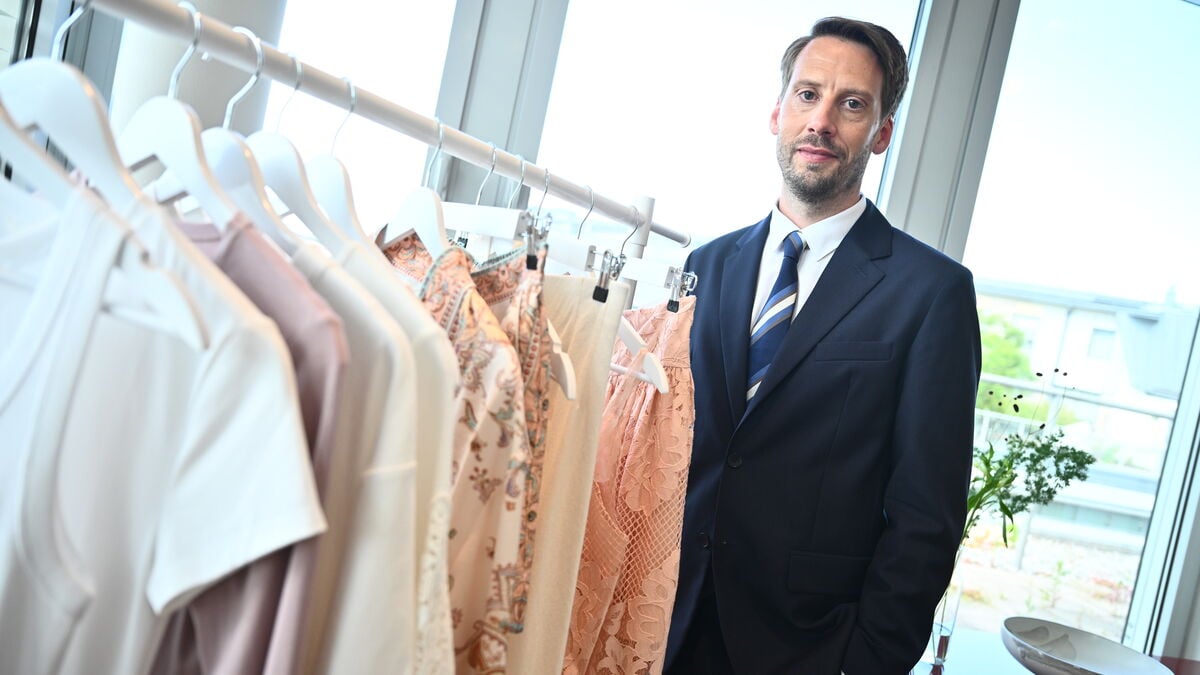
Ever since Daniel Ervér took over as CEO of the global clothing giant in January 2024, one of the main goals has been to increase the company's sales.
So far, this has involved, among other things, renovating existing stores and making them more attractive to customers. However, the latest quarterly figures once again show only a marginal change.
For the summer period June 1-August 31, sales amounted to SEK 57.2 billion, in line with market forecasts but up by "only" 1 percent.
We had a negative sales trend in Q1 and Q2. We are growing in Q3, which is a step in the right direction, but I would have liked to see a bigger step, CEO Daniel Ervér tells TT.
Outcompeted by Inditex
In comparison, Spanish competitor Inditex, with the Zara chain, recently reported sales figures. For its part, sales increased by 9 percent in August, while H&M, in its September forecast, is sticking to a weak increase of 1 percent compared with the previous year.
"We see further potential to accelerate and increase the pace. Then we are big in some markets that have had very tough external conditions," says Ervér, mentioning Germany and England, among others.
We have had a tough consumer climate there.
While sales are increasing in the Nordic region, there is a significantly weaker trend in Western and Southern Europe. According to Ervér, the explanation is not that H&M's products are not being sold to customers, but rather a consequence of logistics challenges.
We are working to improve our logistics network and this means we are also closing a number of warehouses. This has meant that we have not been able to stock our stores as well as we would have liked.
A challenge
Another challenge for the company is the situation in the Middle East and the war in Iran. Shipping costs have risen significantly, as have raw material prices, which are affecting products such as cotton and recycled polyester.
"Looking into the fourth quarter, that picture continues, plus we see an increase in material costs. We only work with recycled polyester, but as polyester that comes directly from oil-based sources increases, the price of recycled polyester also increases," says Ervér.