Bjorn Wiechel (S):
I personally want to avoid giving vent to snarky opinions that damage cohesion and create distrust between people, but as long as people's opinions stay within the bounds of the law, I think it might be better for them to be aired than for us to pretend they don't exist.
Alexander Christiansson (SD):
That we should return to extreme mass migration while returning to a flat legal policy. Or that as a person you should be able to choose how to identify yourself based on a subjective feeling.
Kristina Axén Olin (M):
Even deeply controversial opinions should be protected by freedom of expression in a democracy, as long as they do not call for violence, constitute slander or incite against a group of people. An example of such an opinion could be if we have a deadly pandemic and a working vaccine is produced and at the same time an anti-vaccination campaign is conducted. Dangerous to society but would still be protected on grounds of freedom of expression.
Vasiliki Tsouplaki (V):
It is very harmful with all the statements that are spread that people who are sick, unemployed or dependent on social support are lazy and cheat. It has laid the foundation for cuts in social security systems, increased stress and ill health for people who are having a very hard time. It makes it harder for people to get back to work, increases inequality and in the long run, growing poverty leads to increased risks of more crime and ultimately a more unsafe society for everyone.
But of course, freedom of expression should also apply to lies, exaggerations and fantasies.
Catarina Deremar (C):
Criticizing a religion, which is so private and means so much to many people, can under certain circumstances be harmful to society in the direct event. For example, we have seen riots in connection with the Koran burnings, but one must still be able to criticize religions as well as other power structures in society in different ways, within the framework of the legislation we have today. Freedom of expression is fundamental to our democracy.
Roland Utbult (KD):
Immigrants are worth less than “ordinary” Swedes.
Mats Berglund (MP):
– Difficult! Freedom of expression is extremely important to protect, especially in times like now when democracy is seriously and acutely threatened both globally, in Europe and also in Sweden.
Climate deniers, anti-vaxxers and similar people and groups must be allowed to express their opinion even if it is harmful to society. A good example in culture is also that a cultural worker should be allowed to express himself positively about Russia. Freedom of expression is not tested when it protects popular opinions, but when it protects opinions that many people dislike.
Malin Danielsson (L):
I believe pitting groups against each other or singling out a minority as the root of all evil can be harmful to society in the long run. But restrictions on freedom of expression are the wrong way to go. It is in the open debate that the discussion should take place, where culture can be crucial in how we approach the conversation.
I think, for example, about the significance of the photo exhibition of beaten children that preceded the ban on child abuse or what Elisabeth Ohlson Wallin's "Ecce Homo" did for the view of homosexuals.
In previous articles, questions have been asked by Howlin' Pelle Almqvist, singer in The Hives, Ingrid Carlberg, permanent secretary of the Swedish Academy, Klara Kristalova, artist with an exhibition at the Venice Biennale, and artist Toussaint Chiza, formerly known as "Tusse", who won Melodifestivalen 2021.
Ahead of the elections this fall, TT lets a number of culture and entertainment profiles ask their most burning questions to cultural politicians – and get answers.
Those who respond sit on the Riksdag's Culture Committee and are their party's spokesperson on cultural issues.
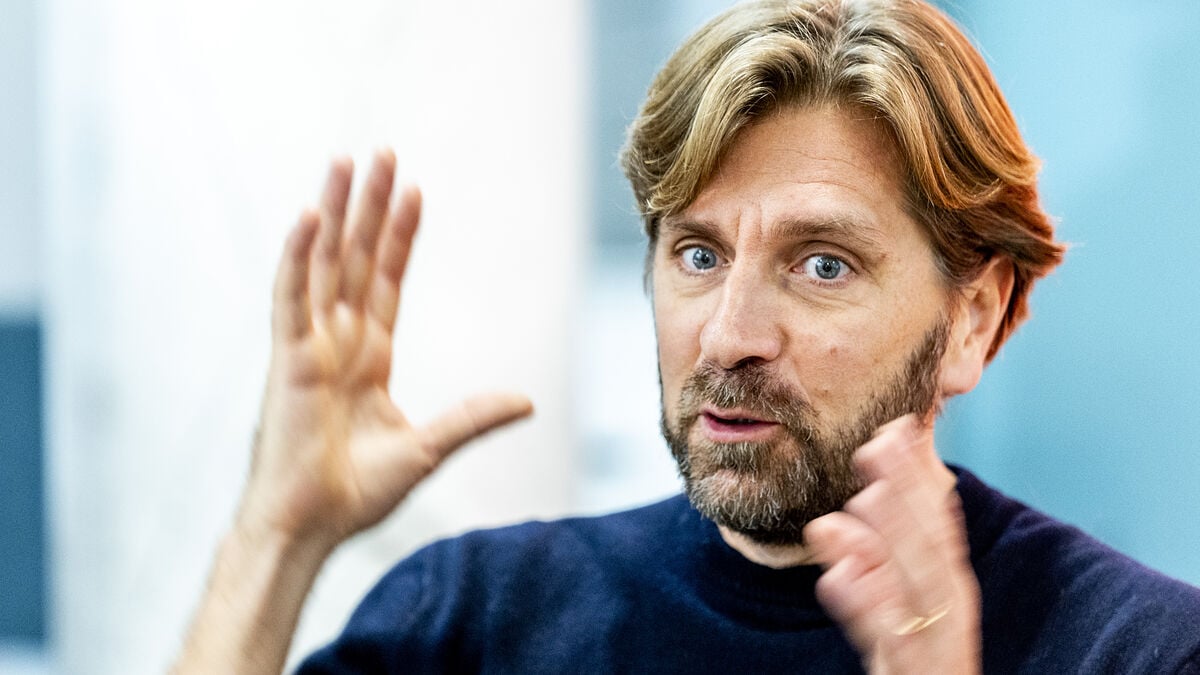
Director Ruben Östlund's question in full reads:
Name a controversial opinion that you believe is harmful to society, but which should still be protected by freedom of speech.