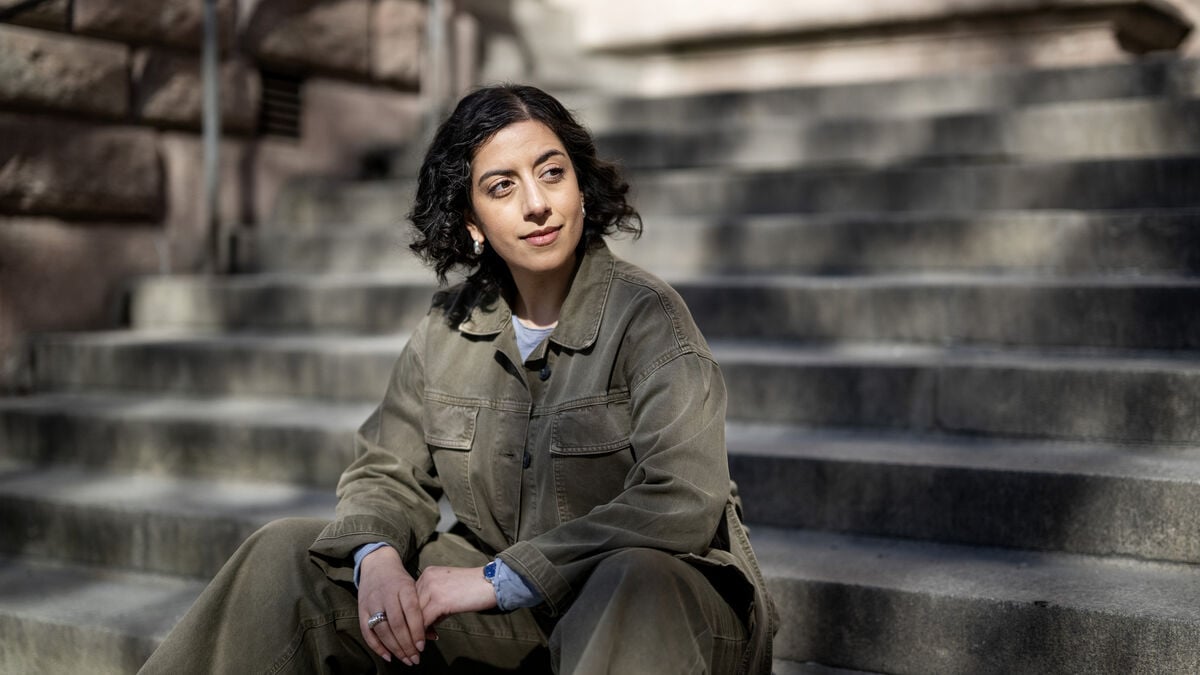
At the beginning of the year, the Liberals received 1.4 percent in an opinion poll, the same as the category “other parties.” The figure exposed a serious crisis for the party that had been going on for a long time, the party leader stated.
Now L is at 2.7 percent, according to the latest analysis from the Electoral Research Program at the University of Gothenburg. But the question is whether the crisis still exists.
“I would say that we still have a long way to go, but I note a slight increase in public opinion and in trust in me,” says Simona Mohamsson, who is also Minister of Education and Integration.
If L still manages to pass the parliamentary barrier and the Tidö parties win the election, they will sit in government, she states. The Christian Democrats' Ebba Busch has said that a government can consist of four, three or two parties.
“I think it is important that all four of us sit in government and take responsibility together,” says Mohamsson.
Going into opposition
She rules out L becoming a supporting party.
“We should be in the rooms where decisions are made. That means sitting in, taking responsibility and having influence, and that's best done in government. So it's not an option.”
If, however, the Tidö parties were to lose the election, which opinion polls are currently indicating, she does not intend to resign.
“No, I feel I have strong support.”
Then L will go into opposition; a collaboration with the Social Democrats is unthinkable, she says.
“We should remember that the last time Magdalena Andersson was voted in as Prime Minister, she had to resign later that day. There is a big risk that it will be quite chaotic on the other side.”
School promises fail to materialize
When L entered into the Tidö Agreement in 2022, then-party leader Johan Pehrson stated that a new state-controlled school budget would be introduced, a common school choice for all schools, and that the waiting time for independent schools would be significantly shortened. But despite the promise, these reforms are not being implemented.
“We still have the ambition to make these changes,” says Mohamsson.
The Tidö Agreement also promises restrictions on independent schools' profit distribution, something L calls a "complete renovation" of the independent school system. An investigation suggests that distributions should be limited in the first five years in the event of new establishments, changes of ownership and quality deficiencies. A bill will be coming "shortly" with this type of requirement, TT learns.
“We will make proposals and get a majority for the proposal, unlike previous governments that said a lot but were unable to get a majority.”
Simona Mohamsson was born on December 27, 1994 in Hamburg, Germany.
She moved to Överlida in Svenljunga municipality when she was eight years old.
She has previously been party secretary, vice chairman of the Liberal Youth Association and chairman of the social committee at Hisingen in Gothenburg.
Mohamsson has a bachelor's degree in public administration, with a focus on policy analysis, from the University of Gothenburg and in 2021 she published the book "Hong Kong RIP", which depicts the struggle for democracy in Hong Kong.
She speaks four languages. Her father is Palestinian and her mother is Lebanese, and after moving to Sweden, the family changed their name from Mohammed to Mohamsson.