At 12:15 on Saturday, the final vote count in this year's parliamentary elections was completed, and it is now clear who the 349 members will be.
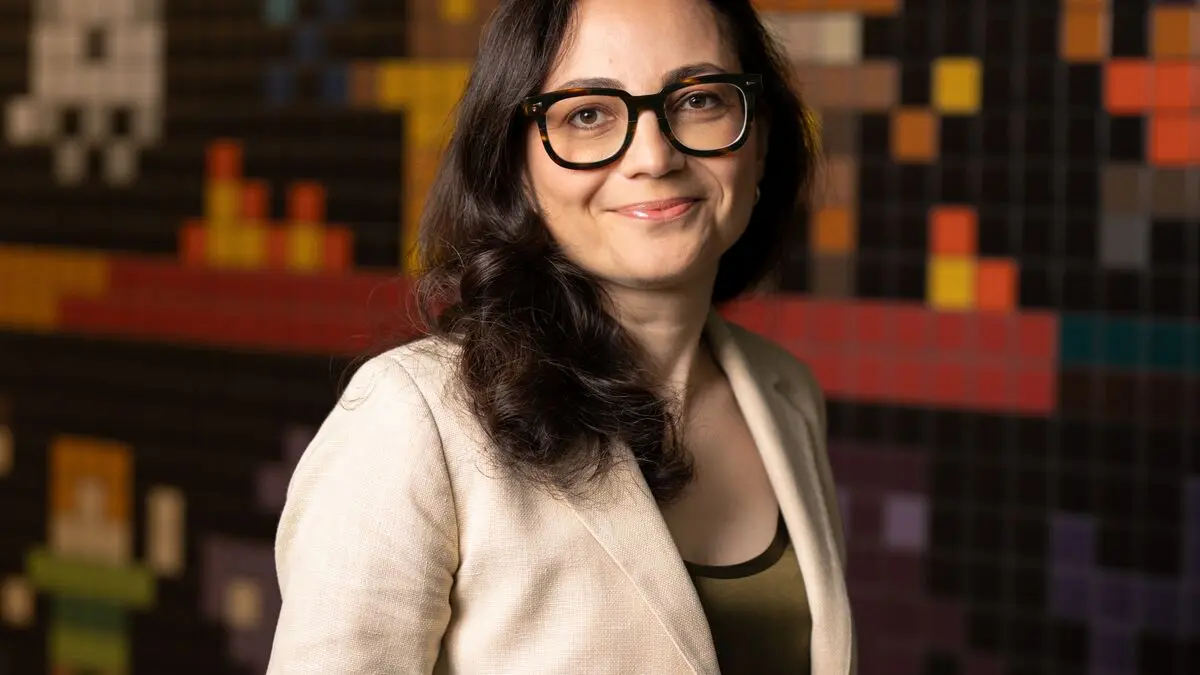
Eight people have managed to overtake people who were ahead of them on the list and thus entered the Riksdag. One of them is Centre Party member Julia Algotsson in Umeå, who during the election campaign pushed issues about forests, property rights, climate change and entrepreneurship. The main reason for the campaign was not primarily to try to win a seat in the Riksdag, because that is so difficult, she says.
But rather to get a chance to talk more about these issues that are so important, she says.
It has been nerve-wracking to follow the vote count:
It was a feeling of unreality, but of course great fun and very exciting.
No relocation plans
So far, she has no plans to move her family permanently to Stockholm, but there will be some kind of commute to the Riksdag building where she hopes to pursue her issues.
It is important that you deliver and do as well as you can.
Former Liberal Birgitta Ohlsson says she is "excited, happy and optimistic" about making a comeback in the Riksdag, now for the Centre Party.
"It's the same ideals and the same ideology, but a new party. It's not me who has changed, it's the Liberals," she tells TV4 Nyheterna.
Carlson misses
Another person who has signed up is Gotland profile Meit Fohlin (S).
I am moved by it and I didn't expect it at all, she says.
She and the party are negotiating locally about how Gotland should be governed. She is currently the chairwoman of the regional board, a position she may retain. In that case, she will decline the parliamentary seat.
It feels like a great trust. But ultimately it's about what's best for the party.
Several profiles, however, have not managed to get in. KD ministers Peter Kullgren and Andreas Carlson are two examples.
Others who will not receive a seat in the Riksdag are KD's Lars Adaktusson and the Liberals' Martin Melin.
Among the well-known names leaving the Riksdag and who have not stood for re-election are the healthcare veteran Anders W Jonsson (C) as well as the former ministers Annika Strandhäll (S) and Paulina Brandberg (L).
Voter turnout was 0.67 percentage points higher than in the previous election, reaching 84.89 percent.
Corrected: In an earlier version of the text, there was incorrect information about who had entered parliament.
The opposition – S, V, MP and C – together collect 176 seats in the final vote count. The Tidö parties – M, SD, KD and L – get 173.
Here are the election results in percentage and seats, in brackets, for the parliamentary parties:
Social Democrats: 28.0 percent (99)
The Moderates: 19.9 percent (70)
Sweden Democrats 17.5 percent (62)
The Left Party 8.4 percent (30)
Centre Party 7.0 percent (25)
Christian Democrats 6.2 percent (22)
The Green Party 6.1 percent (22)
The Liberals 5.3 percent (19).
Other parties: 1.6
Voter turnout was 84.9 percent, slightly higher than in 2022 when it was 84.2.
Birgitta Ohlsson (C) Stockholm Municipality, 6,460
Anfal Mahdi (V) Malmö Municipality, 2,960
Sten Bergheden (M) Västra Götaland County East, 2,081
Julia Algotsson (C) Västerbotten, 1,014
Meit Fohlin (S) Gotland, 954
Caroline Täljeblad (V) Västerbotten, 904
Mohamed Ali (L) Dalarna, 648
Mohamed Abdukani (MP) Södermanland, 484