El Niño is expected to wreak more havoc than usual this year. The climate phenomenon began to appear several months earlier than usual, causing concern not only among affected farmers, but also among economists who warn of harmful effects on the economy in the form of supply problems, inflation and higher food prices globally.
Access to flour, rice, cocoa, sugar cane and natural rubber could be affected, analysts at major bank Goldman Sachs warn, for example.
For many farmers in different parts of the world, harvests are failing and energy prices are skyrocketing.
Around half of our food consumption in Sweden is imported, so El Niño could also bring higher food prices here, according to Andreas Wallström, head of forecasting at Swedbank.
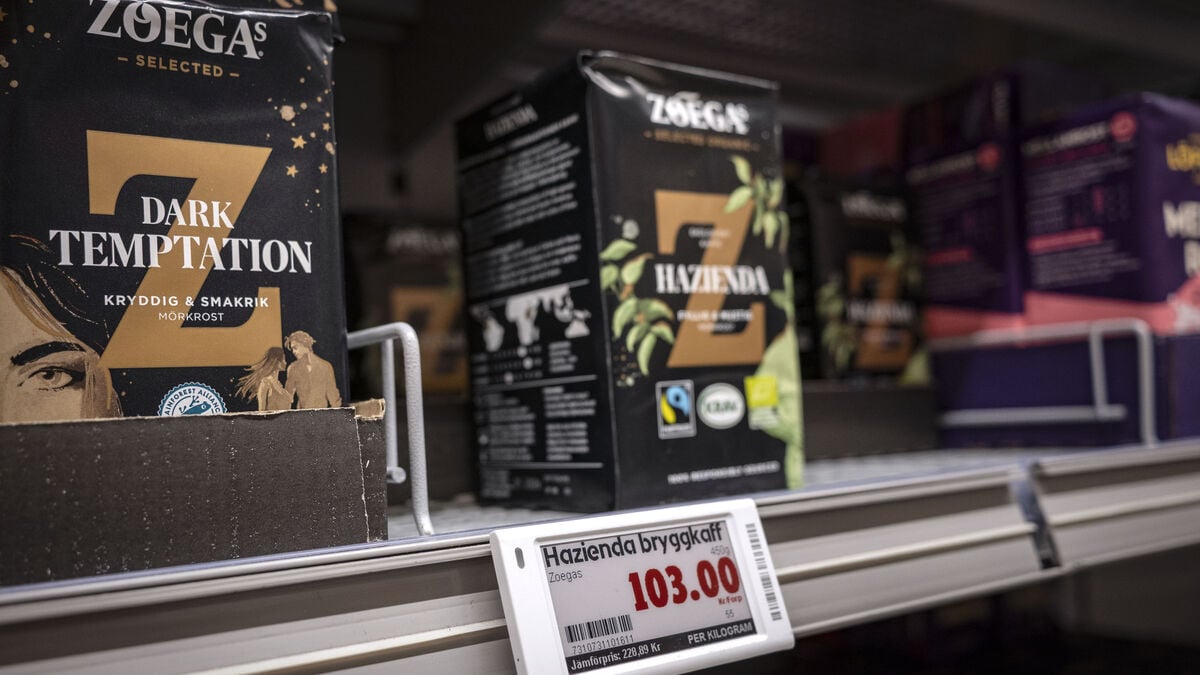
El Niño is expected to devour about a fifth of Brazil's upcoming coffee harvest, driving up coffee prices. Vietnam, which accounts for a large share of the world's coffee production, is also particularly vulnerable to drought as a result of El Niño.
According to Andreas Wallström, however, the weather phenomenon will not cause too much of a price shock for coffee-loving Swedes.
But the lost crops and extreme weather caused by the phenomenon could be one of the things that fuels inflation, he says.
Not here and now, but if we look ahead to 2027, there is a risk that the Swedish Central Bank will feel forced to raise interest rates to curb inflation, says Andreas Wallström.
In Sweden's case, the krona exchange rate also tends to be weak, which creates further upward pressure on prices here, he adds.
Facts: El Niño is expected to become stronger
In normal years, trade winds blow from South America towards Asia, pushing warm surface waters in the Pacific Ocean towards Australia and Indonesia. The cold deep-sea waters are in turn pushed towards South America.
During El Niño, which has existed for 250 million years and occurs irregularly at intervals of 2 to 7 years, these patterns change:
El Niño warms the surface waters in the eastern parts of the Pacific Ocean and affects the winds, which can change direction.
The warm water begins to move back towards South America, which can cause heavy rains and flooding in South America and drought in Southeast Asia and Australia.
El Niño is now manifesting itself in, among other things, extreme heat in the Pacific Ocean, which can intensify heat waves, droughts and floods in several parts of the world.
El Niño is expected to be at its strongest between August and October this year and remain until the spring of 2027.
Sources: Nature, forskning.se, Food and Agriculture Organization of the United Nations (FAO).