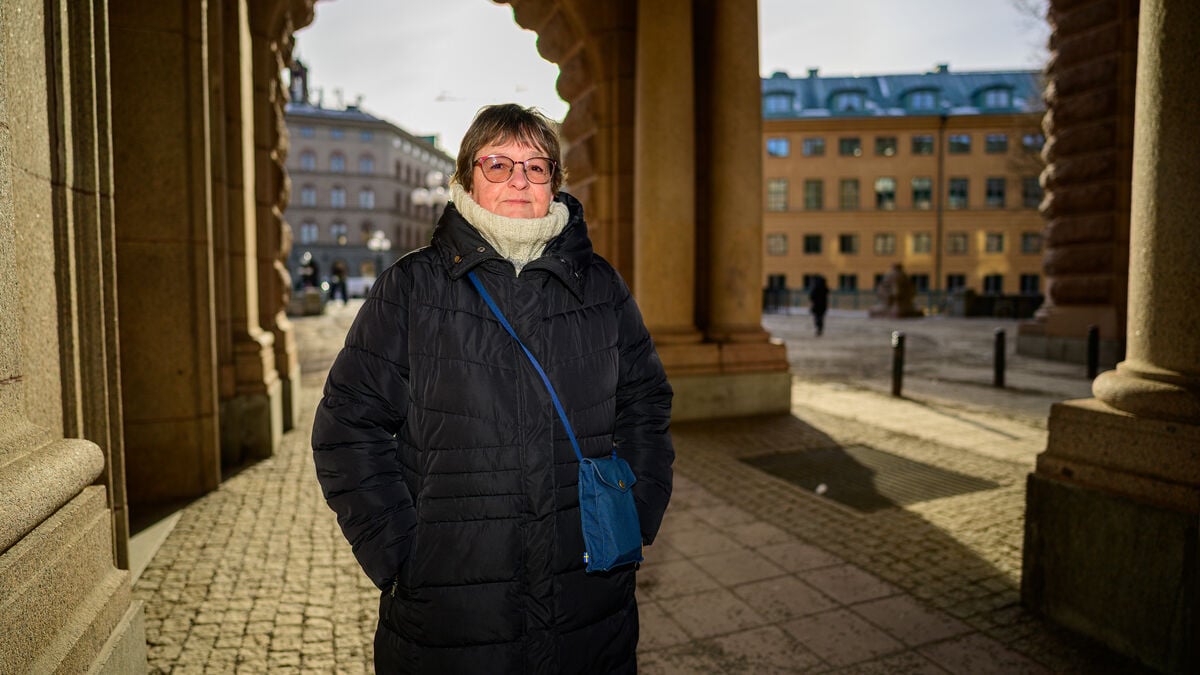
It will soon be time for 71-year-old Ulla-Lena Lindqvist to move out to her summer cottage in Vidja, south of Stockholm, again. It will be her fourth season with a stolen address, she notes.
"When I checked the day before yesterday, there were 66 people. It's unbelievable that it's been going on for so long," she says.
The problem with the fake registrations has been going on at the address since 2023. According to a review in Hem & Hyra, several people in the area are affected, and it has been shown that someone is selling the addresses to companies and private individuals.
Ulla-Lena Lindqvist has reported the matter to the police and sought help from the Swedish Tax Agency, but the problems continue. According to the Swedish Tax Agency, the fact that these are addresses where people are not registered has meant that it has been difficult to address the problem.
Debate in the Riksdag
On Friday, the fake registrations were debated in the Riksdag, where Kalle Olsson (S) questioned the responsible minister, Elisabeth Svantesson (M).
Svantesson stated that the Swedish Tax Agency will be tasked with investigating how the problem can be solved.
"This is a situation that no one, neither Ulla-Lena nor anyone else, should have to experience. One's own safe place should not be hijacked, kidnapped or taken over by someone else. I take this very seriously and will ensure that the Swedish Tax Agency works much harder on the issue and does what is necessary to prevent this from happening," Svantesson said.
Ulla-Lena Lindqvist's case has attracted a lot of attention since she, with the help of the Center for Justice, sued the state over the authorities' handling of the issue. After the debate, she met with the minister.
"When we talked, she probably understood my problem much more. At the same time, it all seemed like news to her, even though it had been up for a year."
Hopeful
Svantesson was upset by what she heard and promised that she would contact the Swedish Tax Agency, Lindqvist says. Lindqvist is cautiously hopeful.
However, Lindqvist cannot understand the Tax Agency's actions.
"They should realize that they have a problem and if they can't solve it themselves, they have to ask for help."
Tobias Wijk, development strategist at the Swedish Tax Agency, has previously told TT that the entire model for so-called postal addresses needs to be reviewed to address the problem.
"It is not adapted to today's conditions, when addresses are used as a tool and sold; it is too easy to change addresses."
The newspaper Hem & Hyra has examined the case of Ulla-Lena Lindqvist and has seen that several properties in the cottage area have been affected in a similar way. According to the examination, the area has become a hub for so-called fake addresses - and it has turned out to be a person who sells the addresses to companies and private individuals and then goes out and collects the mail.
Several of the people who were incorrectly listed in the area are from Ukraine and say they bought the addresses because they live in second homes and the hosts don't want them registered there. They say they didn't know where they were registered.
In October 2025, the Swedish Tax Agency said it is streamlining the work of handling incorrect population registrations. This includes new machine solutions, sample-based control work and methods for investigating what is behind the incorrect population registration.
Sources: Hem & Hyra, Swedish Tax Agency