Evilásio Santos da Silveira Júnior said he was going shopping. Instead, he bled to death in a favela after being shot in the arm.
The 33-year-old's death in Salvador, the capital of Bahia state, is surrounded by unanswered questions. The case reflects what has emerged as President Luiz Inácio Lula da Silva's biggest challenge in next weekend's elections: ongoing street violence - and criticism of the government's apparent inability to stop it.
Police say Júnior was killed in crossfire between rival gangs and accuse him of involvement, the AP news agency reports. His family says he had no gang connections and accuses state forces of shooting him dead in an unprovoked raid.
"I can't say I feel protected by the police. Unfortunately, they are often the perpetrators," Júnior's sister Magnólia Nascimento told the AP.
Losing support
She hopes the next president will improve security and crack down on gangs, something that both Lula and his main opponent, former President Jair Bolsonaro's son Flávio Bolsonaro, have promised.
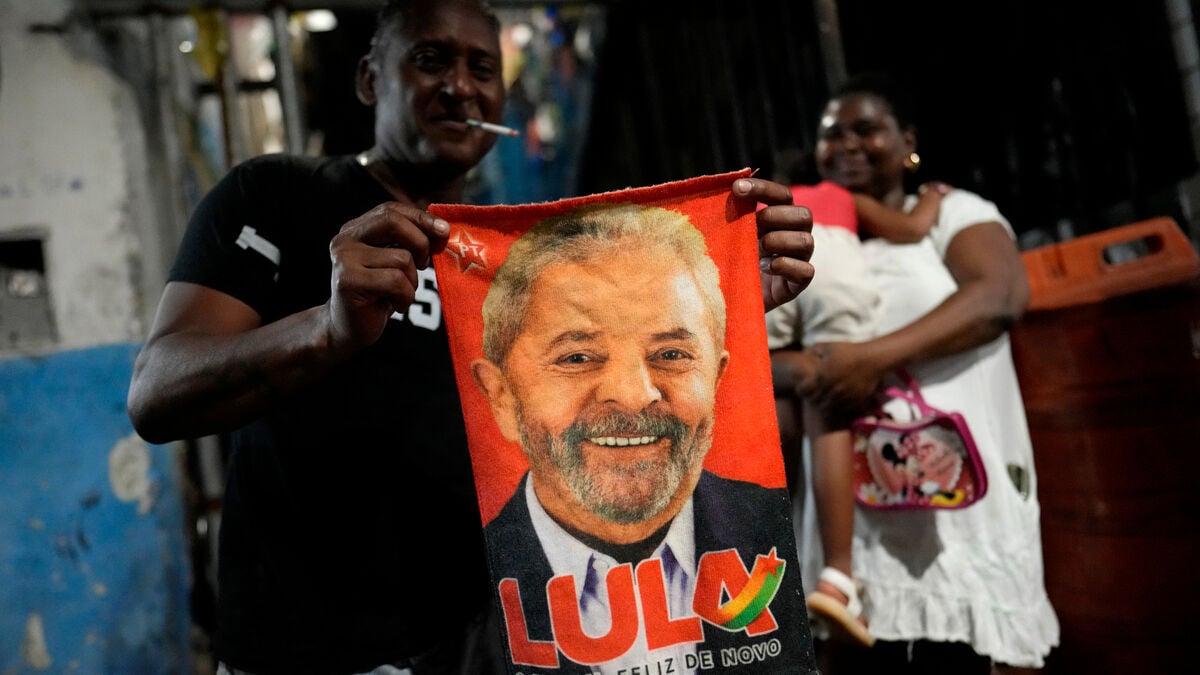
Bahia has long been one of Lula's Workers' Party, the PT (Partido dos Trabalhadores), strongest strongholds. The party has governed the state since 2006, and in the final round against the now-imprisoned Jair Bolsonaro in the 2022 elections, the PT won 72 percent here.
But it is also a state where gang and police violence has increased dramatically - and where opinion polls now show the PT losing support. Critics say the ruling party has failed to reduce violence, stop the flow of weapons and drugs, and invest enough in schools and education.
Lula, whose social reforms have improved living conditions for millions in Bahia, has tried to boost his profile on security issues by promising more federal resources to combat violence.
Voters are hesitant
Flávio Bolsonaro has campaigned on a tougher crackdown on crime - and has floated plans to build huge prisons across the country, inspired by Salvadoran President Nayib Bukele. Bukele has presided over a dramatic drop in the murder rate in El Salvador, but his methods have been heavily criticized by human rights groups.
The question is whether violence has become a central enough issue to tip the tide in Bahia - and possibly all of Brazil - in Bolsonaro's favor in the election on October 4.
"I voted for Lula last time, but I'm not convinced now," Salvadoran Jane Souza told AP.
At the same time, I think Flávio Bolsonaro just wants to get his father out of prison.
Brazil will hold presidential and congressional elections on October 4.
If none of the presidential candidates receives more than 50 percent of the votes in the first round of elections, a second, decisive round will be held on October 25.
The main battle is between incumbent President Luiz Inácio Lula da Silva (Workers' Party, PT) and Rio de Janeiro senator Flávio Bolsonaro (Liberal Party, PL), son of the imprisoned former president Jair Bolsonaro.
Lula da Silva, who won the 2022 presidential election and previously governed the country from 2003 to 2011, is running for a fourth term.
The economy, gang violence and the relationship with the United States have been identified in advance as crucial issues.
Flávio Bolsonaro has very close ties to US President Donald Trump and advocates an even closer relationship between Brasilia and Washington DC.
Lula da Silva has called US trade tariffs against the country an “attack” and made national sovereignty and self-determination one of his most important election issues.
The trade tariffs that the US imposed on Brazil last year were motivated, among other things, by what Trump called the "witch hunt" against Jair Bolsonaro, who in September 2025 was sentenced to 27 years and three months in prison, accused of a failed coup attempt after the 2022 election.