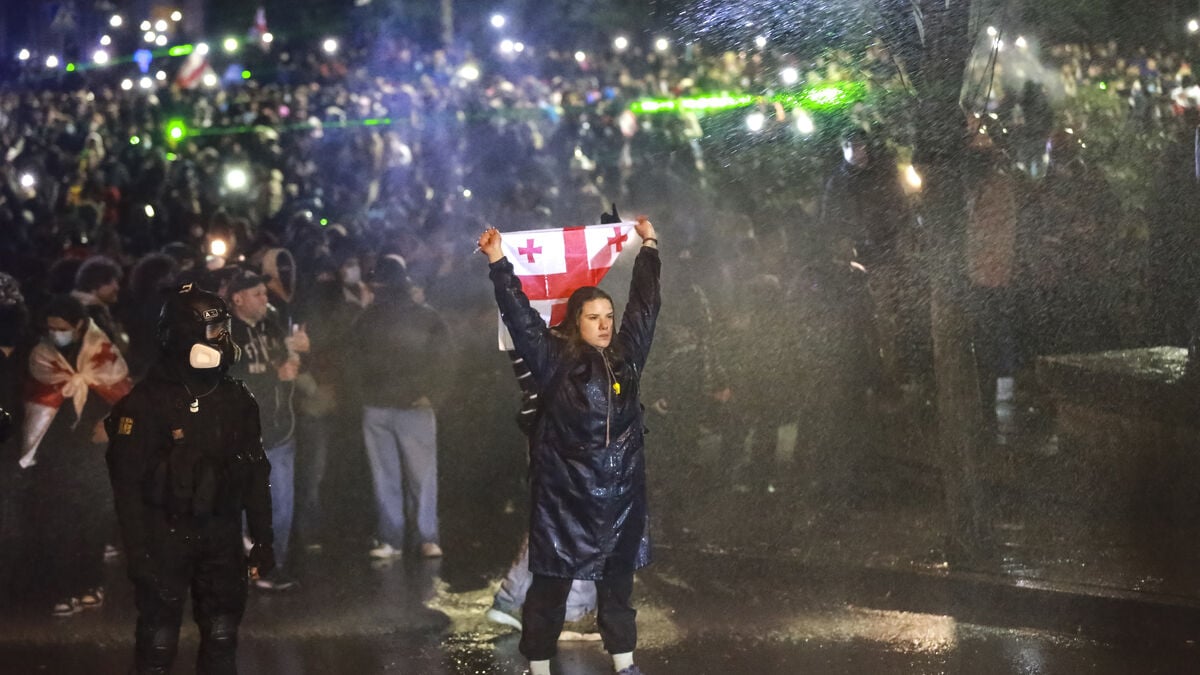
The liquid in the water cannons used in the capital Tbilisi burned the skin, according to witnesses. Other symptoms have also been reported, such as shortness of breath, coughing and vomiting that lasted for several weeks.
Chemical weapons experts, whistleblowers within the country's riot police and doctors speak out in the article, where the BBC concludes that there is much evidence that bromobenzyl cyanide - which was used by France against Germany in World War I - was used in the water cannons.
The chemical compound is believed to have ceased use in the 1930s, due to concerns about long-term effects.
Doctor Konstantine Chakhunashvili participated in the protests and subsequently conducted a study with nearly 350 people who were there. Almost half reported having experienced side effects that lasted for over 30 days.
A toxicology and chemical weapons expert told the BBC that the symptoms were consistent with bromobenzyl cyanide. A whistleblower from the riot police claims that chemicals were added to the water cannons.
The widespread protests were directed against Prime Minister Irakli Kobachidze and the increasingly pro-Russian Georgian Dream party, which, among other things, has frozen negotiations on accession to the EU.
According to Georgian authorities, the BBC's conclusions are "absurd".