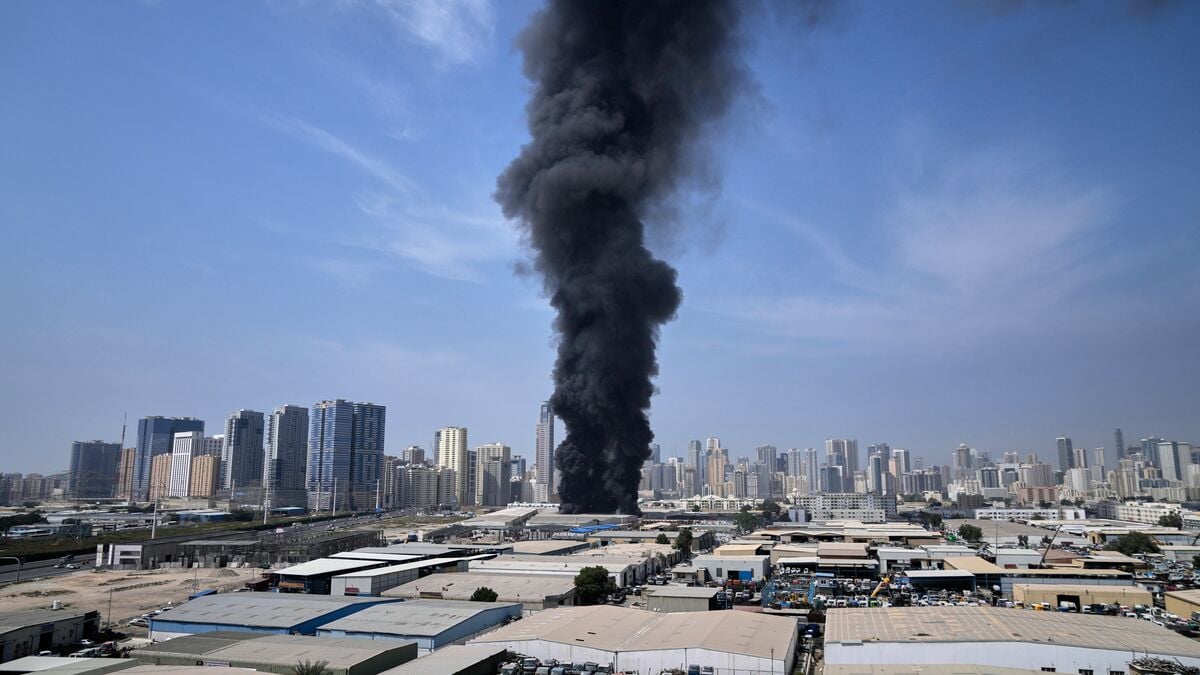
Thousands of Swedes are still stuck in Dubai and Doha due to cancelled flights. In media reports, Swedish travelers have expressed dissatisfaction with what the Ministry of Foreign Affairs is doing for them.
Kristersson does not believe that the travelers' frustration is unreasonable.
No, in general I don't think you should expect too much. There is a very important distinction to make between those who have gone to these countries now, on vacation or for other reasons, completely without travel advice. They shouldn't blame themselves, he tells TT.
Some European countries have begun evacuating citizens from the region. But this is not currently the case for Sweden, according to Foreign Minister Maria Malmer Stenergard (M).
There are a few countries that have been able to fly home a limited number of citizens, she tells TT, adding that she "regrets the situation."
Exploring possibilities
Kristersson emphasizes that the government is continuously evaluating the situation and investigating what options exist.
I know that the Ministry of Foreign Affairs is in contact with other countries to see what they are doing and what we could do. But generally I have no new information now.
Opposition leader Magdalena Andersson (S) says in a statement on Instagram that the government must "work with like-minded people."
Not least within the EU, to get Swedes out of the region and to avoid the conflict developing into a major regional war, says Andersson.
Center Party leader Elisabeth Thand Ringqvist writes on X that the government must immediately prepare for a "possible evacuation" of Swedish citizens.
"Several European countries have already acted and secured EU support for evacuation flights. Sweden cannot stand idly by," she writes.
"Shelter in place"
On Monday and Tuesday, several flights were able to take off, especially from the United Arab Emirates, but Svante Liljegren, head of the Swedish Foreign Ministry's consular unit, does not think this should be overinterpreted to mean that the situation is back to normal.
The Ministry of Foreign Affairs does not consider it appropriate to bus stranded Swedes to countries that have flights.
Given that there are so many of them, we believe it is best to "shelter in place" as they say, to remain in the hotels where you are staying and not expose yourself to that type of risk, Liljegren said on Tuesday morning.
For Sweden, there are three different levels of advice. The first is called "non-essential travel", which covers tourist and visitor travel. The next level is "all travel", which also includes other travel, such as work travel. The highest advice is a "call to leave the country", which is only issued when there is an imminent danger to life and health.
Currently, Swedes in Iran and Yemen are being urged to leave the country, and all travel advice applies to Iraq and Lebanon (with some exceptions, where the lower "advice against travel" applies), the Palestinian territories and Israel.
The Ministry of Foreign Affairs advises against non-essential travel to Bahrain, the United Arab Emirates and Qatar (transit not included), Kuwait and Jordan.
For Egypt and Saudi Arabia, the advice applies to certain vulnerable areas.