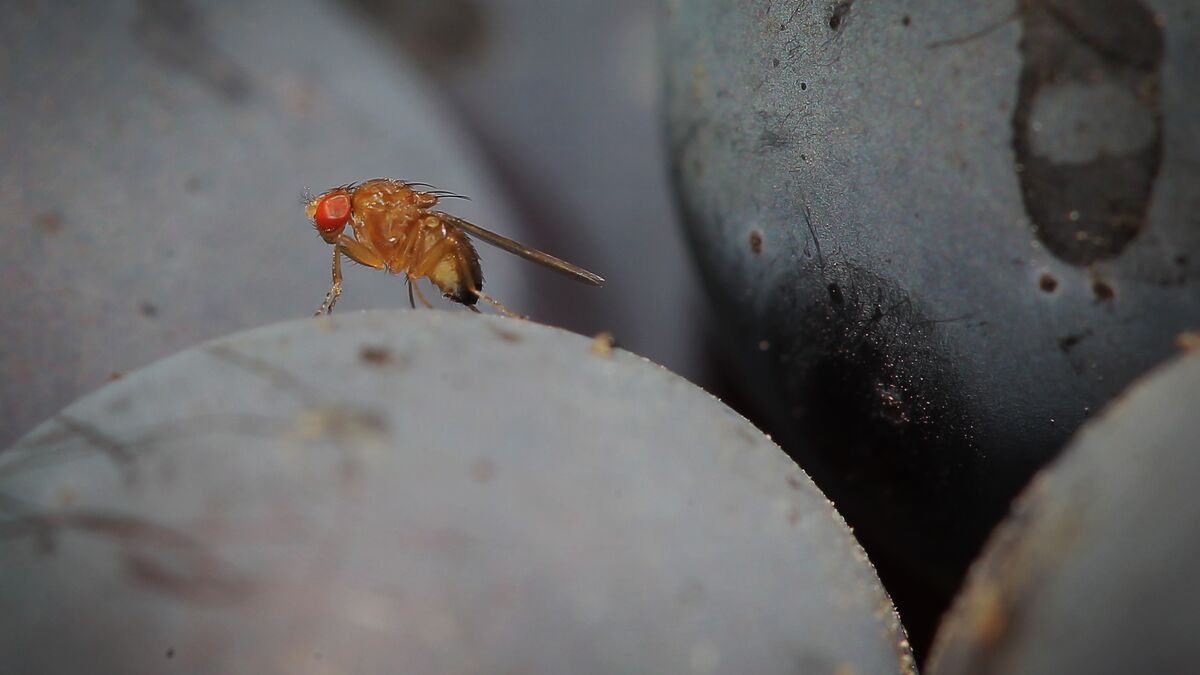
There are around 4,000 species of fruit flies in the world, the vast majority of which feed on fruit and many of which thrive indoors in our kitchens. But one species differs markedly from its relatives by living in flowing watercourses in Africa, and has puzzled scientists for many years.
For example, the larvae have claws to hold on to the surface despite strong currents, and they feed on insects.
"I've been fascinated by it ever since I was a doctoral student and wanted to study it. It has truly changed its lifestyle, from eating rotting fruit to becoming a predator in flowing water," says Marcus Stensmyr, associate professor at Lund University and researcher in zoology.
Mysterious variant
This particular fruit fly had been extremely elusive and had not been observed since 1981, but then Marcus Stensmyr and his research colleagues received a tip that a captured specimen was in a museum in Zurich, Switzerland.
Using modern technology, they have managed to extract DNA from the preserved fly and map its genome. The results, published in the scientific journal Current Biology, show that it belongs to a group of flies that live near rushing water. The "mysterious" water flies have simply adapted to their environment and are genetically different from those we have in Sweden, among other places.
"The African variant has almost completely lost its sense of smell and has a completely different metabolism. It would not do at all in a Swedish kitchen," says Stensmyr.
Provides answers about climate
The research points to the value of collections of insects and animals. Using the same method, researchers can see how changes in the climate and environmental toxins have affected, for example, bees, butterflies and bumblebees in our vicinity.
Marcus Stensmyr has not given up hope of finding an aquatic fruit fly.
"Absolutely not. We have found places in Tanzania where we think it might be possible to see them."
These flies are found everywhere in our nature, so it is difficult to prevent them from entering houses and apartments.
If you get fruit flies at home, there are tricks to get rid of them.
Dispose of fruit waste in sealed bags and keep the fruit bowl free of overripe fruit.
Clean reusable bottles and the like and store them tightly in plastic bags, for example.
Don't leave dishes in the sink for too long and remove food residue from the sink immediately.
Throw away the trash every day and keep an eye on the compost.
Clean the sink and floor drain with a coarse brush and dish soap to get rid of eggs and larvae that may be present in the drain.
Source: Anticimex, SLU