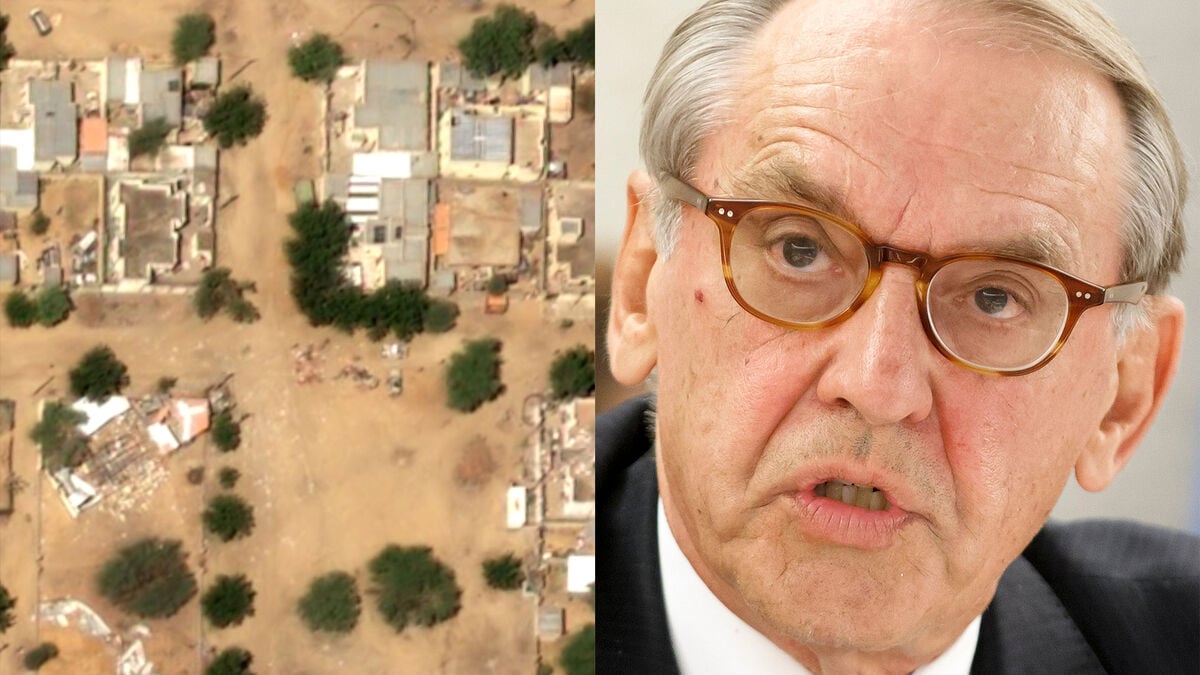
With the support of satellite images, researchers at Yale University in the US state that they have evidence that the RSF (Rapid Support Forces) militia went from house to house after they captured al-Fashir in the western parts of the country.
Outside houses and next to cars, bloodstains and dozens of irregular shapes, which scientists believe are bodies, are visible. About 2,000 civilians were killed, according to forces loyal to the Sudanese army.
“Large-scale massacres”
Both sides have committed war crimes, but RSF has been responsible for by far the largest share of massacres of civilians and the like, says Johan Brosché, associate professor of peace and conflict studies at Uppsala University.
There is a recurring pattern among RSF of killing civilians. When RSF took over Geneina in Darfur, 10,000 to 15,000 people were killed on ethnic grounds. So that there has been large-scale massacres based on ethnicity, there is no doubt.
The war in Sudan has raged since 2023 after a schism between two rival factions within the country's military leadership. Armed fighting broke out and the war between the paramilitary Rapid Support Forces and the regular army was a fact.
Both sides have been extremely armed and strong. In addition, both actors have had a large supply of resources, says Brosché.
Now 25 million people are suffering from acute food shortages and 30 million people are in need of emergency aid, while 14 million people have been forced to flee, according to the UN.
Want to see intervention
Jan Eliasson, former deputy secretary-general of the UN and the world organization's special envoy to Sudan, calls what is happening in Sudan "blatant war crimes and crimes against humanity." So why isn't the outside world intervening more forcefully?
I think that both the UN and the African Union should act much more decisively and impose sanctions against these people or even take the initiative for some kind of intervention, because the situation is so terrible, says Eliasson.
He believes that there are no real political differences between the five permanent members of the UN Security Council that would stand in the way of a resolution that would have brought relief to the people of Sudan. But deadlocks stand in the way.
We have such a deep distrust between the great powers now, a distrust that has gone very deep. They don't even cooperate on issues where they should be able to agree.