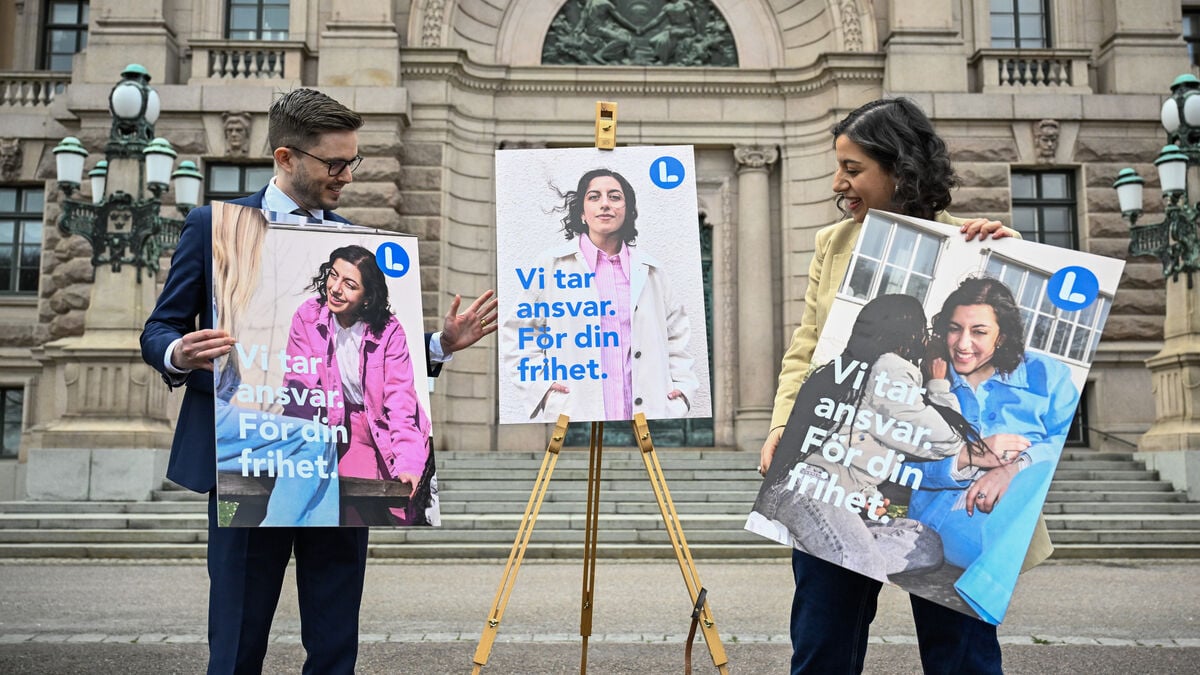
In the parliamentary elections, the Liberals look set to get 5.4 percent. In the municipal and regional elections, the party is set to get 4.0 and 3.3 percent of the votes, respectively, according to a combination of preliminary vote counts, with some districts still left to count. The regional result looks set to be the party's worst in all regions since 1973. In twelve regions, the party looks set to fail to pass the threshold; four new ones - Uppsala, Jönköping, Kronoberg and Värmland - have been added since the last election.
In Stockholm, the party is still hanging on, but almost every third voter has disappeared.
It's hard to be happy with a result when you're going backwards. But I'm very happy that we're still in parliament," says regional councilor Amelie Tarschys Ingre.
She thinks she felt support from voters at the end of the election campaign.
I had hoped that it might spill over even more at the regional level, she says.
Backs in three out of four
The municipal elections have also been bad, where it looks like the party is losing in 215, remaining unchanged in 14 and increasing in 61. In Vellinge, the Liberals look set to lose 5.6 percentage points, almost every third voter. Despite that, the party is getting 11.4 percent. The party's Vellinge chairman Henrik Thorsell says that "the national trend also affected us."
Sure, you can be critical and dissatisfied, but you might also say that compared with many others, it's pretty good.
In 204 of the municipalities where the party loses in the municipal elections, it simultaneously increases in the parliamentary elections. Thorsell says that it is a “credit boost” when moderate voters vote in support.
Now there are four years to take advantage of it and create something new so that people vote for us next time, he says.
Fredrik Brange is also pleased with the successes at the national level, but notes that the party has had a tough period behind it.
We have been described as calculated and so on, and that has also left an impression at a local level.
Upwards in their places
At the same time, there are also some local increases, including in Ljusdal and the L-fiefdom of Landskrona.
"There are many examples where we have grown very strongly locally. There is certainly a lot to learn from those examples," he says.
Now the party's organisation needs to be strengthened outside the country.
"We definitely have a lot of work ahead of us in continuing to strengthen this party. A liberal party in Sweden should be at least 10 percent, I think," says Brange.
The Liberals' results in the regional elections, and the change compared with the previous election. The threshold is 3 percent. Preliminary figures.
Blekinge: 2.8 (-0.1)
Dalarna: 1.8 (-0.8)
Gävleborg: 2.6 (-0.3)
Halland: 4.2 (-0.8)
Jämtland: 1.8 (-0.7)
Jönköping: 2.3 (-0.9)
Kalmar: 1.9 (-0.9)
Kronoberg: 2.6 (-1.6)
Norrbotten: 1.6 (-0.7)
Skåne: 3.9 (-1.3)
Stockholm: 4.1 (-1.9)
Södermanland: 2.5 (-0.4)
Uppsala: 2.7 (-1.8)
Värmland: 2.4 (-1.3)
Västerbotten: 3.3 (-1.1)
Västernorrland: 1.2 (-1.0)
Västmanland: 4.5 (-0.4)
Västra Götaland: 3.3 (-1.5)
Örebro: 4.1 (-0.6)
Östergötland: 3.2 (-1.4)