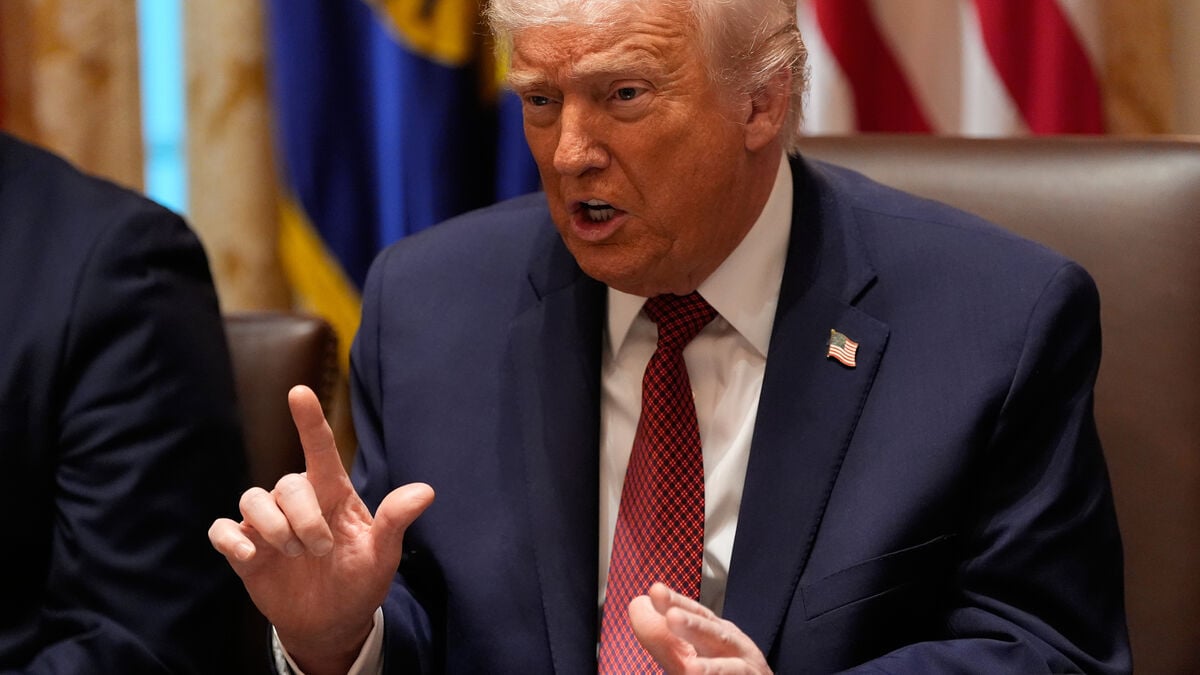
The relationship between the United States and Europe is strained. On Tuesday, things got even more tense when President Trump sharply criticized European leaders in an interview with Politico .
Europe is decaying, Trump claimed, and European leaders are weak.
"Trump's comment is in line with the new security strategy that paints Europe as a continent on ice," writes Erik Brattberg, senior fellow at the Atlantic Council think tank, to TT.
The security strategy, which was published on Friday, warns of "civilizational extinction" through, among other things, immigration, low birth rates and alleged threats to freedom of expression in Europe.
“Standing alone”
Much of what Trump says in the interview is similar to what is said in the security strategy, which may mean that Trump's statements did not surprise Europeans very much, says Göran von Sydow, director of the Swedish Institute for European Policy Studies (Sieps). However, he sees the way in which Trump expresses himself about Europe as startling.
Partly, how to intervene in what is domestic politics in the allied countries, he says.
The second part is about Ukraine, which once again makes it clear to Europeans that in many ways they stand alone in trying to support Ukraine. Here, big questions are being asked about how to act now, he says.
A third aspect is the tone of Trump's statements, says Göran von Sydow.
Trump alternates between saying that he wants a strong Europe while also pointing out that Europe is weak – there is something paradoxical about that.
Respects strength
Erik Brattberg believes that Trump does not see cooperation between the US and Europe as value-based, but rather transactional.
"European attempts to charm Trump to try to hold together transatlantic cooperation have clearly failed because Trump only respects strength," writes Brattberg.
Trump's statement comes as negotiations are underway to end Russia's war of aggression in Ukraine, where previous versions of the US's proposed peace plan have been criticized for being too much in line with Russian wishes.
"The question is what lessons European leaders will learn regarding how they themselves will need to increase support for Ukraine and take care of their own defense against Russia without the US," writes Erik Brattberg.