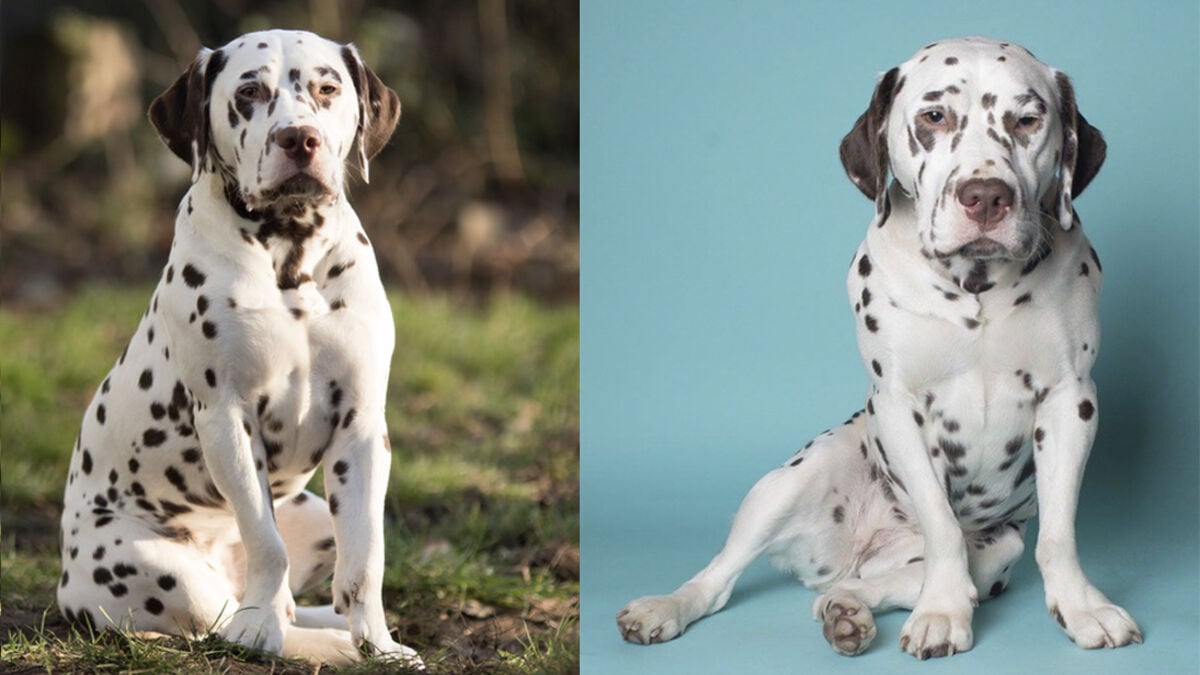
It started with an unexpected phone call. A dog breeder called and asked how the analysis of samples from dwarf Dalmatians was going. The researchers at the Swedish University of Agricultural Sciences (SLU) had to think for a moment. It turns out that they were blood samples submitted in the 1990s.
"We started looking and found them at the bottom of one of the university's freezers," says Tomas Bergström, associate professor of molecular genetics and bioinformatics.
The blood samples came from a litter of Dalmatians in which some of the puppies were affected by dwarfism. The disease makes dogs weak-legged; they have difficulty walking and are often in pain. It has been a known problem and there were suspicions that the cause was genetic.
Detective work
In the lab, the researchers were able to determine that the samples contained a mutation in a specific gene. The problem was that there was a lack of documentation about the dogs from which the samples came.
The only thing we had to go on was that some of the samples were labeled "Dwarf Dalmatians," says Bergström.
Detective work led the researchers to a relative of the breeder, who had preserved VHS footage of the litter.
The films clearly show how their gait deteriorates over time.
Further searches led to contact with veterinary colleagues who were involved at the time, and through them to additional samples and X-rays, both from Sweden and other European countries.
“Great advantage”
In the fall of 2025, they published a scientific study that determined which gene variant causes dwarfism. The condition is recessive, meaning that both parents must carry it for a puppy to get the disease.
Although it is uncommon today, it can now be avoided entirely through a DNA test.
For dog breeders, the discovery is a relief.
Inger Hagbohm bred 54 litters until she ended her business in 2021. She has had puppies born with the mutation and was one of those who contributed information about the old samples in the freezer.
"It's a huge advantage that there is a test now. Not all dogs with dwarfism experience pain, but for many it is very difficult for them," she says.
In the long term, research on mutations in animals may provide clues about genetic skeletal diseases in humans.
A mutation in the same gene occurs in humans, but there are only about ten known cases worldwide.