Last week, after the US and Israel attacked Iran and, among other things, killed Iran's supreme leader Ayatollah Ali Khamenei, the Iran-allied Islamist movement Hezbollah, based in Lebanon, attacked Israel with rockets and drones.
Whoever fired those rockets wanted to bring about the collapse of the Lebanese state and plunge it into aggression and chaos. All for the sake of the Iranian regime,
Joseph Aoun said this in a digital meeting with senior European officials.
Joseph Aoun describes Hezbollah as “an armed group that stands outside the state, and that values neither the interests of Lebanon nor the lives of its people.”
Aoun further said that “direct negotiations under international auspices” with Israel are needed to end the war.
Ground forces advanced
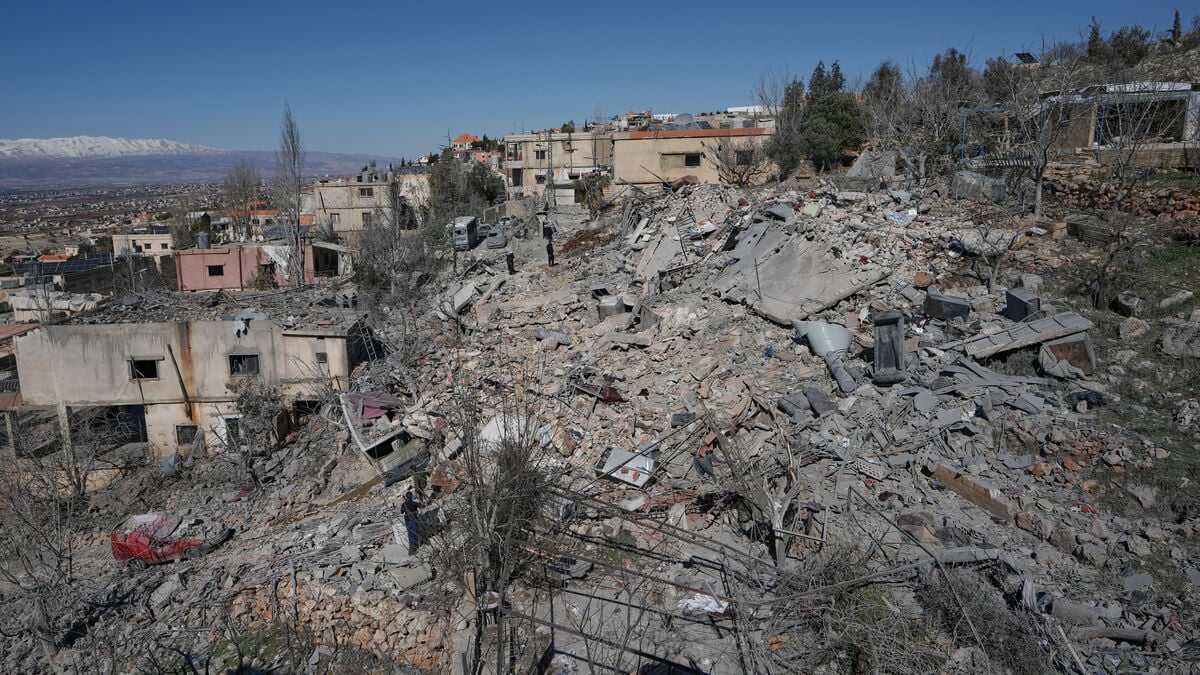
After Hezbollah's initial attack, Israel responded with both air strikes and ground forces, resulting in a large number of casualties.
Ground forces advanced Monday night, prompted by several airstrikes on the area.
In southern Lebanon, Hezbollah said overnight that it was fighting Israeli soldiers who had entered the Lebanese border towns of Odaisseh and Aitaroun.
This morning's attacks in southern Beirut were reportedly carried out by Israel and targeted a company linked to the Shiite militia. Fighting was also reported in eastern Lebanon.
Nearly 500 dead
According to Hezbollah, “around 15” Israeli helicopters coming from the Syrian side of the border into eastern Lebanon were spotted overnight.
Two Hezbollah sources said earlier that a helicopter in the area had been shot down “in the mountains east of Baalbek.”
Israeli Defense Minister Israel Katz said in a statement that senior Hezbollah commander Abu Hussein Ragheb was killed in one of the night's attacks.
Lebanon's Health Ministry announced that 486 people had been killed in attacks over the past week.
EU foreign policy chief Kaja Kallas has called on both Hezbollah and Israel to cease their attacks. After a conversation with Aoun, Kallas said Israel's offensive in southern Lebanon “risks dragging Lebanon and its people into a war that is not theirs, with serious humanitarian consequences.”
Mohammad Raad, a member of parliament for Hezbollah, said in a statement on the Islamist movement's television channel al-Manar that Hezbollah will continue the war “at any cost.”