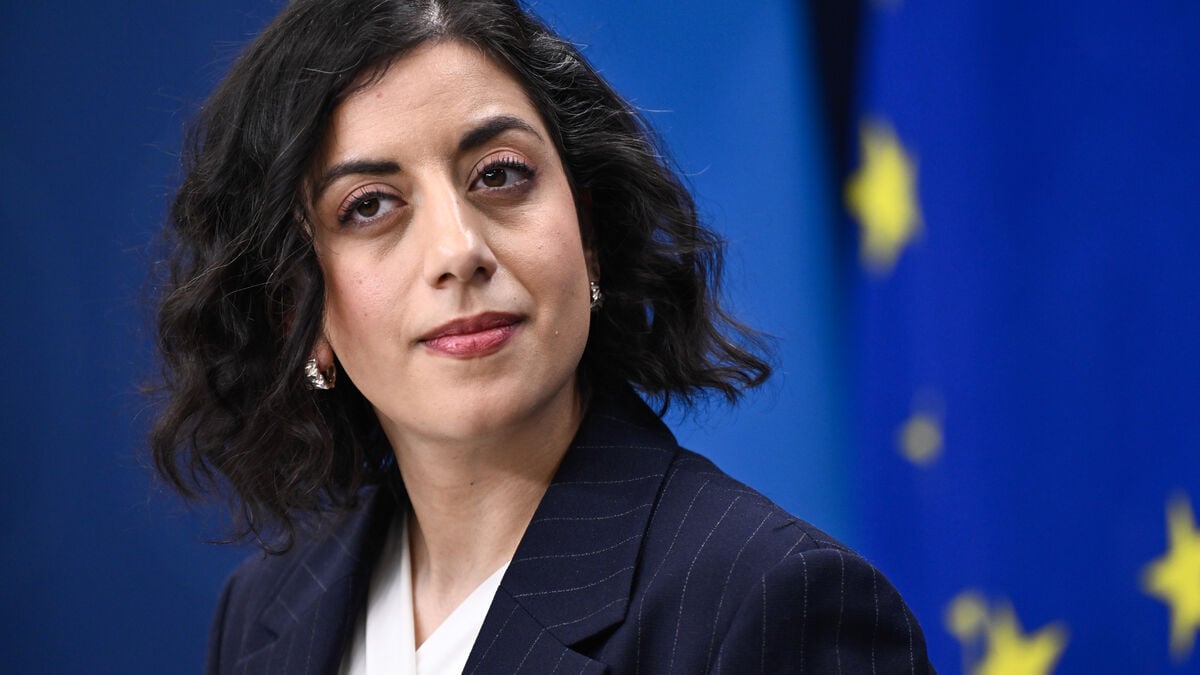
All of Sweden's students will return to mobile-free schools after the summer holidays, says Minister of Education and Integration Simona Mohamsson (L) about the proposal now being presented in a referral to the Council on Legislation.
Mohamsson claims at a press conference that the ban will be good for both learning and students' mental health. Students will be allowed to hand in their cell phones at the start of the school day and will get them back at the end of the day, not earlier.
“Free zone all day”
Principals have had the option to ban mobile phones for a few years now, and many have done so. When asked what difference a national ban makes, she replies that it will now be the same for everyone, regardless of school or place of residence.
Minister of Social Affairs Jakob Forssmed (KD) fills in:
- "Some have already implemented it, but others don't have mobile phones banned all day; now it will be a free zone all day."
Students should be given greater opportunities to focus on learning, hang out with friends during breaks, perhaps play soccer or read a book, and avoid being disturbed by their own or others' mobile phones.
The legislative amendments are proposed to take effect on August 1 this year.
A teacher should be able to make exceptions if mobile phones are needed for teaching or if a student has special reasons.
Another disruption in schools is the tablets that students have to use for schoolwork - but which are also used for things like playing games. When schools block a gaming site, students immediately find a new one.
Should iPads also be removed from schools?
"It's no secret that the Liberals want to push screens out of schools. I think it should be books, paper and pen, and that teachers should make a very careful assessment when choosing to have screens," says Mohamsson.
She says that this is something they want to continue to pursue.
Expulsions
The government also proposes that teachers should be given increased opportunities to expel disruptive students. Students who pose a danger to other students or staff could also be denied access to school or suspended for a certain period of time.
The proposal also includes changes regarding remedial teaching for students who need it, in Swedish and mathematics. Special tests will show which students need remedial teaching. This will then be given in small groups, not individually in the classroom with the rest of the class.
The Social Democrats believe that several of the suggestions are good.
"But as long as the government does not address underfunding and profiteering, chaos and disorder in classrooms will persist," says Anders Ygeman, education policy spokesperson.