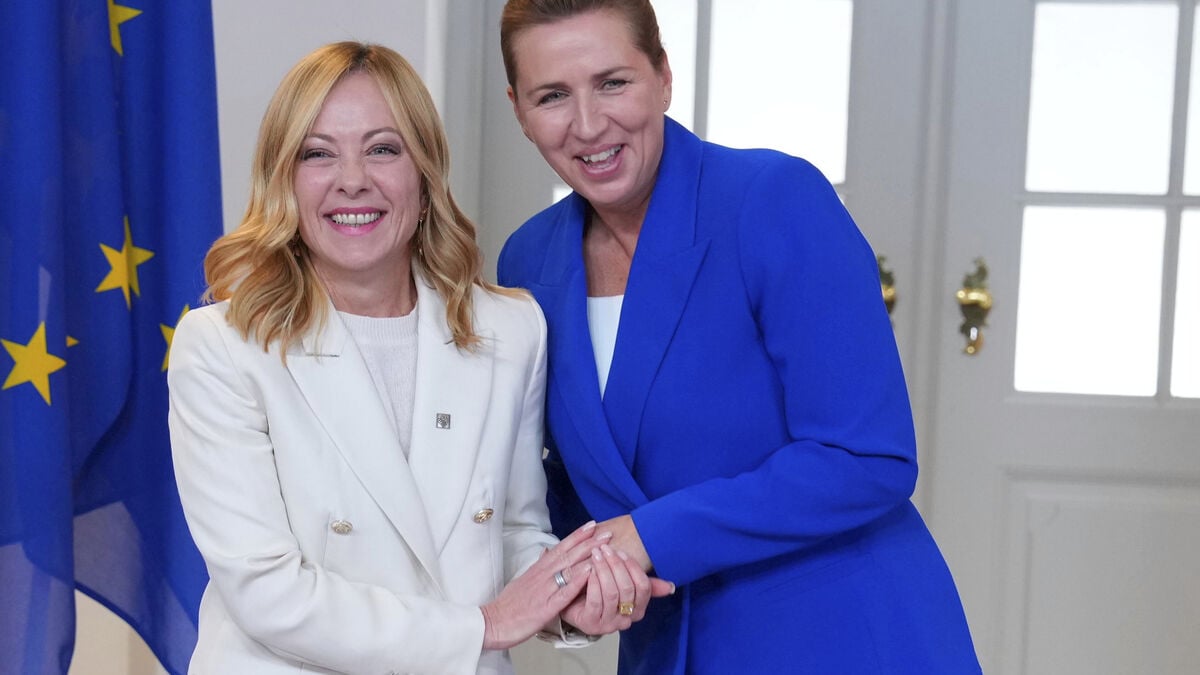
The Dane's comments were said to have been made behind closed doors at the recent EU leaders' summit in Brussels, but were quickly leaked, including to the French conservative magazine Le Point.
They came after she and Italian Prime Minister Giorgia Meloni joined 17 other EU countries in a letter urging the European Commission not only to help EU countries set up camps for deportees outside Europe, but also to contribute financially.
Frederiksen also followed up in an interview with the Financial Times newspaper.
"Are we solving the problem of mass migration within or outside Europe? Now, for the first time, we believe that it should happen outside. That is the biggest change," said the Dane.
Uzbekistan and Uganda?
The deportation camps - called return hubs in EU parlance - have been approved by both EU countries and the European Parliament. Now only a final formal go-ahead from the Council of Ministers is awaited before one or more member states can sign an initial agreement with a suitable country outside the EU to test whether it works.
Uzbekistan, Rwanda and Uganda are mentioned in this context, according to information provided to the news site Politico Europe. It is unlikely that this will happen without criticism. The three countries are politically best known for authoritarian regimes, suppressed opposition and questionable human rights records.
Mette Frederiksen is already talking about moving forward with handling asylum applications outside the EU. Supporters of the idea point out that this would save refugees and migrants from risking their lives in dangerous small boats, at the hands of unscrupulous people smugglers.
Criticism of Spain
The political turnaround in the EU is almost complete. Whereas previously a clear majority of countries were on the same side as German Chancellor Merkel, it is now the supporters of her line who are in the minority and are being criticized.
This applies not least to Spain, whose Prime Minister Pedro Sanchez is being criticized for his amnesty to hundreds of thousands who have arrived in the country without permission.
Many countries are very concerned about this. We are doing everything we can to reduce the migration pressure on Europe. . . For a country in that situation to do exactly the opposite also increases the risks for other countries, said Prime Minister Ulf Kristersson (M) at his press conference after the EU summit on Midsummer Eve, for example.
In March 2025, the European Commission presented its proposal for a new return regulation to replace the 2008 return directive.
The regulation includes an opening for centres in non-EU countries where people who have not been granted the right to stay in the EU can be taken while waiting to be deported to their home countries. The centres - called return hubs in EU parlance - will only be for people who have already had their asylum applications rejected or have been deported for other reasons.
EU member states and the European Parliament agreed on the details in early June. The regulation will then enter into force once the final formal approval has been given by the Council of Ministers, although this will not be the case until this autumn.