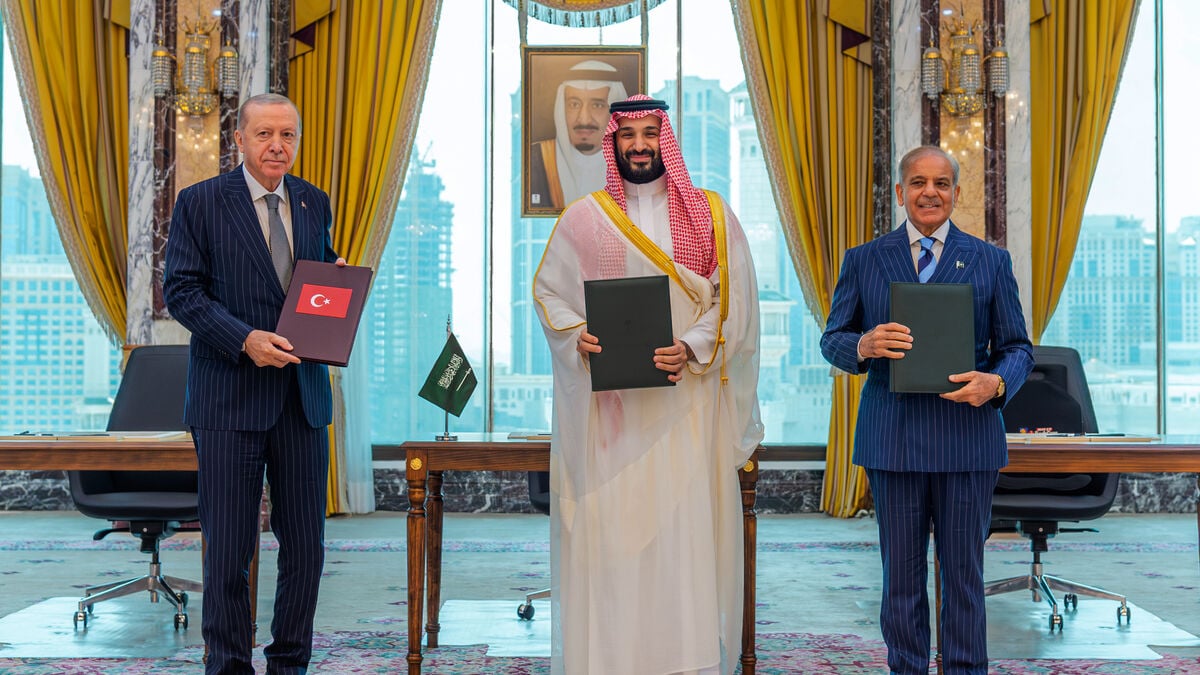
The defence cooperation between the countries was signed last Friday and, according to Turkish Defence Minister Hakan Fidan, it is only a matter of time before Egypt joins.
They are our natural partners in an alliance and we are already behaving like allies," Fidan told the state-run Turkish news agency Anatolia.
He is open to more members:
We should grow, and if necessary, bring all countries under this umbrella.
“Different inputs”
The pact is being concluded at a time when the region is being shaken by the consequences of the US war against Iran, which has drawn a number of countries into unrest and paralysed shipping traffic through the Strait of Hormuz, which is so important for world trade.
Both Iran and its allies in the Houthi movement in Yemen have attacked targets in Saudi Arabia during the war. Egyptian territory was also hit in July by a drone attack on a US-owned gas tanker.
The pact seems to be about countering Iranian influence in the region, but also about acting as a kind of counterweight to Israel, says Aras Lindh, an analyst at the Swedish National Defence Research Institute (FOI).
According to him, the member countries have different entry points into the alliance. Partly different positions of strength and partly different security policy challenges. But what they all have in common is that they all believe they stand to gain from the strengthened cooperation.
The question is to what extent countries are ready to act in defence of each other.
Lindh takes a scenario as an example: If Iran again attacks American targets in Saudi Arabia, how would Pakistan and Turkey respond?
That's where I believe the value of this defence pact will be determined.
US influence
According to Pakistan's Foreign Ministry, the pact means that an attack on any of the members will be considered an attack on all, similar to NATO's Article Five.
For now, however, it should be seen as an attempt at joint deterrence, rather than something they can back up with something more concrete, says Lindh.
The US has long wanted Europe to take greater responsibility for its security. The new defence cooperation could be an expression of a similar development in and around the Middle East, Lindh explains.
The United States has tried to turn its attention to China.
In light of this, these countries have wanted to find other complements to the security guarantees they have from the US, says Lindh, citing Saudi Arabia as an example.