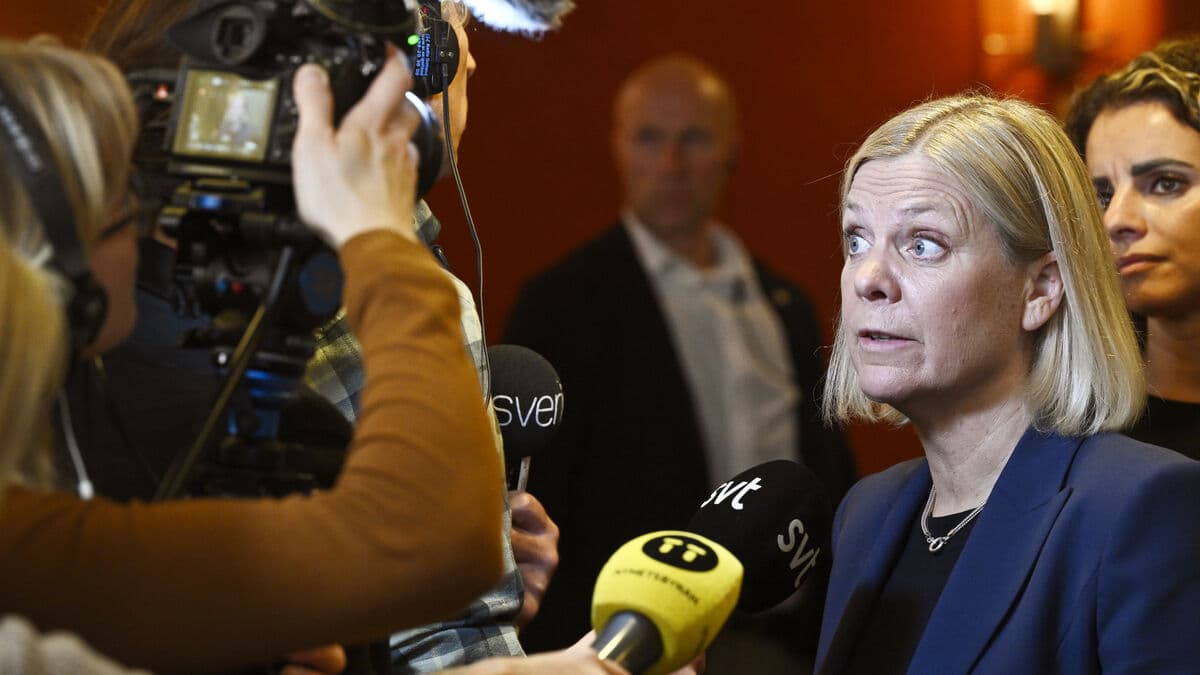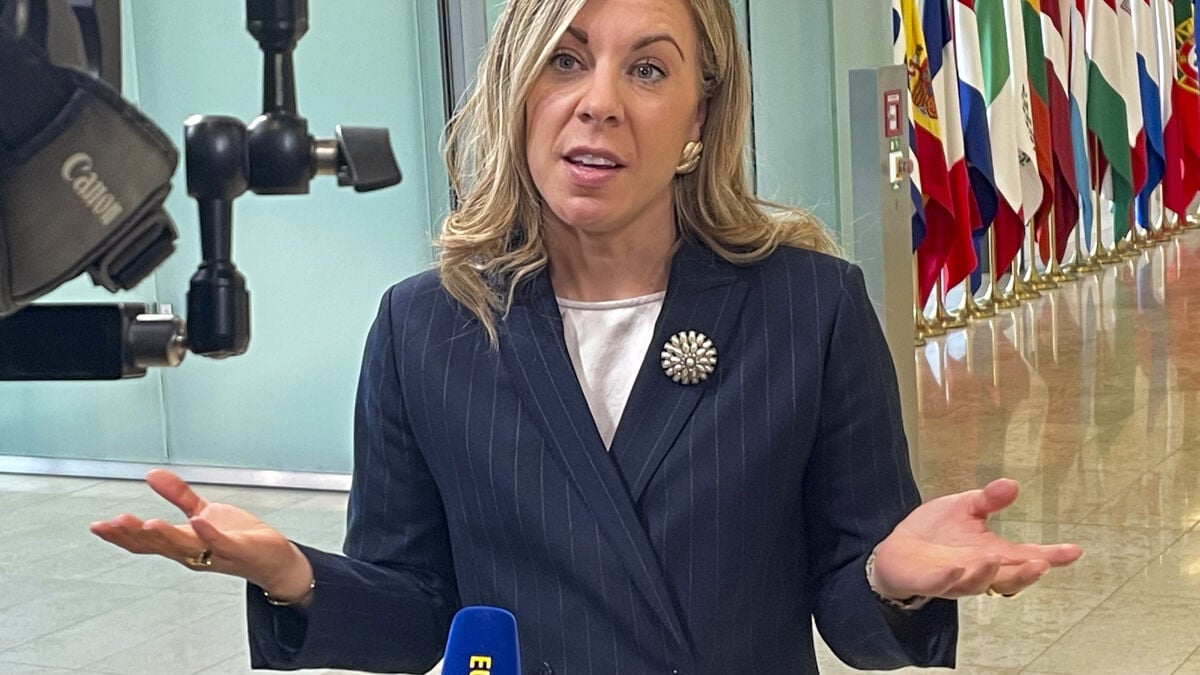
EU Affairs Minister Jessica Rosencrantz (M) flatly dismisses anyone who might believe in a quick solution to the EU’s next long-term budget.
The 140 billion euros in cuts proposed by Ireland’s presidency this autumn are nowhere near enough.
Another “several hundred billion” must be saved - and in the right areas.
“The problem right now ... is that in the areas dealing with cohesion policy and agriculture, there are actually no cuts, while cuts are being made in the areas focused on competitiveness and security. That is not a good balance,” says Rosencrantz on her way to Tuesday’s discussions with other EU countries in Luxembourg.
Divided countries
The long-term budget for 2028-34 is one of the main topics at the EU leaders’ summit in Brussels on Thursday and Friday.
However, there is unlikely to be any progress even then.
“There will continue to be a bad atmosphere. The negotiations will be uncomfortable. Right now, we are far from an agreement,” says Rosencrantz.
The member states are divided into two large blocs. One, led by Spain and Italy, calls itself the “Friends of Cohesion” and wants a substantial budget. The group points out that it includes 17 countries and represents more than half of the EU’s population.
On the other side are the “modernists”, including Sweden and Germany. They comprise just six countries, but account for most of the budget’s revenue and almost half of the Union’s GDP.
Battle over new taxes
France, which has not yet clearly chosen a side, plays a key role. EU Minister Benjamin Haddad talks about the need for an “ambitious budget”, but also says member states should not have to pay more.
France’s solution is to introduce new “own resources” - various forms of EU taxes on, for example, large companies or internet giants, which would go directly into the EU budget.
However, the modernists, not least Sweden, reject such a solution.
“Right now, many people seem to think that the EU’s budget work is just like a magic wish list, that you can just add things. I think it’s incredibly important to focus on the expenditure side and not think that we can just find a lot of new money through new own resources,” says Rosencrantz in Luxembourg.
In the battle over the EU’s next long-term budget, there are two main groups among the member states.
The Friends of Cohesion want a large budget and consist of Italy, Spain, Portugal, Poland, the Czech Republic, Slovakia, Hungary, Croatia, Slovenia, Greece, Cyprus, Bulgaria, Romania, Estonia, Latvia, Lithuania and Malta.
The modernists call for savings and consist of Germany, Sweden, Denmark, Finland, the Netherlands and Austria.
France has attended meetings on both sides, while Belgium, Ireland and Luxembourg have so far stayed outside the various groups.
Agreement from all member states is required to reach a budget.