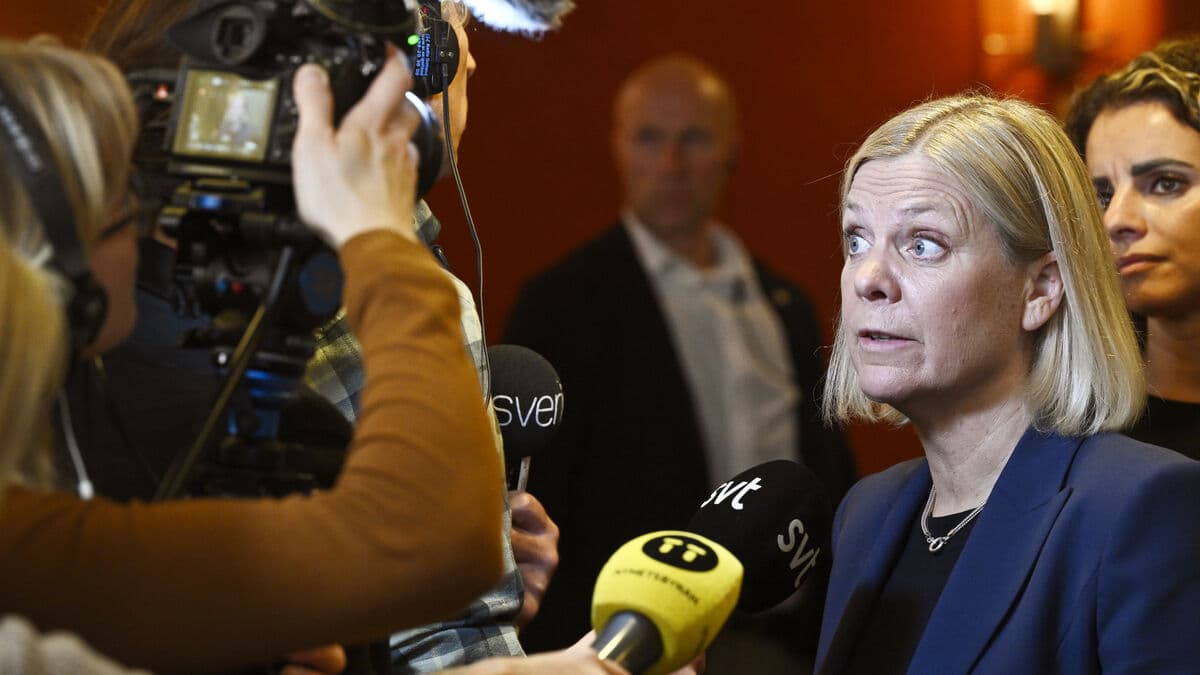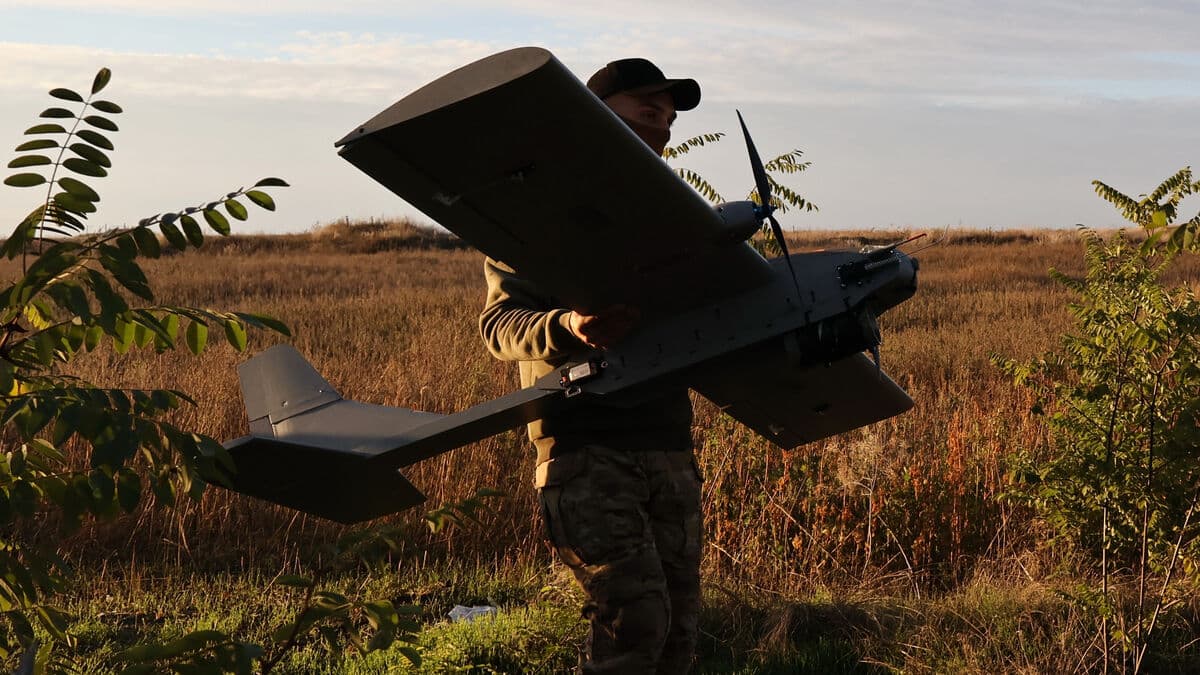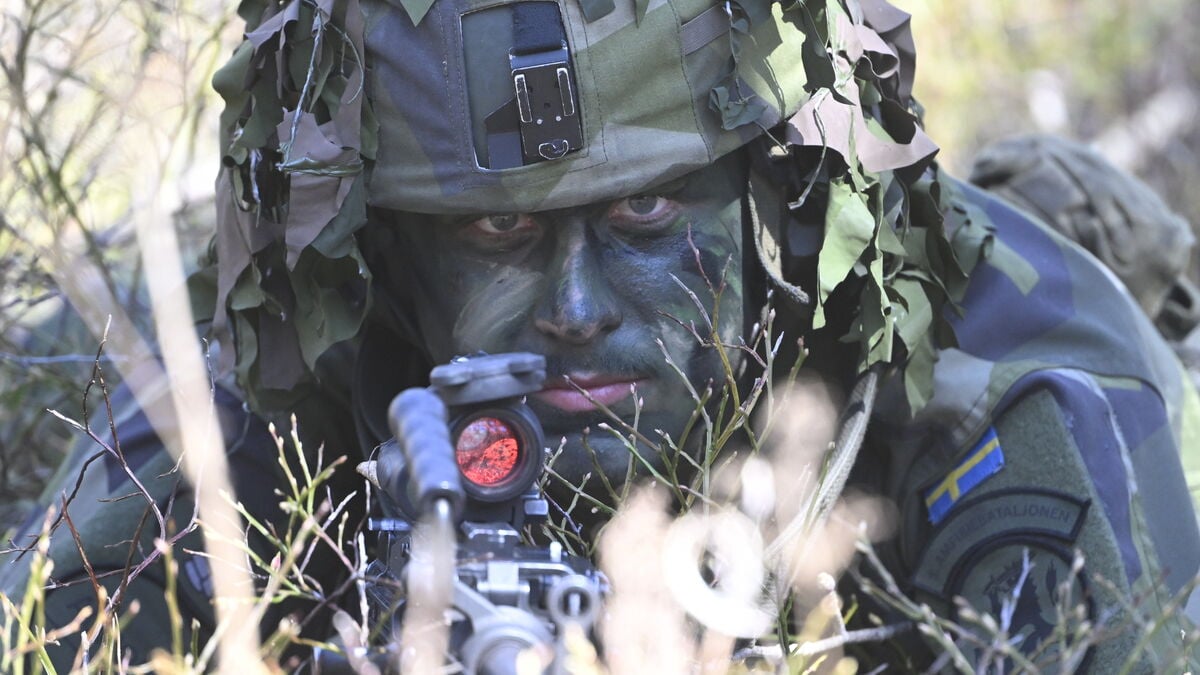
The Swedish Psychological Defense Agency (MPF) conducts annual surveys on Swedes' willingness to defend themselves and concerns about war, among other things. Developments in the world around them leave a clear mark.
Support for Sweden's military defense is the strongest since the surveys began. But willingness to defend oneself is declining slightly.
Put bluntly: Preferably a strong defense, but only if I don't have to take up arms. Is there anything in that?
"You could also say that there is stable support for Sweden to offer armed resistance in the event of an attack. In that sense, the will to defend is high and stable," says MPF's Director General Magnus Hjort.
Supreme Commander Michael Claesson expects that the will to defend will be sufficient on the day it is needed.
"I think I know enough about the character of Swedes to believe that we, after all, have a fairly clear beating heart for the defense of the homeland," he says.
Men have a significantly higher willingness to defend themselves than women, according to MPF.
"It is clear that this is a problem. Here too, we need a common situational picture, in military language, an understanding of why the defense of our territory, of ourselves physically and of what we stand for, is important," says Claesson.
“A society that holds together”
Support for total defense remains high, but when it comes to risking one's own life, the willingness to defend drops from 69 to 65 percent.
If it were to drop further, it would be bad from other perspectives as well, according to Magnus Hjort. Foreign hostile actors are constantly trying to sow division in countries, and the lower the trust in society, the lower the willingness to defend will be. For example, that is exactly what Russia is trying to do with the Ukrainian population, he says.
So how can the will to defend be maintained?
"I believe that we should continue to build a strong society that holds together, that we build a society where everyone feels welcome, where we have a society that delivers in peacetime," he says.
“We have cracks”
Many describe Sweden as more polarized than it has been in a long time. Do we have a strong society that holds together?
"We also have cracks in our society, of course. But I think they are perhaps smaller than in many other countries," says Hjort.
There are challenges with social and economic vulnerability, areas of exclusion and serious crime, according to him.
These are questions that affect how we perceive society. But the survey indicates that 90 percent still think that Sweden is a good country to live in. And that is positive.
More people fear an attack on Sweden
More people than ever before, even though it has fluctuated over the years, see an increased concern that Sweden will be exposed to a military attack in the next five years. One in five states it as likely or very likely. Twenty years ago, only a few percent responded that way.
"There's nothing strange about it, really. We live in a more dangerous world today," says Magnus Hjort.
More women than men fear a military attack on Sweden. At the same time, fewer women are willing to participate in the defense at the risk of their own lives.
Facts: The survey in numbers
Some of the answers in the survey:
65 percent answered "yes, absolutely" or "yes, maybe" when asked if they are prepared to risk their own lives to participate in total defense in the event of a military attack.
80 percent answered yes to the same question, without the risk to their own lives, if they are willing to participate in total defense.
75 percent think we should make armed resistance even if the outcome is uncertain.
49 percent think that Sweden's military defense spending should increase, 31 percent should remain unchanged, 7 percent should be reduced and the rest have no opinion.
One in five, or 20 percent, of Swedes believe that a military attack on Sweden within five years is very or fairly likely.
Source: MPF
Number of responses: 1,065 people
Target group: General public 18–84 years old
Method: Web survey via web panel
Collection period: November 5–17, 2025
The survey was conducted by Attityd in Karlstad.
Source: Psychological Defense Agency