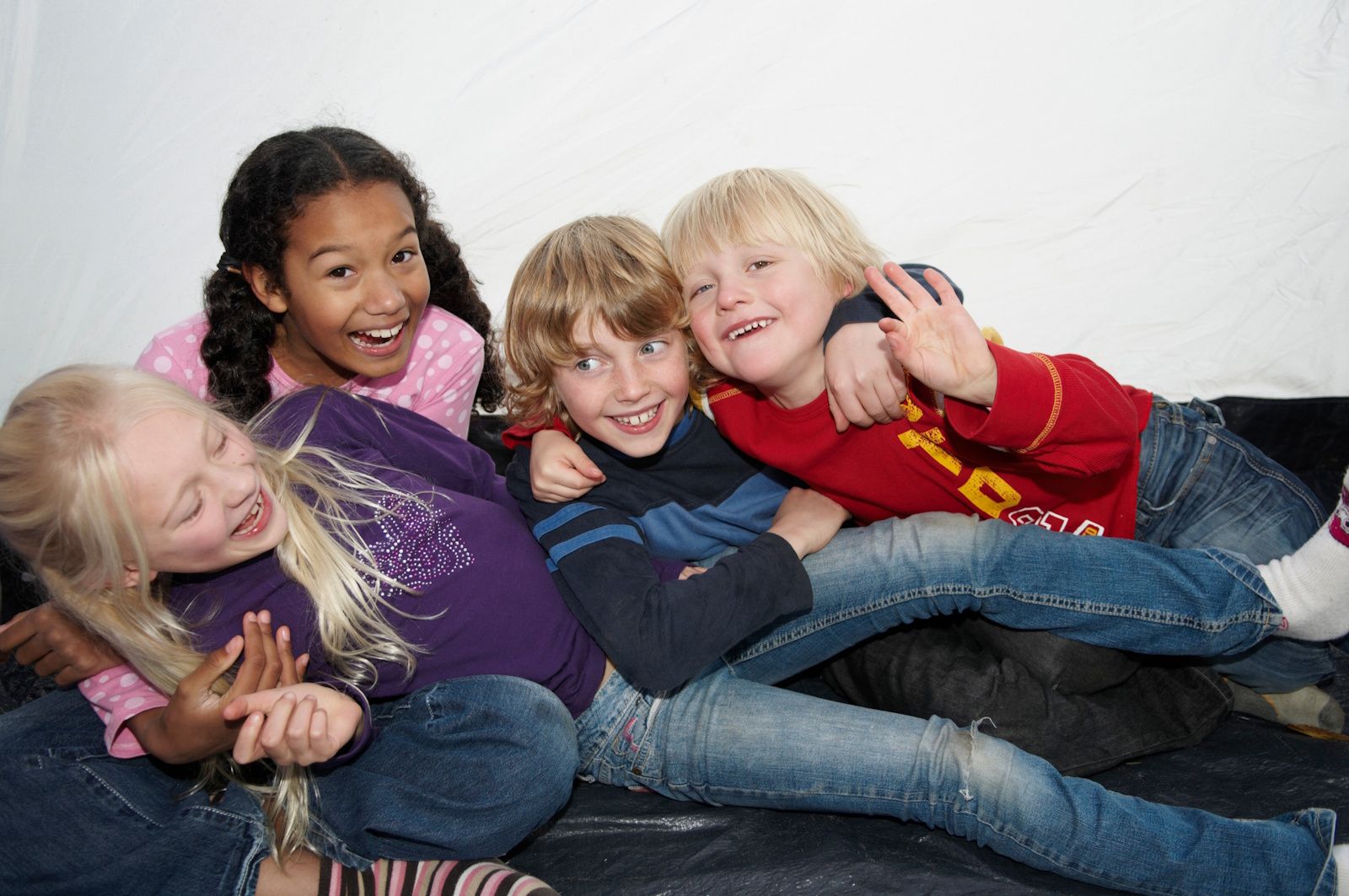
Child benefit (barnbidrag) is SEK 1,250 a month for each child under 16 who lives in Sweden. Families with two or more children also get a large family supplement (flerbarnstillägg), so the total rises faster than the number of children. Försäkringskassan, the Social Insurance Agency, pays it, and the money arrives by the 20th of each month.
How much you get in 2026
When one parent receives the whole amount:
| Children | Child benefit | Large family supplement | Total a month |
|---|---|---|---|
| 1 | SEK 1,250 | none | SEK 1,250 |
| 2 | SEK 2,500 | SEK 150 | SEK 2,650 |
| 3 | SEK 3,750 | SEK 730 | SEK 4,480 |
| 4 | SEK 5,000 | SEK 1,740 | SEK 6,740 |
| 5 | SEK 6,250 | SEK 2,990 | SEK 9,240 |
| 6 | SEK 7,500 | SEK 4,240 | SEK 11,740 |
When it is split between two parents, each receives SEK 625 for one child, SEK 1,325 for two, SEK 2,240 for three, SEK 3,370 for four, SEK 4,620 for five and SEK 5,870 for six.
The budget bill for 2027, presented on 12 November, does not change these amounts.
Who gets it
You can receive child benefit if you are the child's legal custodian, the child is under 16 and lives in Sweden, and both you and the child are insured in Sweden. Your citizenship does not matter as long as you and the child are insured in the EU, the EEA or Switzerland. If a parent lives, works or draws a pension in another EU/EEA country or Switzerland, EU rules decide which country pays.
For a child born on or after 1 March 2014, the benefit is split equally between two parents with joint custody unless they ask for another split. With sole custody, all of it goes to that parent. To change who receives it, both parents sign form 5180; if you do not agree, form 5227 starts an investigation. A change applies at the earliest from the month after you have both signed.
Do you need to apply?
For a child born in Sweden, no. The benefit starts by itself, and the first payment comes the month after the birth.
If you move to Sweden with children, you must report the move to Försäkringskassan once you are registered in the population register. It then checks whether you and the children are insured here, which is why the first payment can take a while. You report through the e-service, or on form 5456 if you cannot use it.
The large family supplement is usually paid automatically together with the child benefit. Some families have to apply for it: for example, unmarried partners who live together can count children from earlier relationships only if they were married to each other before or have a child together, and then they report it on form 5220.
New rule for families who move here from 2027
From 1 January 2027, people who settle in Sweden must qualify before they get child benefit and the large family supplement, along with several other benefits. The Riksdag decided this on 20 May 2026. You qualify after five years of living in Sweden within a fifteen-year period, or sooner through work: an income from work of SEK 40,032 a month for at least six months in a row, or SEK 20,850 a month in 12 of the last 24 months. An exemption is possible for someone who already has a strong and lasting link to Sweden.
The older rules still apply to people who settled in Sweden before 1 January 2027, whatever their citizenship. Försäkringskassan's own child benefit pages did not yet describe the new rule when this guide was updated.
When the child turns 16
Child benefit stops in the quarter the child turns 16. A child born in January to March gets the last payment in June. If the child goes on to upper secondary school, CSN pays a study allowance (studiebidrag) of the same SEK 1,250 a month instead, but not in July or August. A child who is still in compulsory school or in adapted school (anpassad skola) gets extended child benefit; the school reports it.
The large family supplement can continue for a child who gets study allowance or extended child benefit, up to and including June of the year the child turns 20.






What do you think?