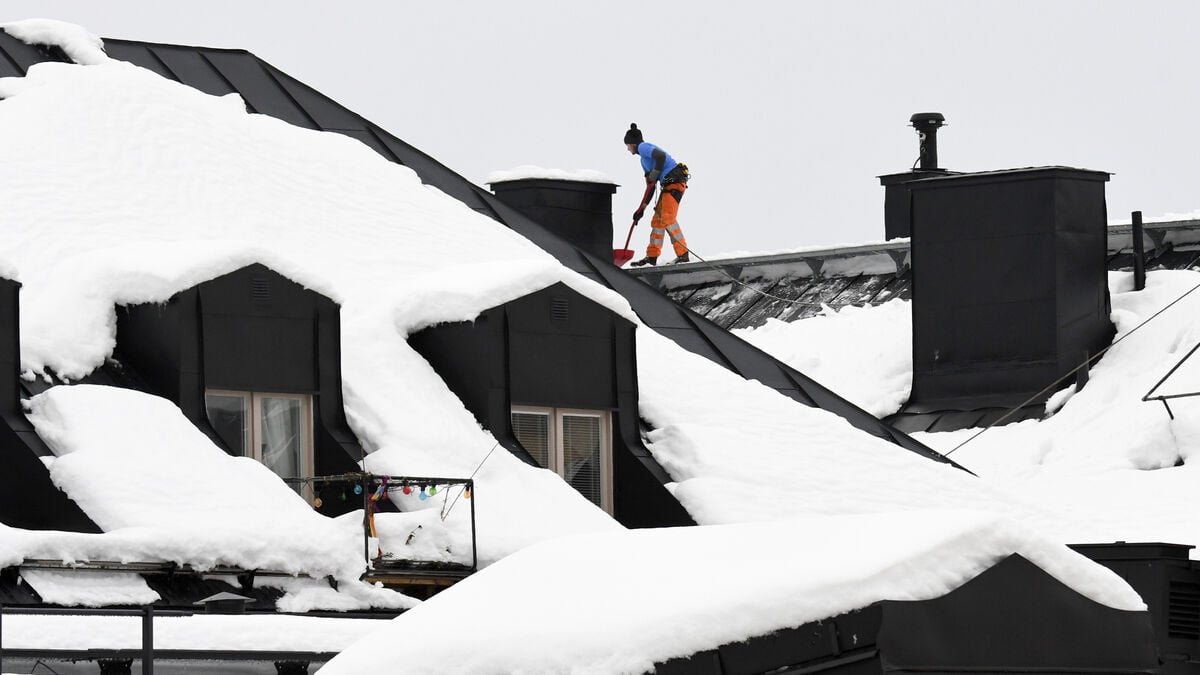
Large parts of the country are covered in snow, and with that comes a high demand for roofers. This also means that “less scrupulous companies” are emerging, says Johan Torstensson Aas, work environment ombudsman at the Byggnads union.
They largely employ completely untrained personnel who may never have worked on a roof. Combined with employers who generally have extremely poor workplace safety knowledge, it's a recipe for disaster.
It often involves foreign labour, he says.
These may be companies that normally do completely different work than roofing. I know, for example, that moving companies have been up there.
Risk of falling
There are a wide range of workplace safety risks associated with shovelling snow from roofs, with the risk of falling being the most serious. This is also where deficiencies are most often seen, says Markus Tomtén, work environment inspector at the Swedish Work Environment Authority.
It can range from not having fall protection, to having fall protection that is not good enough, or using the equipment incorrectly.
Tomtén says that they basically always find shortcomings when they inspect roofing during the peak season, both in the systematic safety work and in the work being carried out.
What I have come across is that sports clubs are taking in schoolchildren who shovel roofs, asylum seekers, students. Sometimes they also hire people on sick leave who are up on a roof. This is probably because they can't find other people who can shovel.
Exploited beggars
A few years ago, he received complaints from companies that they were taking in people who had come to Sweden to beg.
They thought that was too much, because they had no experience or safety awareness; it was just cheap labour. You can think about how little they paid in wages, for example.
It is difficult to say how common work accidents related to roof shovelling are, but according to Byggnads, accidents happen every year. If you fall without the right protection, the risks are great, says Markus Tomtén.
Even if you don't die, if you're lucky, you often end up with injuries that cause problems for the rest of your life.
Johan Torstensson Aas urges clients to check whether the company has a collective agreement and that they use companies with experience in roofing work.
For example, sheet metal companies or chimney sweeps. These are two measures that go a long way, he says.
If you see what appears to be dangerous work, you can directly tip the Swedish Work Environment Authority via their website.
You can also tip Byggnads, which can send out safety representatives if the company has a collective agreement.
If you are the client yourself, the fastest way is to directly contact the company you hired.
If you see dangerous work at a business premises or a housing association, you can also contact those responsible for the premises or association directly.
Source: Swedish Work Environment Authority, Byggnads