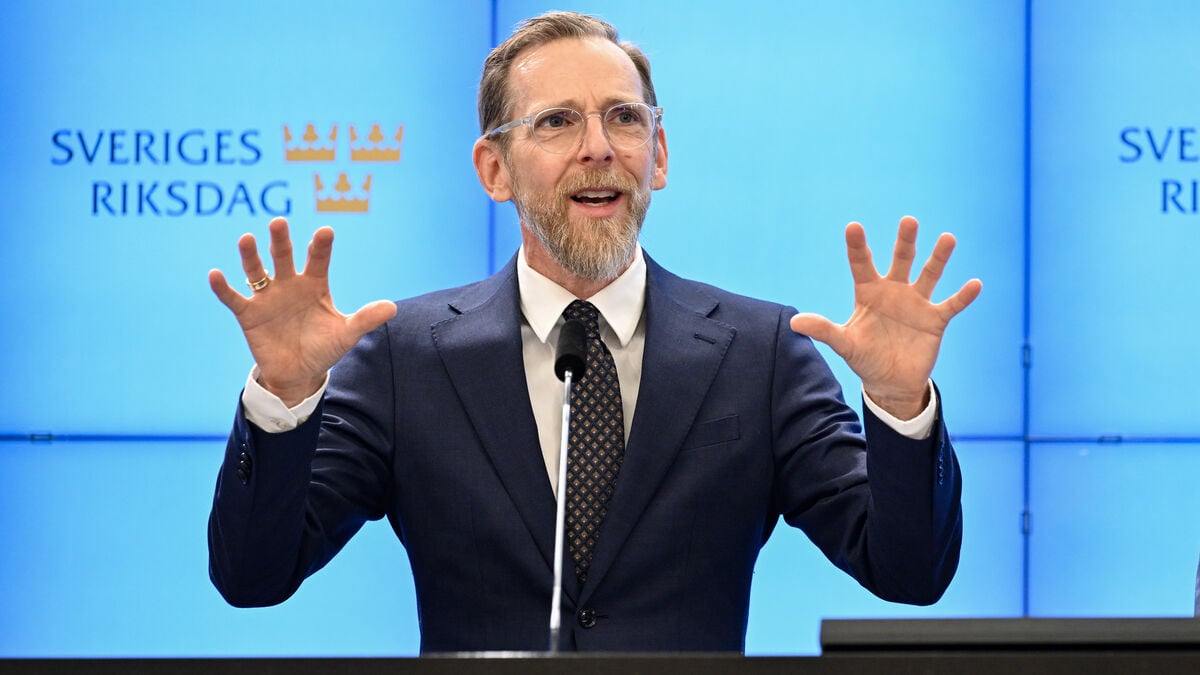
A new study from the Center for Sports Research, commissioned by Jakob Forssmed (KD), shows how parts of youth sports have become increasingly commercialized.
What I was particularly interested in was this early specialization, selection and commercialization - and how it affects cost development. Here we can see that it really affects costs, Forssmed tells TT and continues:
It's about more training, more advanced training, more tournaments further away, more travel - and increased demands on expensive equipment.
He believes that the consequence will be that some children are excluded for financial reasons.
“Ferrari in the driveway”
According to Forssmed, the increased fees are related to children being specialized and selected out at ever earlier ages.
He questions that children aged 10–12 should have to be told whether they are good enough.
In the study, one parent responded, “Belonging to a certain academy is like having a Ferrari in the driveway.”
"It's interesting that it has become a status symbol to have your child in an academy, and that you don't really dare to question the cost increases, for fear of your child's place in the academy," says Forssmed.
Requirements for the Swedish Sports Federation
The state distributes 2 billion kronor to the sports movement every year - and the government is now demanding that the Swedish Sports Federation report on how it is working to counteract early specialization and selection.
Selection in sports varies depending on the nature of the sport and competition structure, according to Malin Träff, spokesperson for children and youth sports at the Swedish Sports Federation.
In some sports, early selection is addressed as a central challenge - and in others you don't see it at all, but then it takes on a slightly different form, says Malin Träff.
The Swedish Sports Federation's guidelines say no to elite-level training before the age of 13.
There may not be an exact age that is always best, but you still need to put your foot down - and that was set at 13 years old, says Träff.
The study is based on interviews with 41 parents of boys and girls between the ages of 10–16 in Swedish football academies.
A total of 13 academies are included, linked to clubs in the Allsvenskan, Damallsvenskan and Superettan.
The study focuses on how parents think about costs, demands and expectations.
A football academy is an elite youth organization, often linked to an elite club, that trains young players.