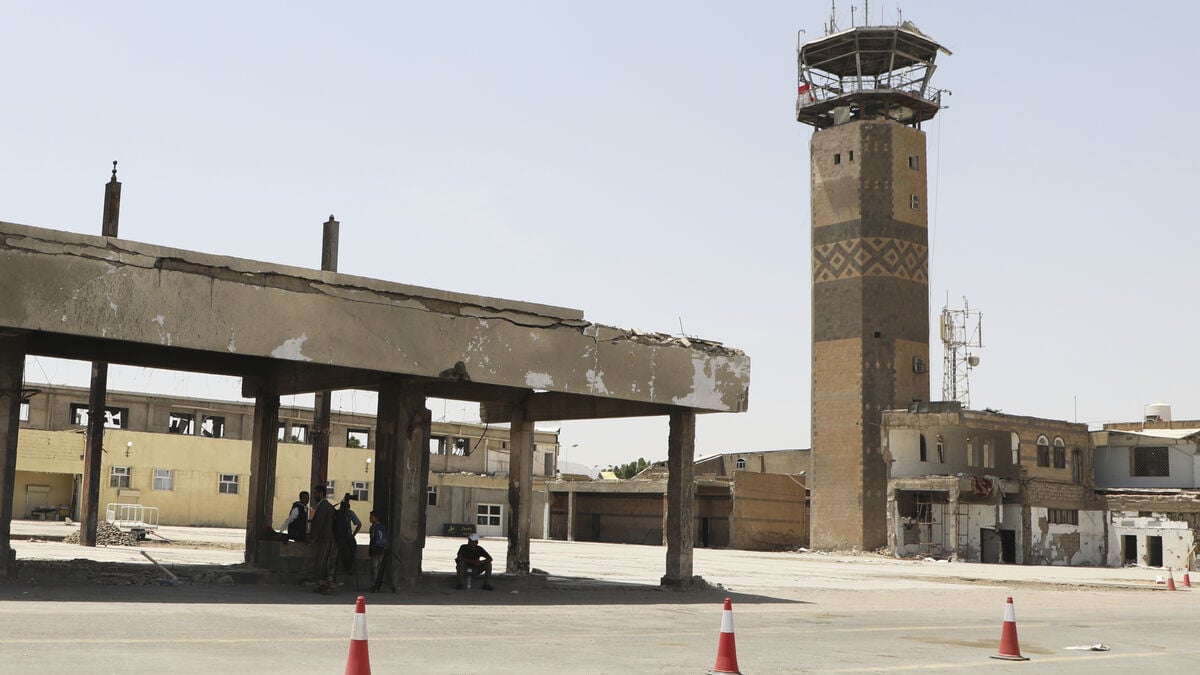
Yemen's internationally recognized government says it was behind the attack on the airport. The purpose was said to have been to prevent an Iranian plane from landing. Meanwhile, the Iran-backed Houthis, who have controlled the airport since 2014, accuse Saudi Arabia of being behind the attack.
On the plane was a delegation from the Houthi movement returning from the funeral ceremony for Iran's slain Supreme Leader Ali Khamenei.
Increased tensions
Tensions between the Houthis - who control large parts of Yemen, including the capital - and the government, which is close to Saudi Arabia, have increased in recent days. This follows the Houthis' accusation in early July that Saudi Arabia attacked an Iranian plane that landed in Sanaa and took off with the delegation on board, writes Al Jazeera
The Houthi movement promised to strike Saudi targets if Riyadh "violated" Yemen's airspace or attempted to attack again.
The Saudi-led coalition supporting the government said later on Monday that it had stopped a rocket attack by the Houthi movement aimed at southern Saudi Arabia.
"The air defense has prevented a threat from a ballistic missile fired by the terrorist-labeled Houthi militia towards the southern region," coalition spokesman Turki al-Maliki wrote in a post on the X platform.
Excludes escalation
The Houthis and the Yemeni government agreed to a UN-brokered ceasefire in 2022, which has partially eased the conflict between the parties, although violence has continued. Monday's airport attack therefore represents the biggest escalation in four years.
The escalation between the parties has raised concerns in many quarters. On Monday, the UN envoy for Yemen called on the parties to de-escalate.
The leader of the internationally recognized government says the conflict will not intensify.
"I have also ordered that the scale of the confrontation should not be escalated in a way that would fulfill Iran's goal of dragging Yemen and its people into war," said Rashad al-Alimi, leader of the Presidential Council, during an emergency meeting.