In principle, as is often the case in nature, it is about a balance or compromise, in this case between quantity and quality.
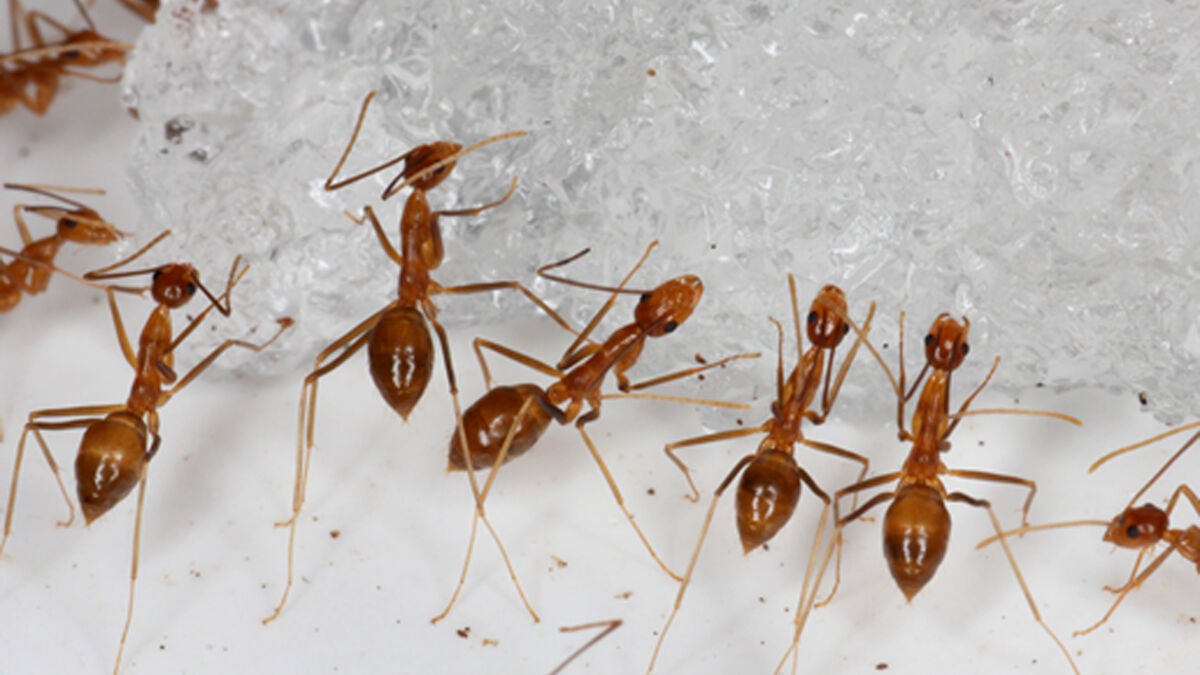
Insects normally have a fairly thick outer shell, an external skeleton also called an exoskeleton, made of chitin. The shell acts as armor that protects against all sorts of enemies. The problem is that it is expensive to produce and requires large amounts of nitrogen and minerals.
The shell decides
In the study, published in Science Advances, researchers led by zoologist Arthur Matte at the University of Cambridge in the UK measured the shell thickness and relative weight of 871 ants from around 500 species - no easy task, considering that ants are small.
They found that ant species with thick shells - such species do exist - live in fairly small colonies with a few individuals, just like most insects. The shells were significantly thinner in the species with the largest colonies.
Focus on quantity
By investing less in protective shells, ants could instead produce more individuals, which were perhaps more vulnerable to external enemies but also made it possible to build gigantic societies with enormous numbers of individuals working together and protecting the colony with joint attacks.
In other words, ants have sacrificed a certain amount of security for the opportunity to become dominant in Earth's ecosystems. Their total numbers are breathtaking - no other animal visible to the naked eye is so numerous and so successful. Clearly, it can pay to bet on quantity instead of quality.
Facts: Ants
Ants, the family Formicidae, belong to the same order as bees and wasps, which are also strongly colony-forming.
In total, scientists have named 15,700 species of ants, but the actual number is believed to be over 22,000.
In some cases, ants can form huge supercolonies with hundreds of millions of individuals.