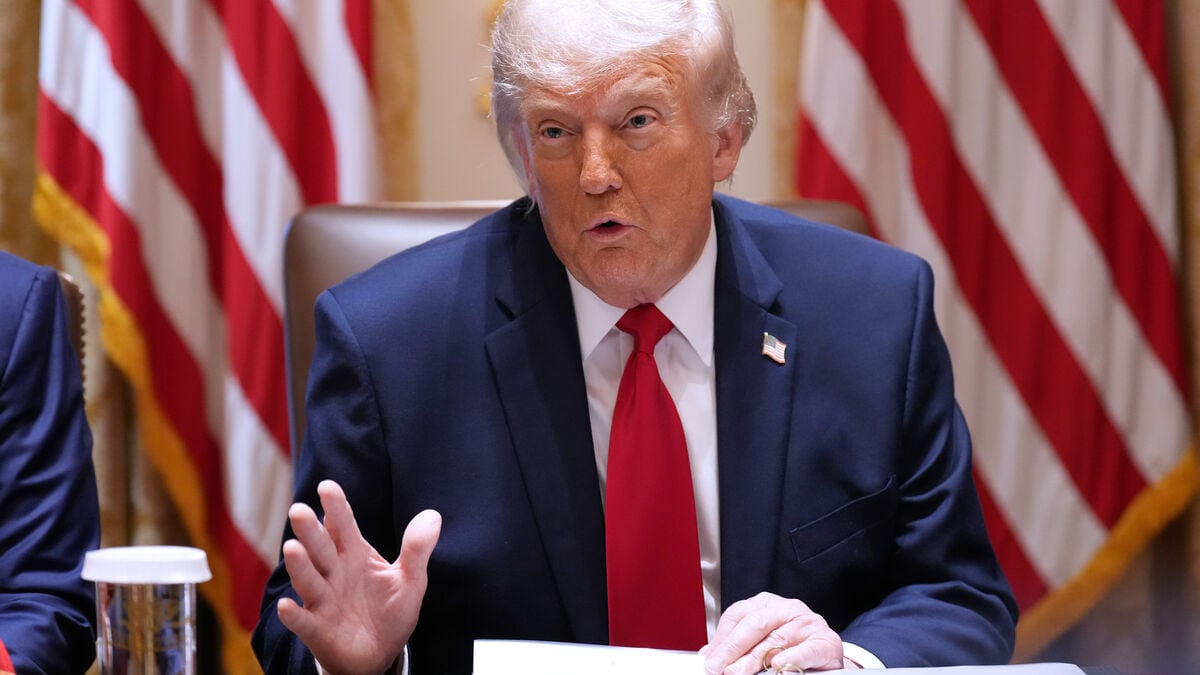
The meeting in the "situation room" - the part of the White House that serves as a command center for acute situations and crises - lasted two hours, according to the newspaper.
The Trump administration believes that an agreement with Iran is close, but that some parts remain to be resolved, including the release of frozen Iranian assets.
Ahead of the meeting, Trump wrote on Truth Social that the goal was to "make a final decision."
Trump also appeared to confirm previous reports in the US media about the contents of the proposed memorandum of understanding with Iran.
"Iran must agree that they will never have a nuclear weapon or a bomb. The Strait of Hormuz must be immediately opened, without tariffs, to unrestricted shipping, in both directions," Trump wrote.
Iranian distrust
The president added that Iran should clear the Strait of Hormuz of mines, and that in return the United States should lift its blockade of Iranian ports.
Trump also stated that the United States, in cooperation with Iran and the International Atomic Energy Agency (IAEA), will "dig up" the highly enriched uranium buried under bombed Iranian nuclear facilities.
The tone from Iran was different on Friday. The country's chief negotiator, the powerful speaker of parliament, Mohammad Bagher Ghalibaf, expressed disbelief.
"We do not trust guarantees or words; only action counts. No steps will be taken until the other side acts first," Ghalibaf wrote on X.
Ghalibaf also claimed that Iran forced concessions not through “dialogue, but through robots.”
Reports that negotiations on Iran's nuclear program are underway were also denied by Tehran. Foreign Ministry spokesman Esmaeil Baqaei said on state-controlled television, "There are no negotiations."
60 days
According to sources cited by several US media outlets on Thursday, Iranian and US negotiators have agreed on a draft memorandum of understanding, but the leaders of both countries have yet to approve the proposal.
The agreement is reportedly seen as a first step towards a permanent end to the conflict. The proposal includes an extension of the ceasefire by 60 days. During this period, negotiations on Iran's nuclear program will begin, the Strait of Hormuz will be opened to commercial shipping, and the US naval blockade will be gradually lifted.