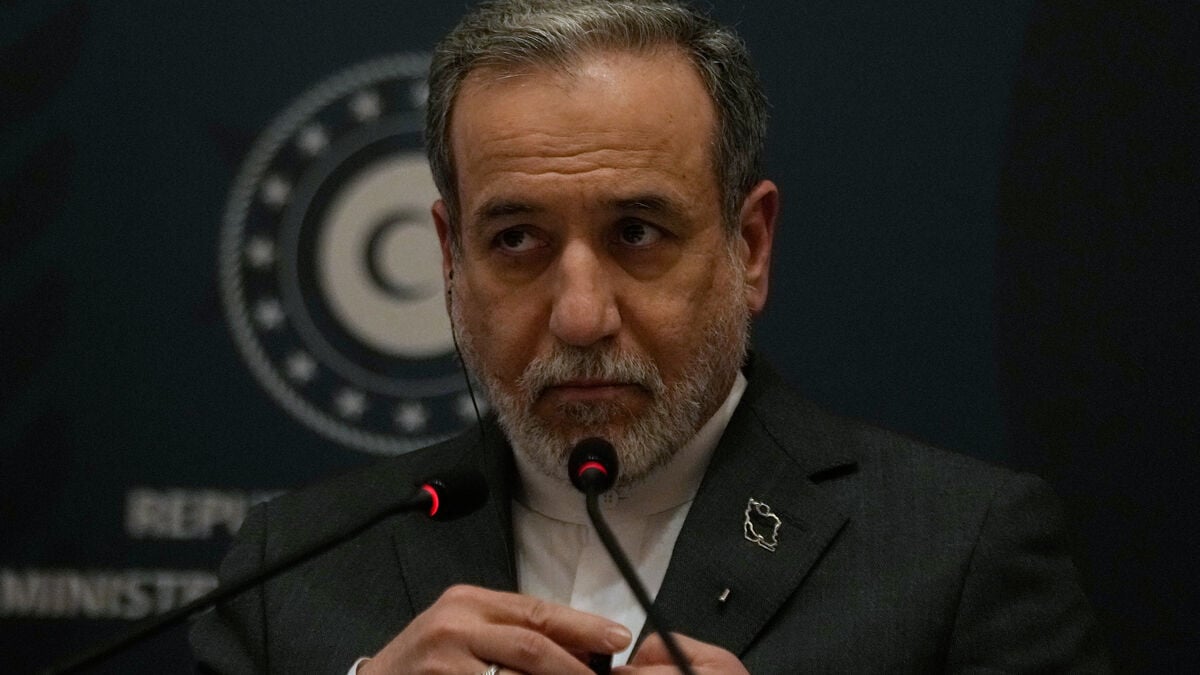
"We hope that the negotiations will lead to a sustainable and negotiated solution that can serve the interests of the parties concerned and the entire region," Araghchi said on Iranian state television afterwards.
According to Araghchi, the two countries have agreed on a possible way forward.
Ultimately, we were able to reach broad agreement on a set of guiding principles, based on which we will move forward and start working on the text of a possible agreement.
No exact date has been set for a third meeting of the resumed nuclear negotiations. First, each country will produce its own draft agreement text, according to Araghchi.
JD Vance emphasized in an interview with Fox News that "in a way it went well," but much remains to be done.
"It was very clear that the President (Trump) has set some red lines that the Iranians are not yet willing to acknowledge and work with," Vance said.
Strategic waterway closed
The indirect talks were conducted, as before, via mediators from Oman.
Iran had previously stressed that the sanctions issue is inseparable from the nuclear issue. The extensive sanctions imposed by the United States against the country have long had a stranglehold on the Iranian economy.
Lifting sanctions is an essential part of an agreement (with the US), foreign policy spokesman Esmail Baqaei told state-run Iranian Press TV.
The Geneva talks began in parallel with reports that Iran had fired missiles at the Strait of Hormuz and closed parts of the waterway. The country's Revolutionary Guards began exercises in the critical waterway on Monday, with the stated aim of preparing for "potential security and military threats."
Increased military presence
Recently, the United States has also increased its military presence in the area, in line with escalating threats between Tehran and Washington, D.C. On Tuesday, Iran's Supreme Leader Ali Khamenei warned that Iranian weapons could "sink American warships" at any time.
The dispute concerns Iran's nuclear energy program, which the world fears has nuclear weapons as its ultimate goal. Previous agreements to control Iran's nuclear energy and uranium enrichment, the so-called JCPOA from 2015, were withdrawn by Trump during his first term.