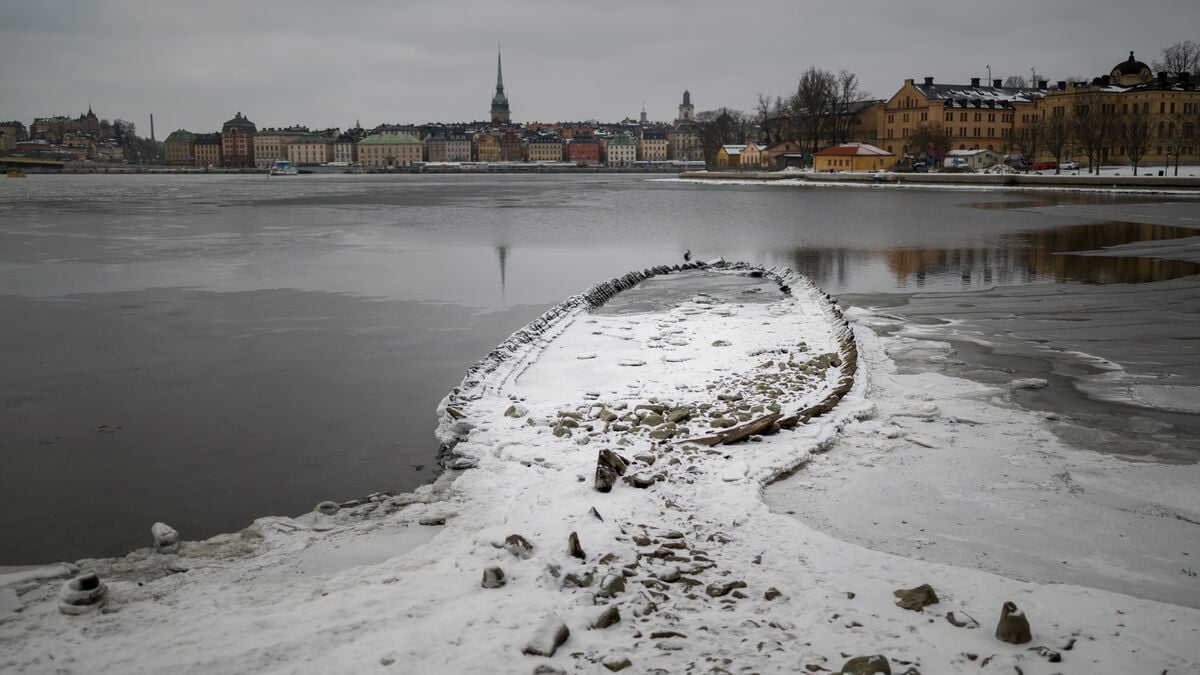
A so-called high-pressure blockage - high pressure that has 'stuck' - has caused the cold to bite hard across Sweden in recent weeks. At the same time, persistent easterly winds have pushed large masses of water out of the Baltic Sea through the Öresund and the Danish belts.
Including water from the Gulf of Bothnia and the Gulf of Finland, this amounts to close to 300 cubic kilometers. And this despite the fact that the water level was raised in connection with storms Johannes and Anna around New Year's.
It's not surprising that the water level in the Baltic Sea varies. But it doesn't happen often that the levels have dropped as much as they have this year.
"Many of the measurement series we have in the Baltic Sea are 100 years or more old, and in Stockholm it is actually over 200 years old. In that time there are perhaps a handful of similar occasions," says Jörgen Öberg.
I looked up Lake Vänern for comparison and it contains about 160 cubic kilometers. So that's almost double.
Hoping for "autumn weather"
In Finland, several low water records have been broken and water levels have also dropped to historically low levels at several of the Swedish measuring stations.
However, the fact that the Baltic Sea has been emptied of so much water does give some hope for a greater influx of new, fresh water to the severely oxygen-depleted seabed.
The first step - the low levels - has already been achieved. But many steps remain, notes Jörgen Öberg.
It's about the weather; ideally there should be a longer period of "autumn weather" with low pressure and westerly winds. But it's also about what type of water there will be.
It has to be water of high enough quality to be useful. It should be salty enough, cold and preferably have been through a storm so that breaking waves have brought oxygen into the water," says Jörgen Öberg.
Several obstacles
Then several additional obstacles await before the water reaches the deepest points and is useful.
All in all, it's a bit of a lottery, in other words.
"You can hope, but there are many steps left. The conditions are better than they have been in a long time, but so far only in the first step of four, five," says Jörgen Öberg.