The government is working on three different scenarios for how the war in Iran could affect the Swedish economy. The longer the conflict continues, the greater the effects will be.
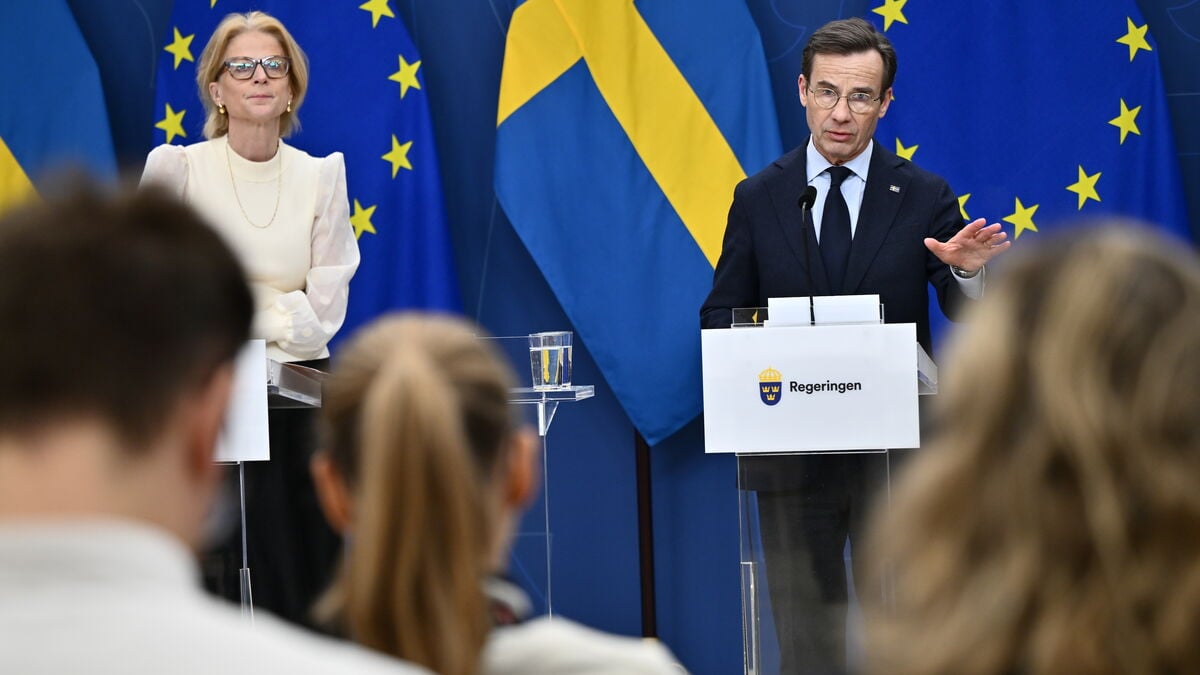
Minister of Finance Elisabeth Svantesson (M) says that "You should always prepare for the worst."
"If there's one thing we've learned in recent years, it's that a lot can happen," she says.
Many Swedes are worried about how their economy will be affected.
No advice to give
In the government's base scenario, the war will end in a few weeks, the now higher oil prices will fall back quickly, and the effects on the Swedish economy are expected to be limited. Inflation will only be affected in the short term.
In the milder scenario, the war ends in the next few days, oil deliveries normalize, and oil prices return to pre-war levels of $60-70 per barrel. The war is then not expected to have any significant effect on the Swedish economy.
In the more serious scenario, the conflict escalates and oil prices rise to $120 a barrel. This is expected to lead to increased production costs for companies, reduced purchasing power for households, higher inflationary pressures and higher interest rates. The effect in this scenario will be clear on Swedish GDP.
No scenario is considered more likely than another. However, Svantesson has no advice to give households.
"I don't usually give advice," she says.
"You have to make your own assessment, but you should know that the Swedish economy is stable."
Her message is that the government is ready to support households if needed.
Can change the electricity subsidy
Svantesson believes that the main financial concern for Swedish households at the moment is the electricity bill. That is why the electricity subsidy is currently the closest measure at hand; Svantesson describes its ceiling as high.
"If this becomes a big problem, we are prepared to change the electricity subsidy," she says.
Another possible measure that could be considered if the more serious scenario becomes a reality is a reduction in fuel taxes. But for that, the government would have to request an exemption from EU rules.
"We have the economic muscle in Sweden to act if this has a dramatic impact on the Swedish economy," says Ulf Kristersson.