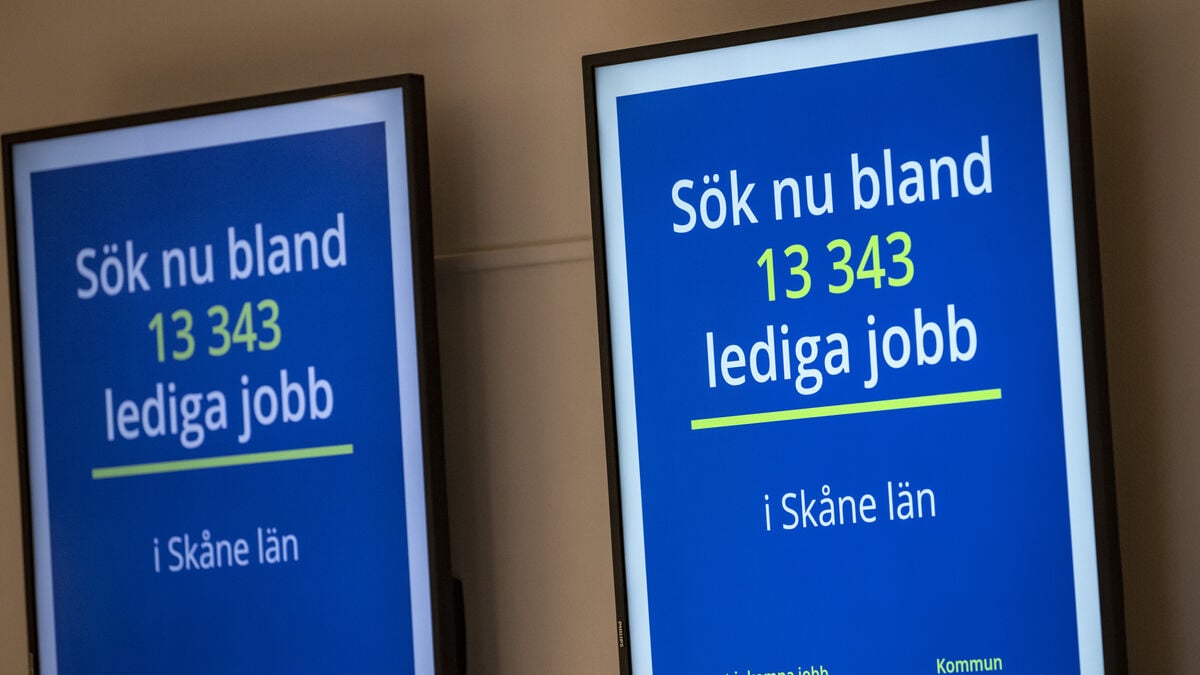
Currently, 339,000 people, or 6.4 percent of the workforce, are registered as unemployed at the country's employment agencies.
If the Swedish Public Employment Service is correct in its new forecast, that figure will have come down to 328,000, or 6.1 percent on average in 2027.
The strengthening is expected to occur gradually with somewhat faster pace in the second half of 2027, which could mean even lower unemployment than that at the end of the year, although the Swedish Public Employment Service (AF) does not want to give exact levels.
Here come the jobs
The driving force behind the increase in jobs in the forecast is, among other things, increased household consumption and increased housing construction, according to Marcus Löwing, labor market analyst at AF.
Where will the jobs come from then?
Employers are still very cautious. We had hoped it would pick up a bit more so late in this recession. If we look at different industries, the construction industry in particular is positive in terms of hiring plans, says Löwing and continues:
Likewise, the manufacturing industry also has some catching up to do.
The largest sector, the broad private services sector, also shows cautious optimism in certain areas, including hotels and restaurants.
Imbalances risk increasing
In the public sector, the situation is mixed. In education, employers expect fewer jobs in a year's time as a result of shrinking birth cohorts, while there is still a shortage of trained personnel in healthcare in many places.
Although unemployment is expected to remain at relatively high levels, employers generally have difficulty finding the right workforce. The long-term unemployed with weak attachment to the labor market, often with low levels of education, are expected to remain high and increase in proportion.
Education, internships and subsidized employment will be important, as usual, according to Marcus Löwing.
Otherwise, these imbalances we already have risk becoming even more apparent during the next boom, when employers will really need to expand their operations.
AF's forecast is based, among other things, on Statistics Sweden's survey of just over 20,000 workplaces and their employment plans during the first quarter of 2026.