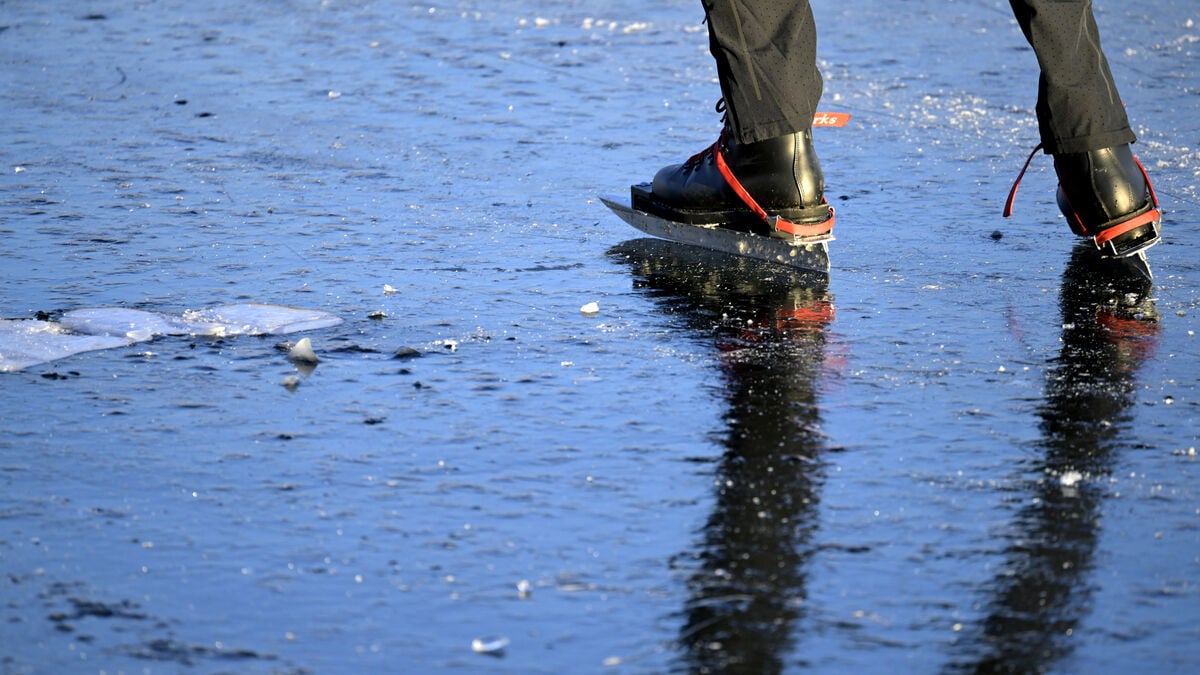
The winter season is approaching and with it the freezing of Sweden's many waterways. But venturing out onto the ice is not without risk and fatalities are not uncommon.
There are several things to consider for those who want to go out on skis, skates or on foot, says Jan Insulander, project manager at the Swedish Ice Safety Council.
The single most important piece of advice – for both experienced and beginners – is not to go out alone.
You should never be alone on the ice because it is very difficult to get out of a wake. If you are not used to ice, you should bring a friend or someone else who is.
In addition to company, you should also bring the right equipment, such as ice cleats and a rescue rope. A life jacket is also recommended.
Clothes become very heavy when they are wet, especially when you are wearing winter clothes, so you need help to float, says Insulander.
12 fatal accidents annually
Over the past ten years, an average of twelve people have died each year in accidents on ice, according to the Swedish Ice Safety Council. These include accidents on foot, on skates, with snowmobiles or while on ice-covered water in other ways.
Older men who go out alone are clearly overrepresented in the statistics, and most accidents occur at the end of the season.
Then the ice becomes loose and dissolved, and can be as thick as you want but still not bear weight, so you have to be extra careful.
The beginning of the season is also particularly risky, before the ice has had time to become thick.
The first ice is also free of cracks and difficult to assess. Otherwise, you can use the cracks to see how thick it might be.
Shorter season
Due to climate change, the ice season has also become shorter, says Insulander, and believes that it is not possible to rely on habit.
You may usually go to a certain place at a certain time of year, but that's no guarantee. It's the here and now that matters, not what it was like last year.
He also says that it is difficult to judge the thickness of the ice by eye when the snow is settling, and that it is therefore important to always test the ice.
You can bring tools, such as an ice drill, and test the ice as you go.
Never go out on the ice alone. Most serious accidents happen to single people, or groups of two where both have gone through the ice. Ideally, there should be three or more and make sure to keep your distance so that everyone doesn't fall in if the ice breaks.
Bring the right equipment. An ice pick to test if the ice holds, ice spikes around your neck near your chin so they are easy to reach, and a throwing rope to be able to rescue someone else who has fallen in.
Ask locals or the local fishing club – they often have a good idea of the ice conditions and know which places to avoid. Study the area before you head out, then you can find areas with weaker ice.
Adjust the tour according to the weather, check the weather forecast before the ice tour.
Stay close to the shore – that way you'll be closer to solid ground if something happens.
Bring a change of clothes, packed in a sealed plastic bag. In addition to having dry clothes on hand in case of an accident, the bag can act as a flotation aid.
If the ice breaks: Stay calm, breathe calmly, and turn in the direction you came from. Methodically work with the ice cleats to get yourself out of the water.
Sources: Mountain Safety Council, Ice Safety Council, Swedish Lifesaving Society.